Suitable for ordinary hard water not exceeding 300 mg/l, for checking and controlling water hardness — for example in cooling water systems, paper manufacturing, the weaving industry and dyeing.
Suitable for mildly hard water; for checking and controlling water hardness, for example in cooling water systems, paper manufacturing and the weaving industry.
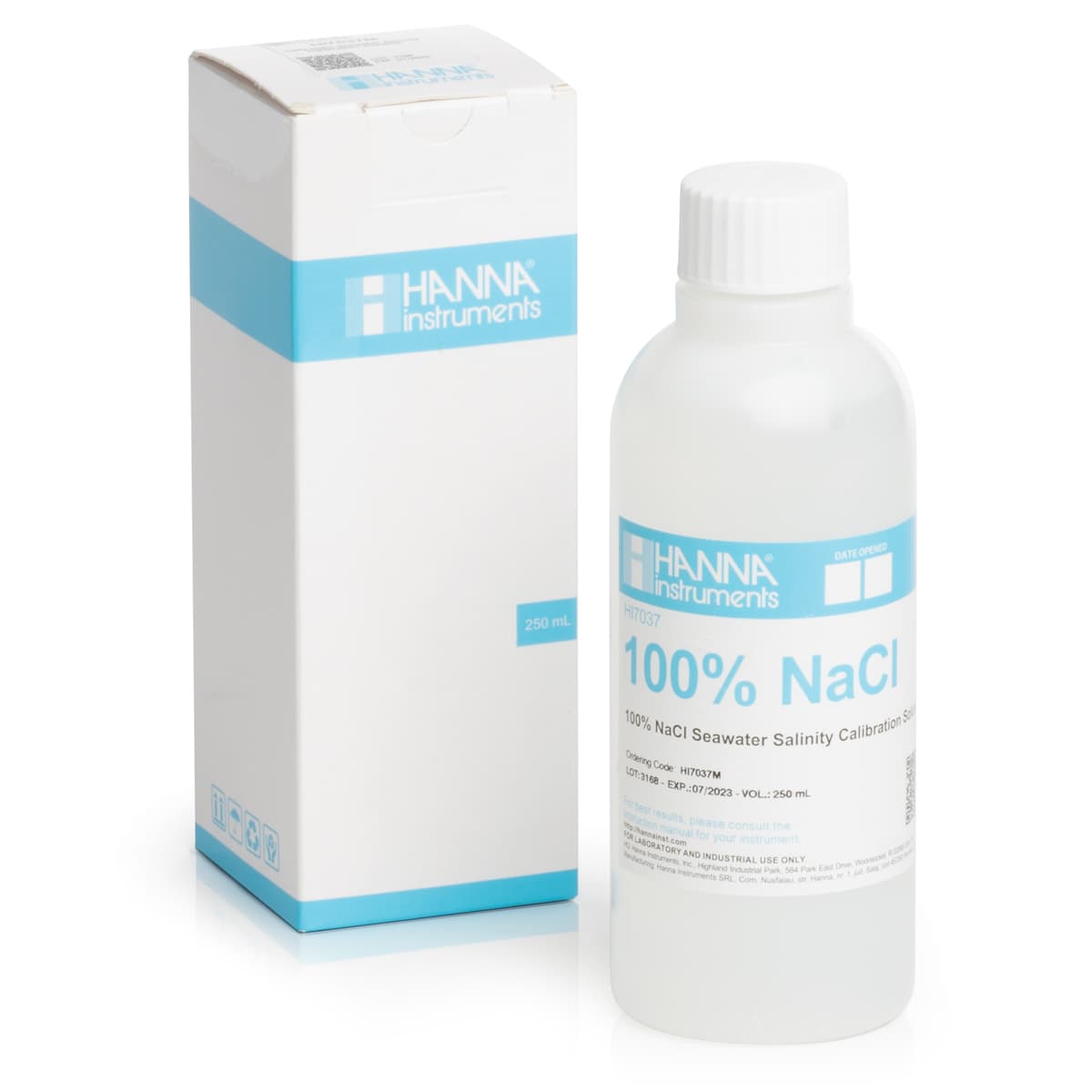
HI7037M is a premium quality 100% NaCl calibration solution for % readings of salinity. HI7037M is produced in accordance with ISO 3696/BS3978 standards using high purity salts, deionized water, certified weight-checked balances, and Class A glassware in a temperature controlled environment monitored with certified…
For measuring pH in various industries including food, beverage, textile and cosmetics, and for checking the acidity and alkalinity of raw water sources and wastewater treatment ponds.
Suitable for measuring chlorine in aquaculture water, including ornamental fish keeping, and also usable in various industries such as food, beverages, hospitals, and shrimp and poultry farms.
Suitable for measuring chlorine in aquaculture water, including ornamental fish keeping, and also usable in various industries such as food, beverages and hospitals.
Nitrite in water comes from the decay of organic matter. It is absorbed into aquatic animals through the gills and reacts with haemoglobin in the blood, preventing oxygen transport, causing blood disorders and possibly killing the animals. A nitrite reading above 0.5 mg/l is considered fairly dangerous.
Measures the alkalinity of water. At a suitable level, alkalinity acts as a buffer that keeps pH from changing quickly; low alkalinity lets pH change rapidly, which can endanger aquatic animals. Suitable for testing water in swimming pools, shrimp farms, aquatic plant cultivation and water used in various industries.
Ammonia matters in aquaculture because it is both a toxin for aquatic animals and a fertiliser for phytoplankton growth. At high concentrations it is dangerous to aquatic animals; in culture ponds most ammonia comes from the animals' excretion and leftover feed.
Dissolved oxygen is an indicator of water quality and is important for aquatic animals and plants; too little oxygen in the water can be harmful to them.
Glass bottle for BOD analysis in water, wastewater or effluent to American Public Health Association standards; Glass bottle for storing reagents or water samples for analysis