
We use cookies to improve this site and see how it is used. Cookies Policy

Skip to content
ไทย

Laboratory Ovens: Hot Air, Drying & Vacuum

Laboratory hot-air, drying and vacuum ovens from Memmert, BINDER and other manufacturers, in natural convection and forced-air designs.

TL;DR

Laboratory ovens: hot-air, drying and vacuum models from Memmert and BINDER

We supply Memmert and BINDER hot-air and drying ovens in natural-convection and forced-air designs, plus BINDER VD vacuum ovens. Most of the hot-air and drying ovens reach 250 °C or 300 °C and the vacuum ovens 200–220 °C, so airflow and what leaves the sample as it dries decide between models. Every model is quoted on request.

Laboratory oven selection guide

How to choose a laboratory oven

01

The job and the temperature you will run

Moisture methods state their own point: the USDA reference air-oven method for ground grain runs one hour at 130 °C. The pharmacopoeial reference for dry-heat sterilisation is at least 160 °C for at least 2 hours, and depyrogenating glassware commonly runs 30 minutes at 250 °C. Give the temperature you will actually use; uniformity is specified at a working point.

02

Natural convection or forced air

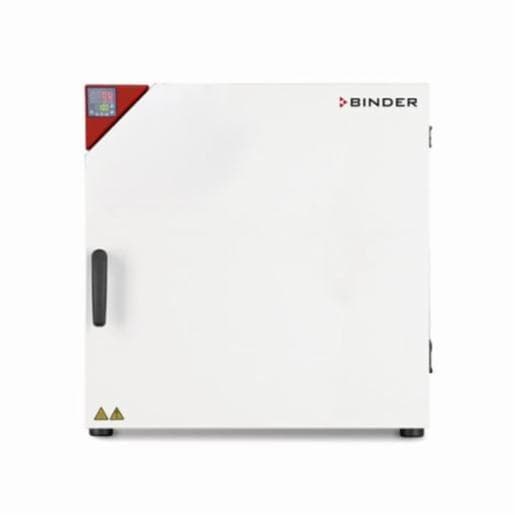
BINDER’s datasheets for two same-size ovens show the difference: the natural-convection ED 56 takes 50 minutes to reach 150 °C and 19 minutes to recover after a 30-second door opening, the forced-air FD 56 takes 15 and 4. Natural convection still suits powders and light samples a fan would scatter. Both designs release moisture through an adjustable air flap.

03

When the job needs a vacuum oven

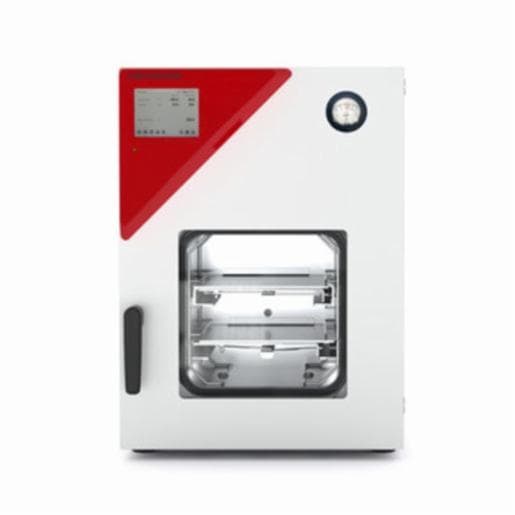
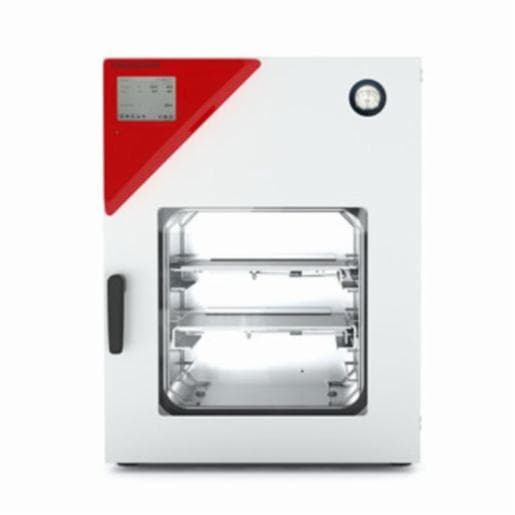
Lowering the pressure lowers the boiling point, so water and solvents leave at temperatures the sample can tolerate, with less oxidation. A vacuum oven needs a vacuum pump, quoted as its own line. Check the solvent rating: BINDER’s VD series is for non-flammable solvents, and flammable solvents need its VDL series.

04

Chamber, shelves and load

The model number is not the volume: BINDER’s ED 56 holds 57 L and its FD 56 60 L. Give the trays, crucibles or glassware per run, the number of shelves and the weight of the heaviest shelf, and leave room between the load and the walls. BINDER measures its uniformity figures in an empty chamber.

05

Over-temperature class and records

Under DIN 12880, class 1 cuts the heating only 20–30 °C above the oven’s rated maximum, so it protects the oven rather than your sample; class 2 cuts it at a limit you set until someone resets it; class 3.1 takes over control at that limit. Memmert’s standard UN55 carries class 1; BINDER’s ED and FD carry class 2, and the ED 56 offers 3.1 as an option. For GMP or ISO/IEC 17025 work, ask for a calibration certificate at your working temperature and data logging.

Include this in an oven request

  • The job, and the temperature and time your method specifies
  • Whether the sample gives off solvent or other flammable vapour
  • Natural convection, forced air or vacuum
  • Load per run, number of shelves and heaviest shelf load
  • Over-temperature class, calibration points and data records
  • Voltage, bench or floor space and required-by date

Common laboratory oven questions

Can a hot-air oven sterilise glassware instead of an autoclave?

For dry glassware and metal instruments, yes. The European Pharmacopoeia reference condition, cited in the EMA sterilisation guideline, is at least 160 °C for at least 2 hours; other cycles have to be validated. It does not replace an autoclave for culture media, liquids or most plastics.

Can I dry samples containing ethanol or acetone in a standard oven?

No. BINDER’s manual for its ED, FD and FED ovens states the chambers have no explosion protection and forbids loading anything combustible or explosive at the working temperature. Its VD vacuum ovens are rated for non-flammable solvents only; flammable solvents need the VDL series. Name the solvent and its volume in the request.

Can a moisture analyser replace the oven method?

For routine control, often yes: a halogen moisture analyser gives a result in minutes. The oven stays the reference, and USDA names the air oven as the reference method for moisture in grains and oilseeds, so labs usually correlate the analyser against the oven before relying on it.

Do I need an oven that reaches 300 °C?

Only if your method needs it. The USDA air-oven moisture methods run at 103–130 °C and the dry-heat sterilisation reference is 160 °C. Depyrogenation commonly runs at 250 °C, which is where a 250 or 300 °C rating matters. Ashing belongs in a muffle furnace.

Before and after drying

Manufacturer and regulatory references

Convection, vacuum, range and safety figures come from the manufacturers’ current pages and manuals; the sterilisation and moisture conditions from the regulators named. Range, uniformity and shelf load are verified against the quoted model.

Specifications, compatibility and supplied documents vary by model and option. Check them against your method and the current manufacturer data sheet before ordering. Supplying equipment does not validate a method or certify compliance.