Municipal, industrial and environmental water work — COD, BOD, turbidity, residual chlorine and heavy metals. Test kits and reagents carry the routine; meters and photometers are the occasional capital line.
Suitable for measuring chlorine in aquaculture water, including ornamental fish keeping, and also usable in various industries such as food, beverages, hospitals, and shrimp and poultry farms.
Suitable for measuring chlorine in aquaculture water, including ornamental fish keeping, and also usable in various industries such as food, beverages and hospitals.
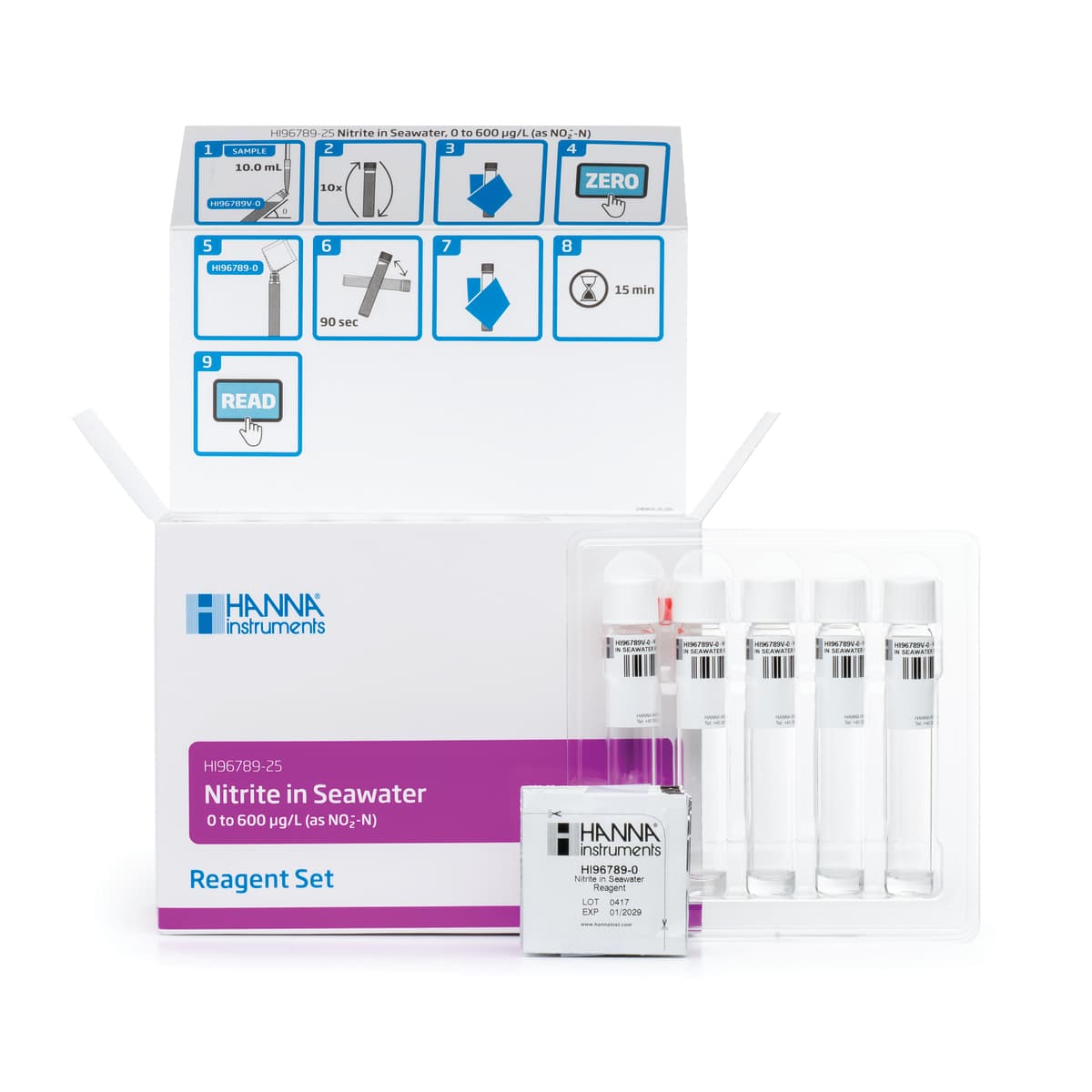
Nitrite in water comes from the decay of organic matter. It is absorbed into aquatic animals through the gills and reacts with haemoglobin in the blood, preventing oxygen transport, causing blood disorders and possibly killing the animals. A nitrite reading above 0.5 mg/l is considered fairly dangerous.
Measures the alkalinity of water. At a suitable level, alkalinity acts as a buffer that keeps pH from changing quickly; low alkalinity lets pH change rapidly, which can endanger aquatic animals. Suitable for testing water in swimming pools, shrimp farms, aquatic plant cultivation and water used in various industries.
Ammonia matters in aquaculture because it is both a toxin for aquatic animals and a fertiliser for phytoplankton growth. At high concentrations it is dangerous to aquatic animals; in culture ponds most ammonia comes from the animals' excretion and leftover feed.
Dissolved oxygen is an indicator of water quality and is important for aquatic animals and plants; too little oxygen in the water can be harmful to them.
Glass bottle for BOD analysis in water, wastewater or effluent to American Public Health Association standards; Glass bottle for storing reagents or water samples for analysis
Lauryl sulfate broth (LSB) is widely used to detect coliform bacteria in wastewater, dairy products, other food products and clinical samples. It is a cream-yellow, homogeneous, free-flowing powder that dissolves readily in water at 25 °C, pH 6.8 ± 2.
Pack size 500 g. Bacto™ Tryptone is used in preparing microbiological culture media. Ingredients, where noted, meet United States Pharmacopeia (USP) performance specifications.
Plate count agar (PCA) culture medium is used for total microbial count testing of samples such as food, drinking water and other sample types. This medium complies with EN ISO 4833, ISO 17410, FDA-BAM and APHA.
Pack size 500 g. Plate Count Agar and Standard Methods Agar (Plate Count Agar; Tryptone Glucose Yeast Agar) are used for obtaining microbial plate counts from milk and dairy products, foods, water and other materials of sanitary importance.