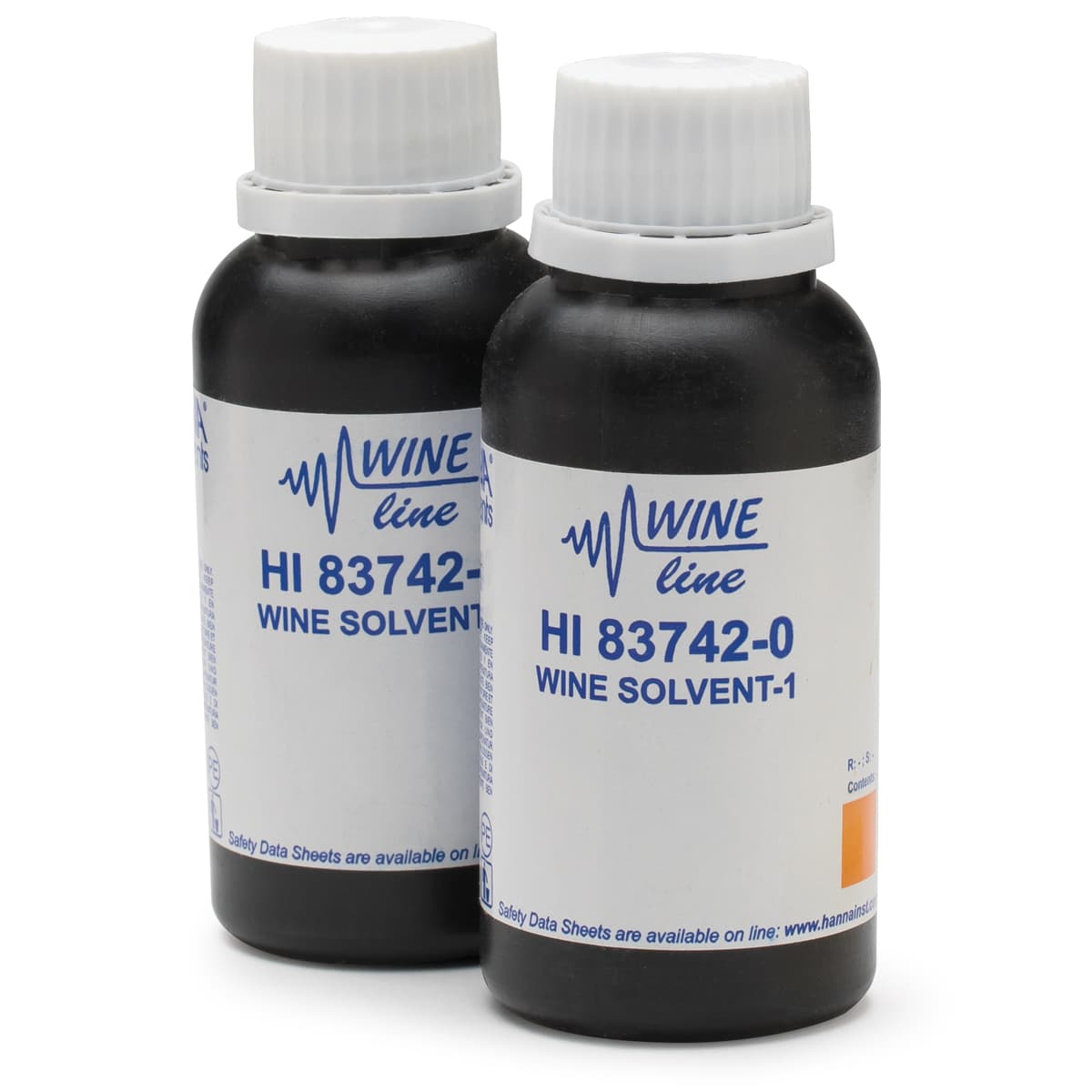
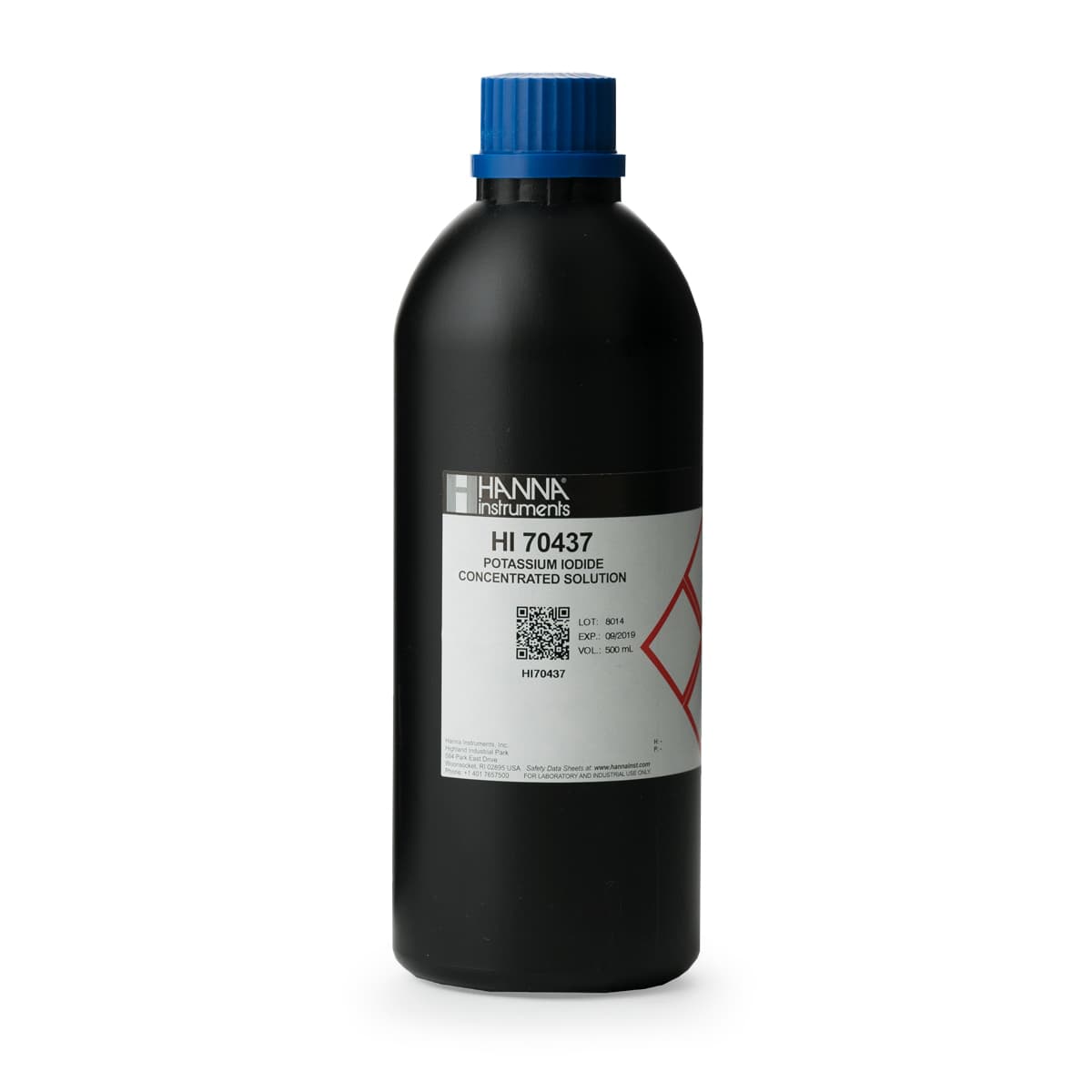
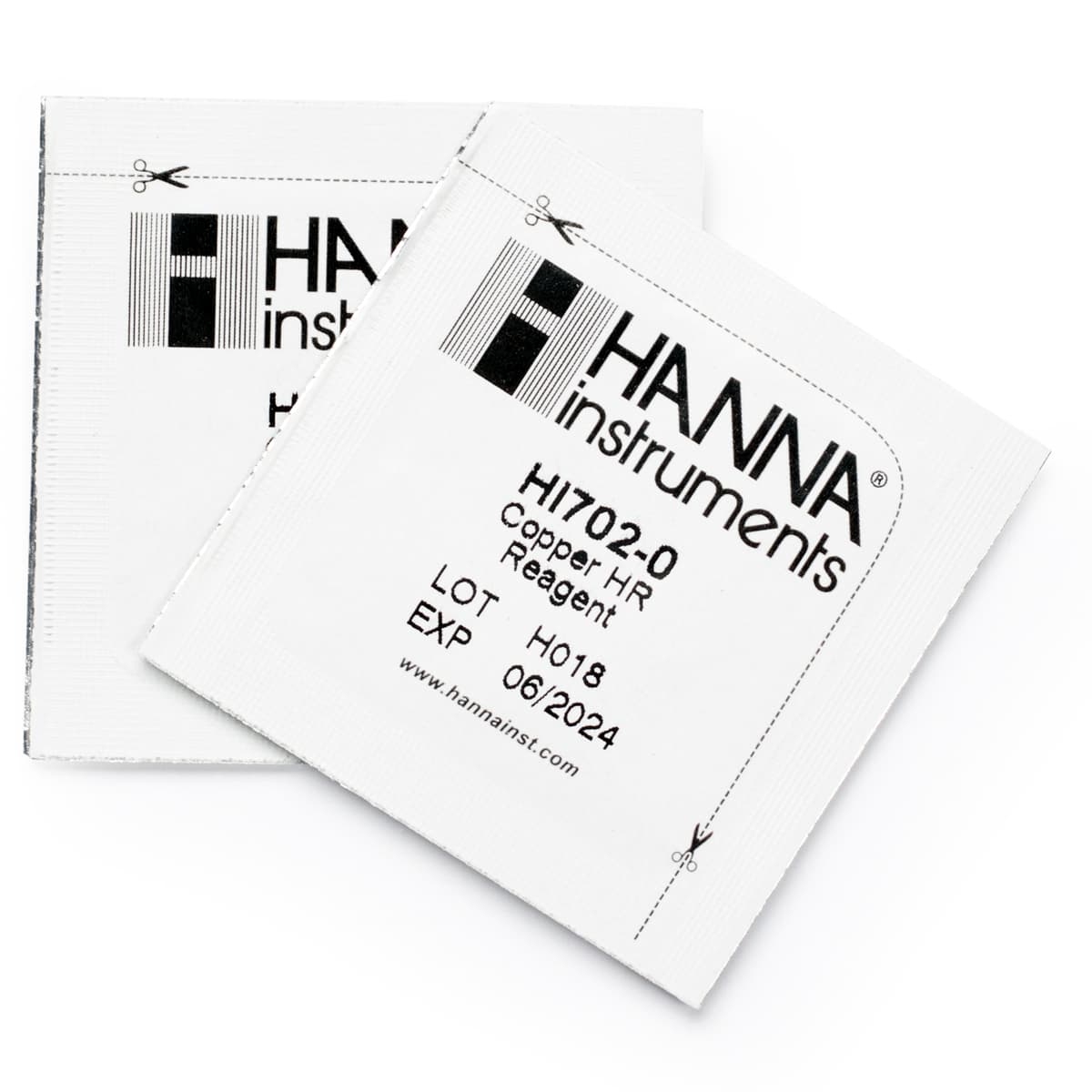
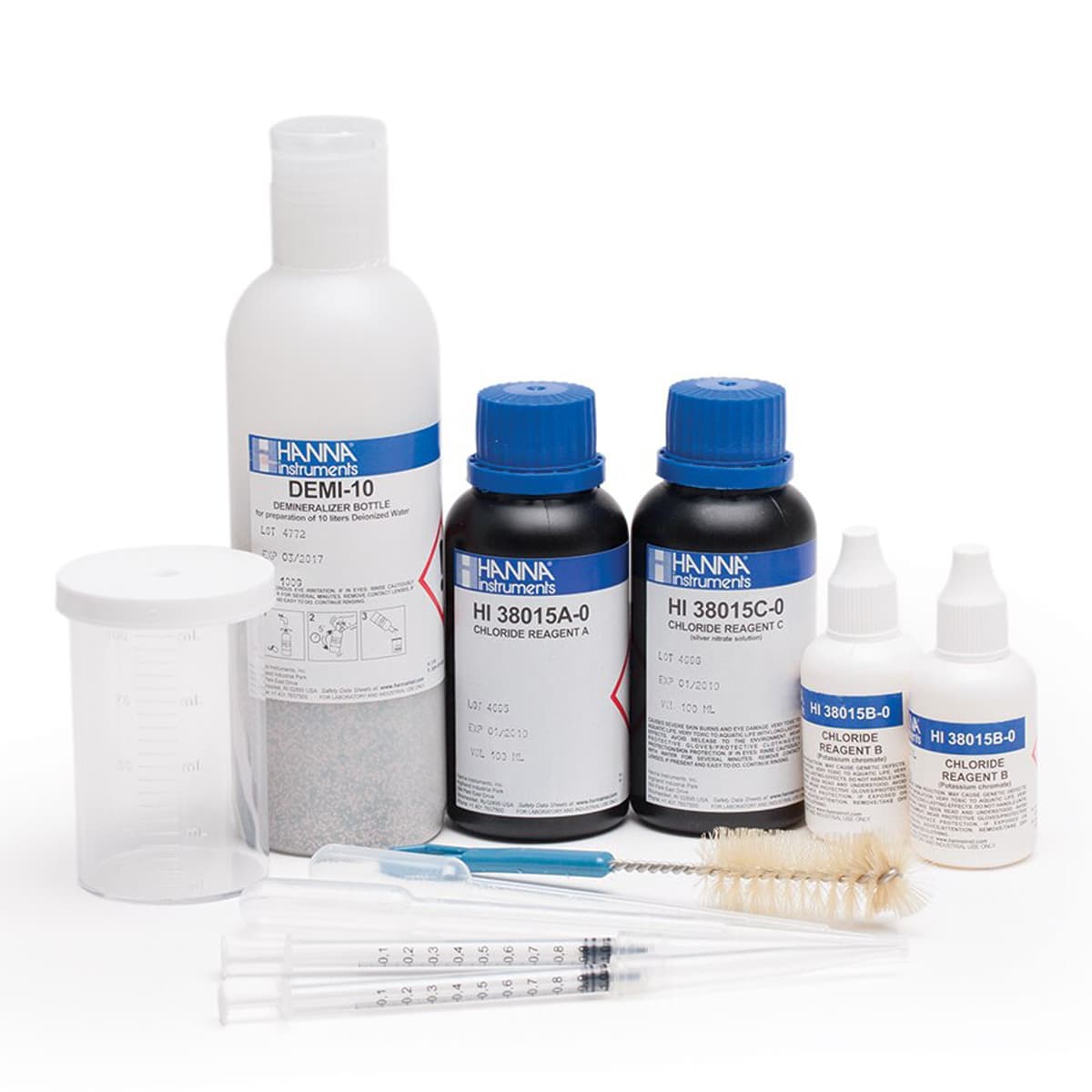
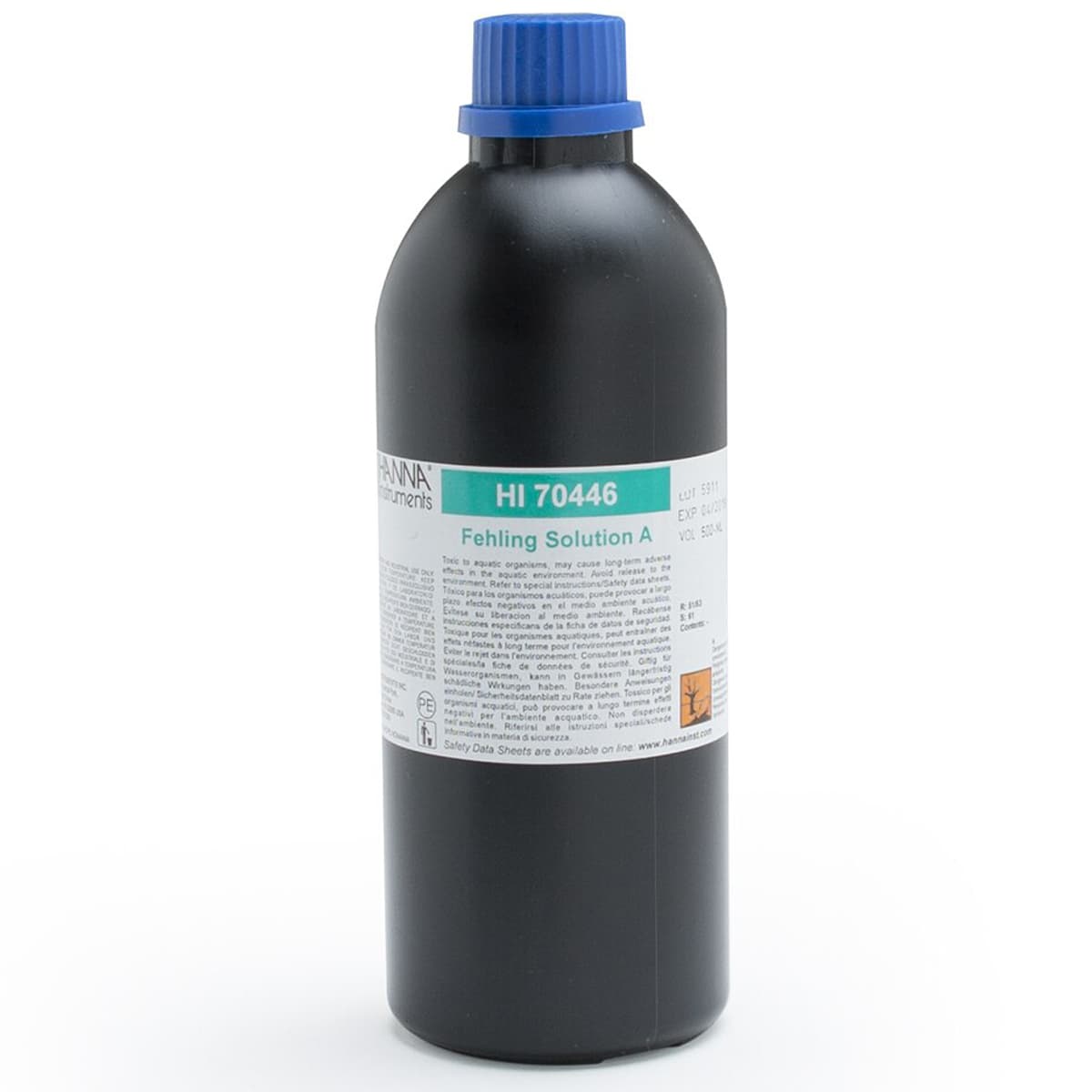
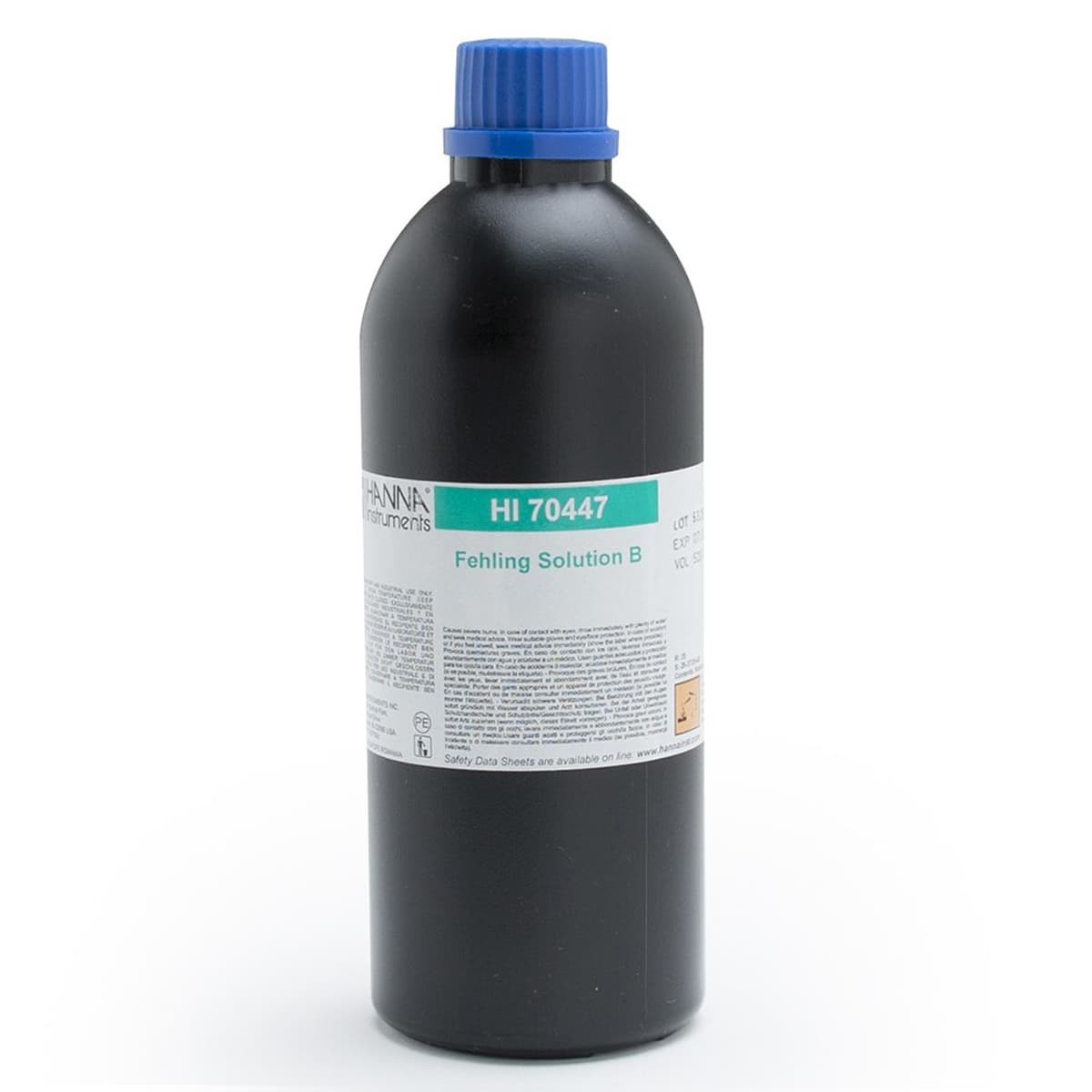
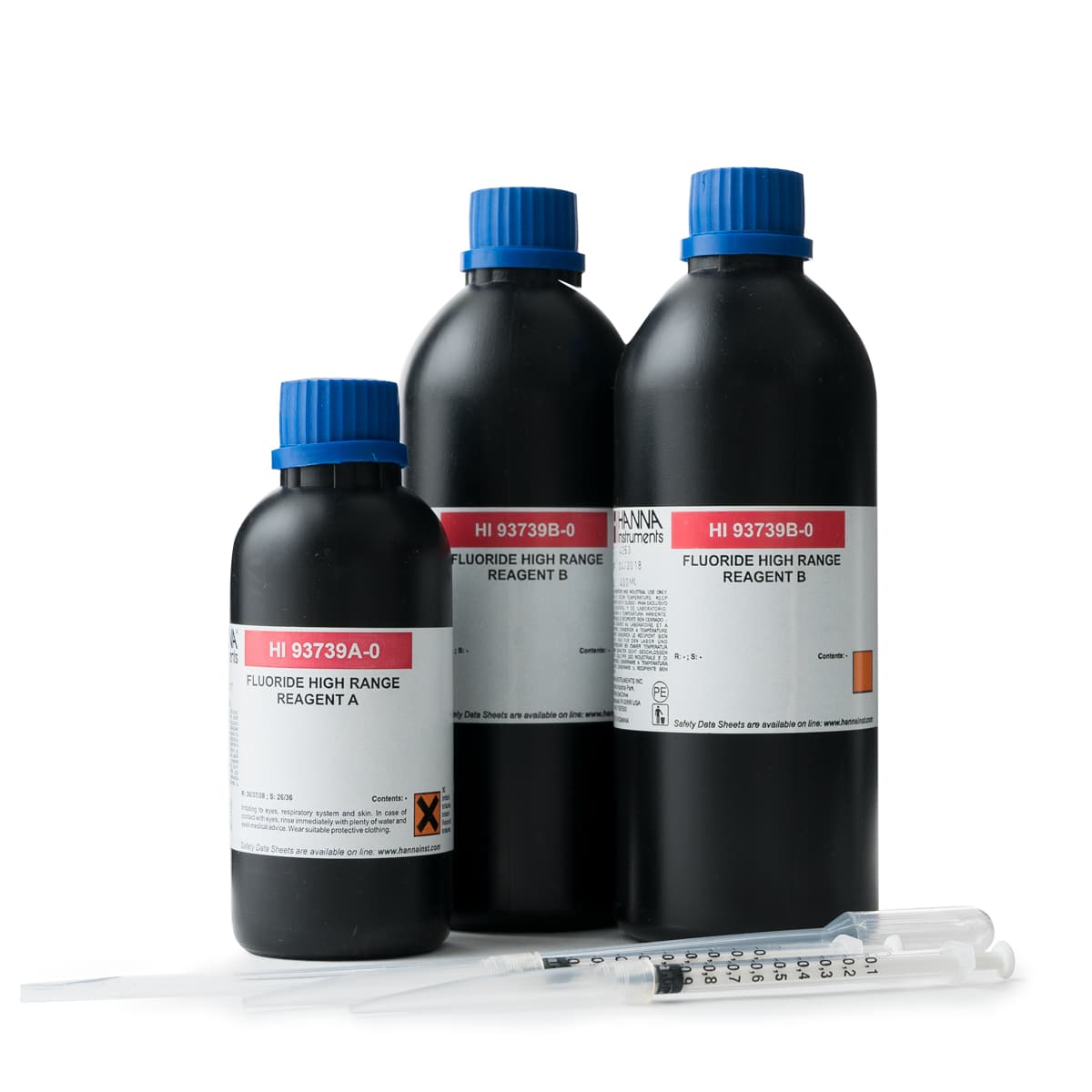
The HI83742-25 is a high quality reagent that is pre-measured, allowing for users to achieve fast and accurate colorimetric measurements. This reagent allow for a direct reading of the sample.
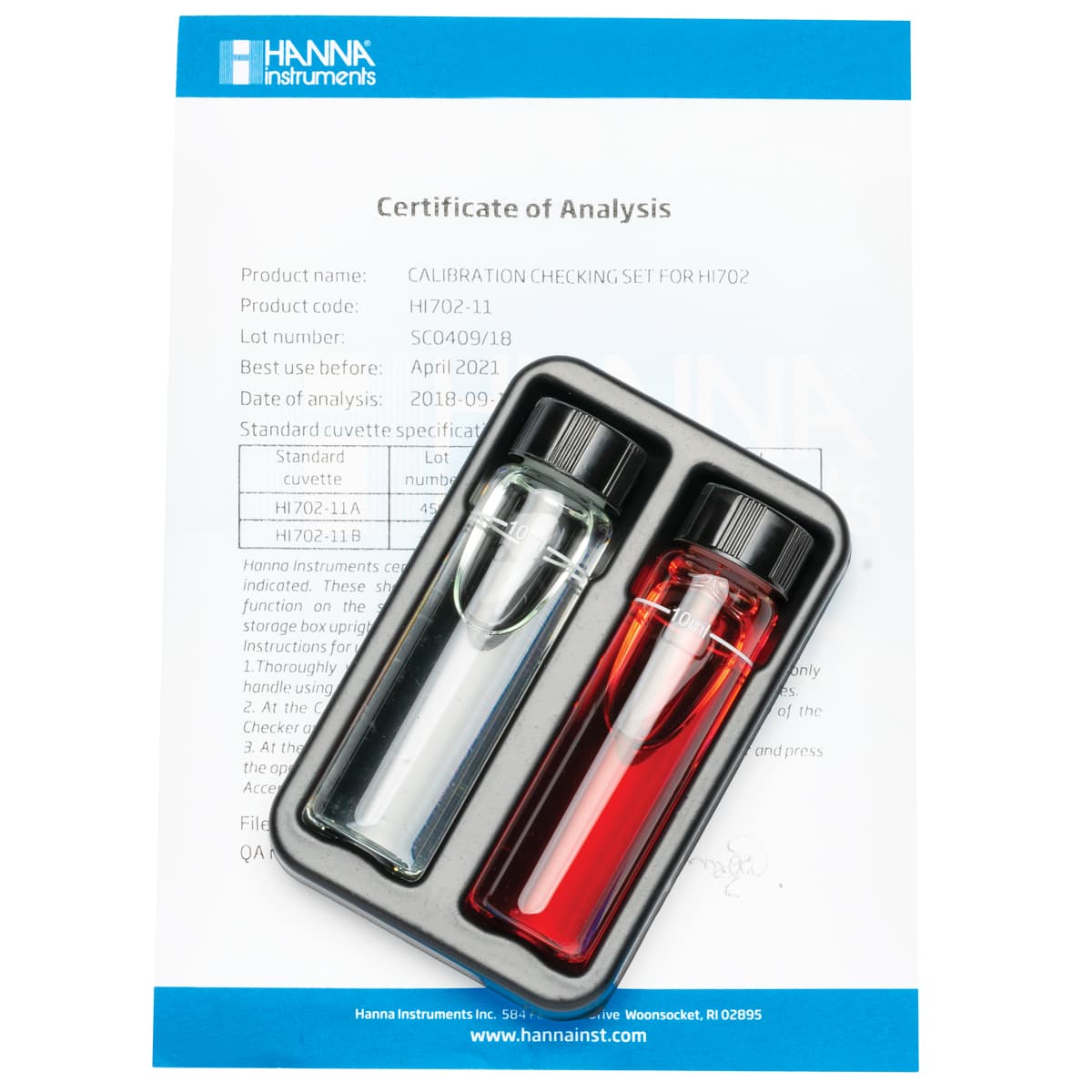
HI747-11 is a high-quality set of calibration standards that allows users to validate the Copper Low Range Checker®HC - HI747. The HI747-11 includes one sealed cuvette for zero ppb copper and one cuvette that is tinted to an equivalent 500 ± 100 ppb copper sample @ 25oC.
The HI747-25 are high quality reagents that are pre-measured, allowing for users to achieve fast and accurate measurements with their Copper Low Range Checker® HC. These reagents follow the Bicinchoninate Method in which the reaction between copper and the reagent causes a purple tint in the sample.
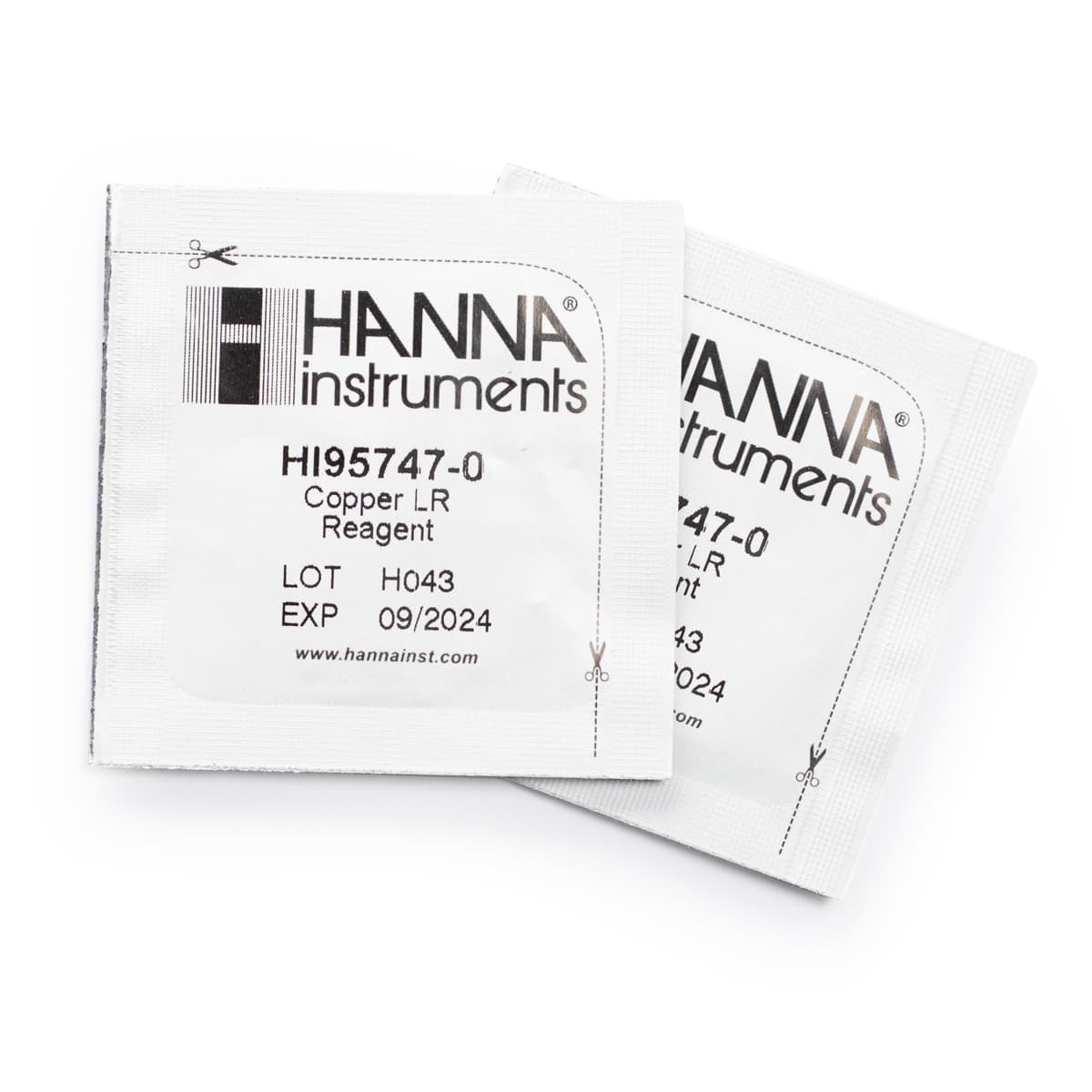
The HI95747-03 are high quality reagents that are pre-measured, allowing for users to achieve fast and accurate colorimetric measurements. The method is an adaptation of the USEPA approved bicinchoninate method. The reaction between copper and the reagent causes a color change in the sample.
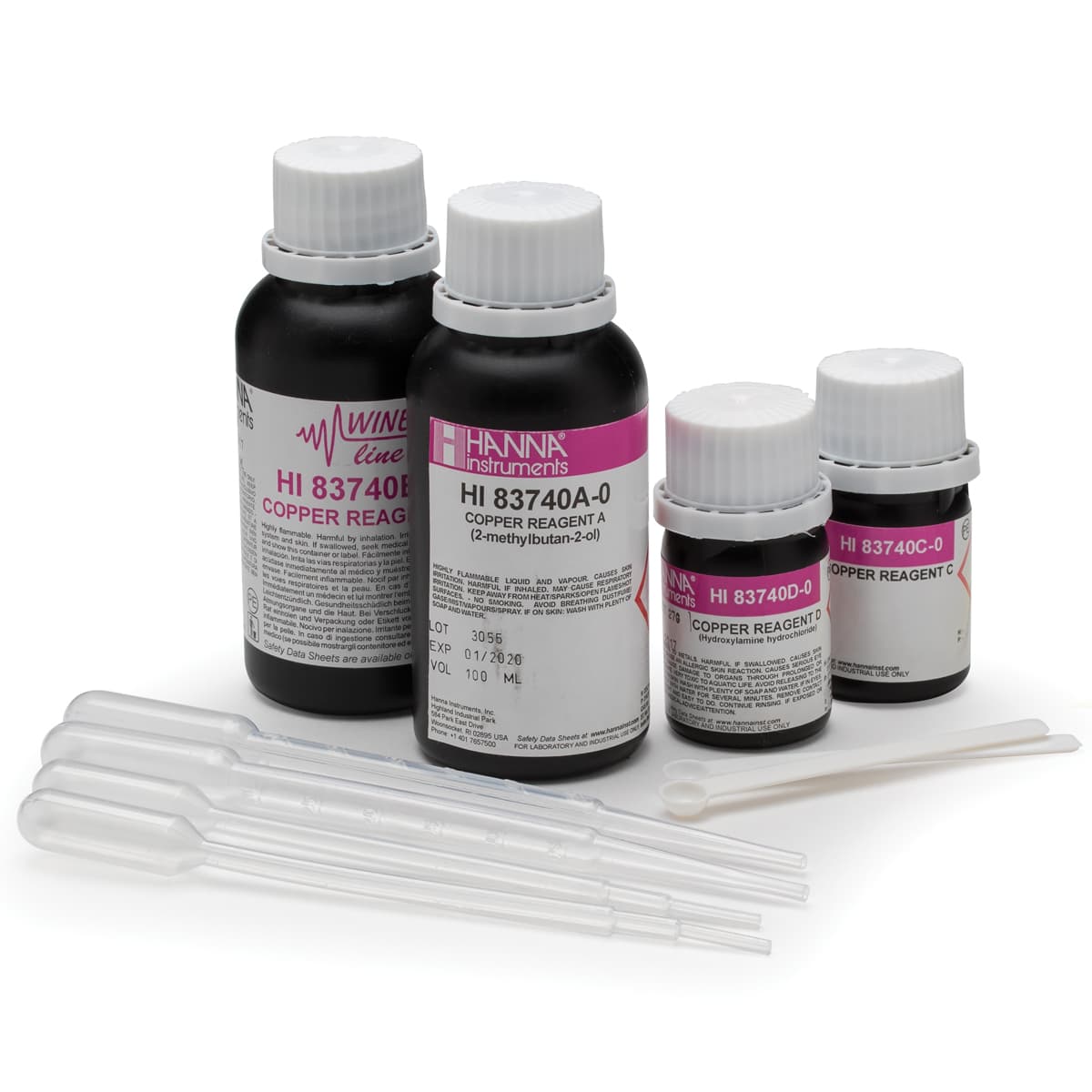
The HI83740-20 are high quality reagents that are pre-measured, allowing for users to achieve fast and accurate colorimetric measurements. These reagents follow a method in which the reaction between copper and reagents causes a purple tint in the sample.
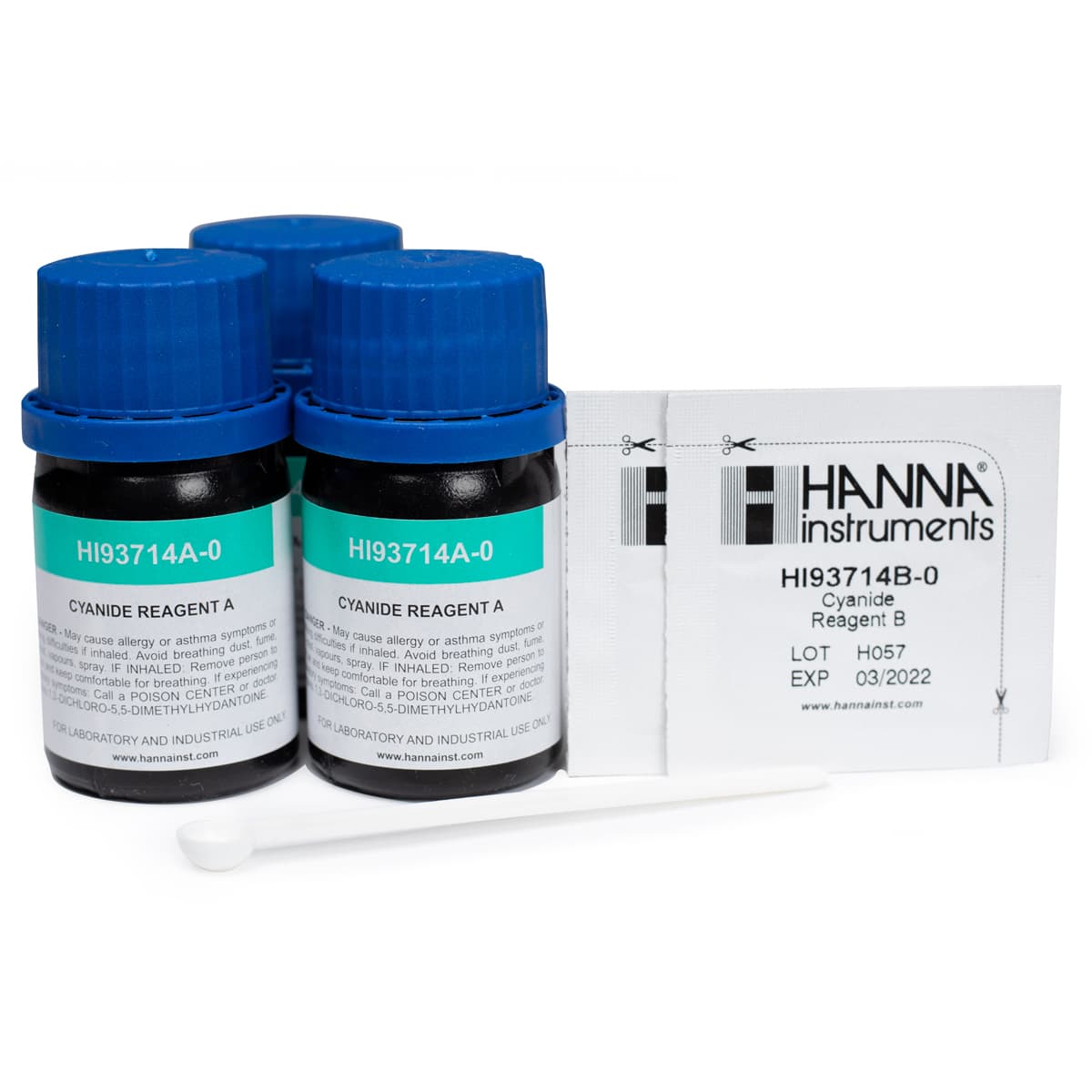
The HI93714-03 are high quality reagents that are pre-measured, allowing for users to achieve fast and accurate colorimetric measurements. These reagents are used in a method that is adapted from the Standard Methods for the Examination of Water and Wastewater, 18th edition, Pyridine-Pyrazalone method.
The HI93722-03 are high quality reagents that are pre-measured, allowing for users to achieve fast and accurate colorimetric measurements. These reagents follow an adaptation of the turbidimetric method. The reaction between cyanuric acid and reagent causes a white suspension in the sample.
HI7041L is designed to refill the electrolyte solution for polarographic dissolved oxygen probes. Polarographic sensor technology is based on the Ross and Clark polarographic measurement method. An oxygen probe is composed of a platinum electrode and a solid silver electrode.
The HI93732-03 are high quality reagents that are pre-measured, allowing for users to achieve fast and accurate colorimetric measurements. The method is an adaptation of the Standard Methods for Examination of Water and Wastewater, 18th edition, azide modified Winkler method.
The HI93711-D3 are high quality liquid reagents that allow for users to achieve fast and accurate colorimetric measurements. These reagents follow an adaptation of the USEPA method 330.5 and Standard Method 4500-Cl G.
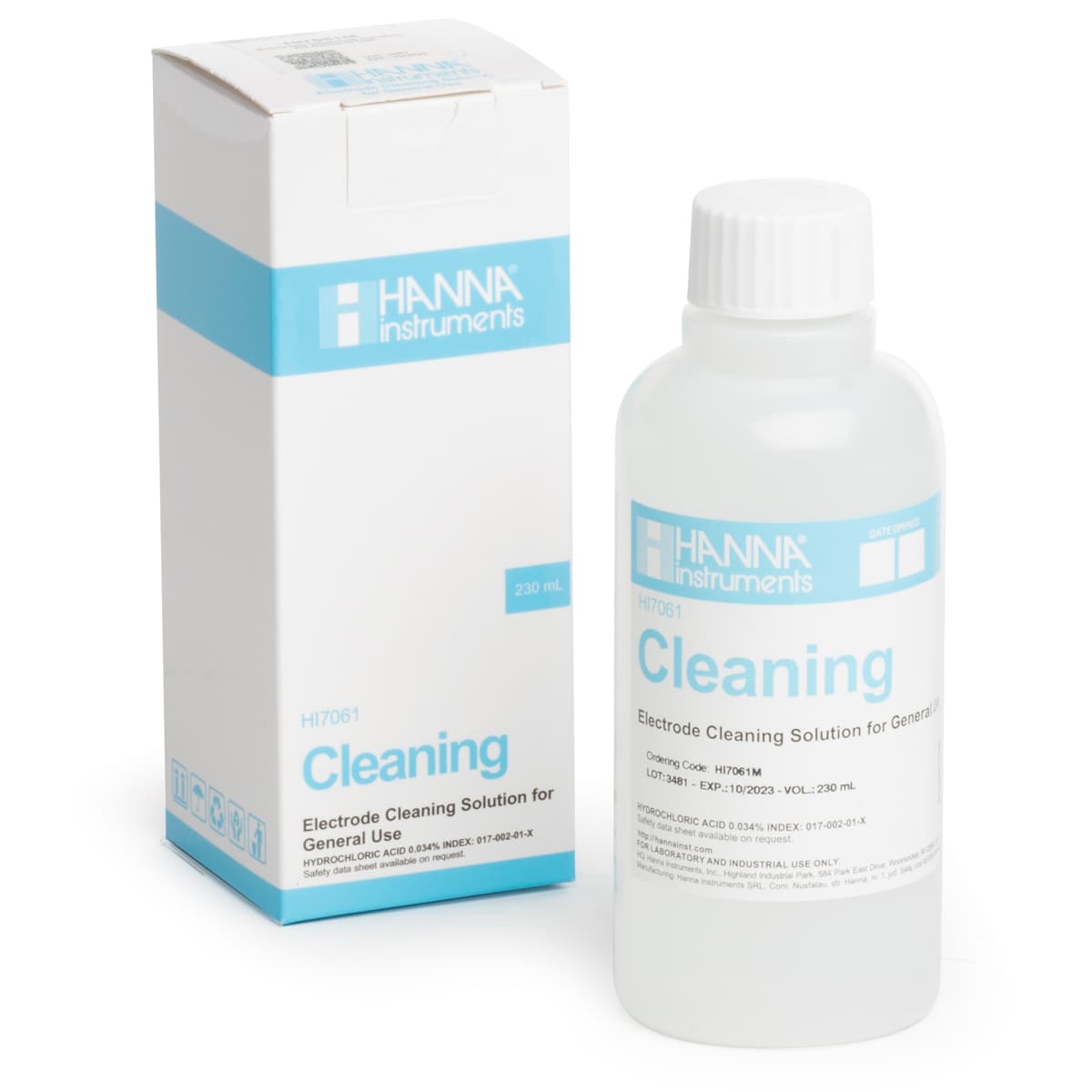
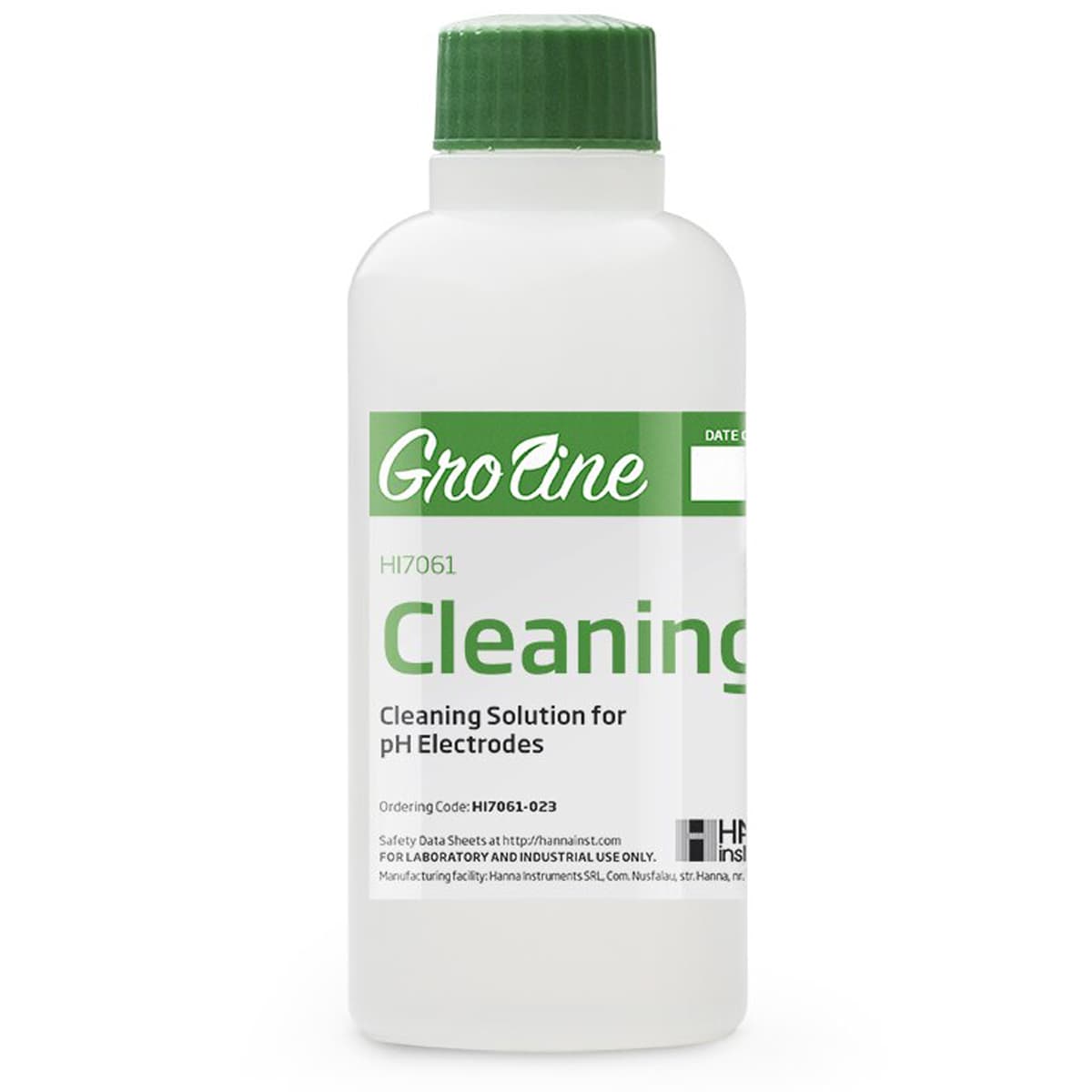
The most common cause for pH measurement inaccuracies is an unclean or improperly cleaned electrode. This is very important to note, because during calibration, the instrument assumes that the electrode is clean and that the standardization curve created during the calibration process will remain a valid reference…
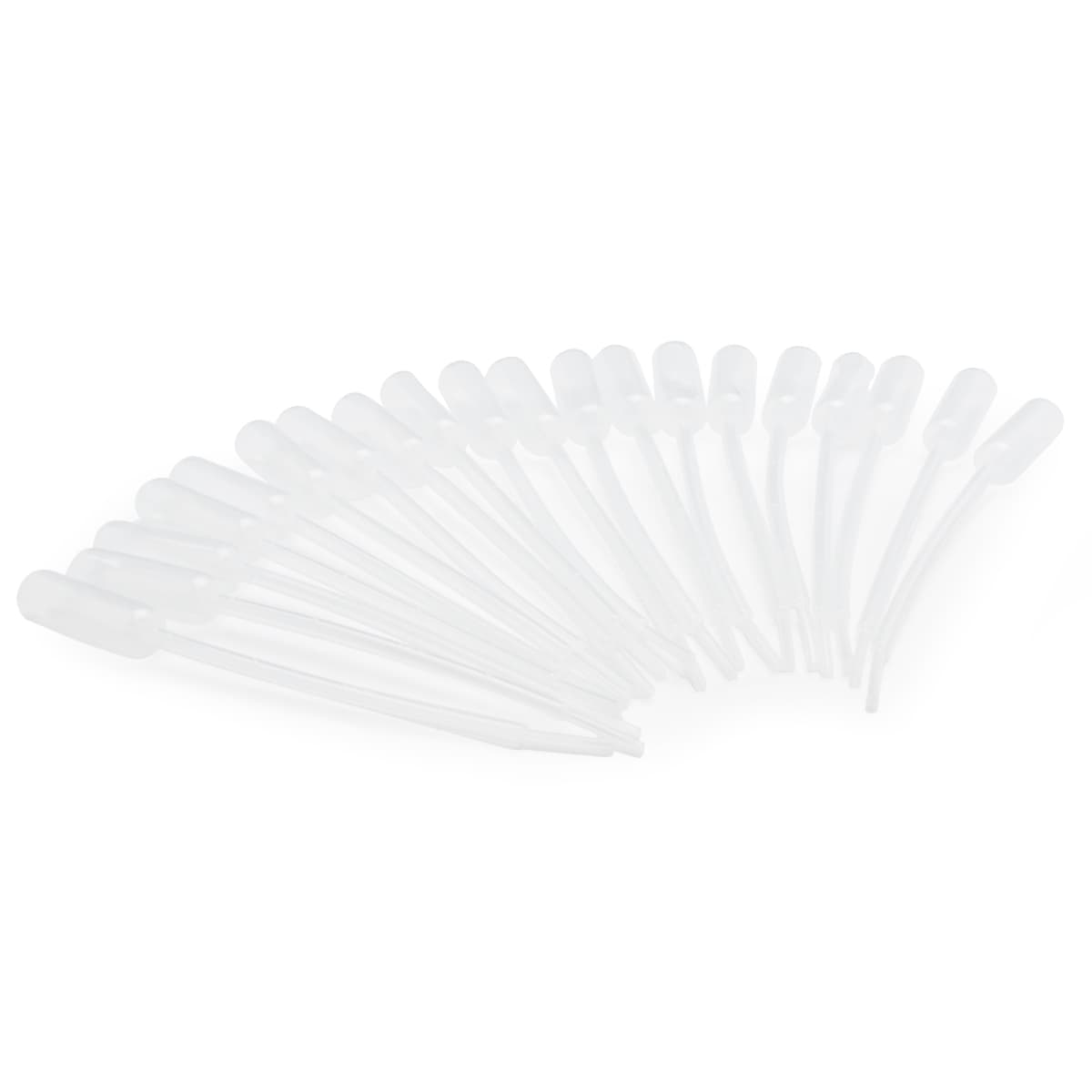
The HI740157P electrode refilling pipettes allow for safe, convenient, and precise transfer of electrolyte fill solution into refillable Hanna electrodes.
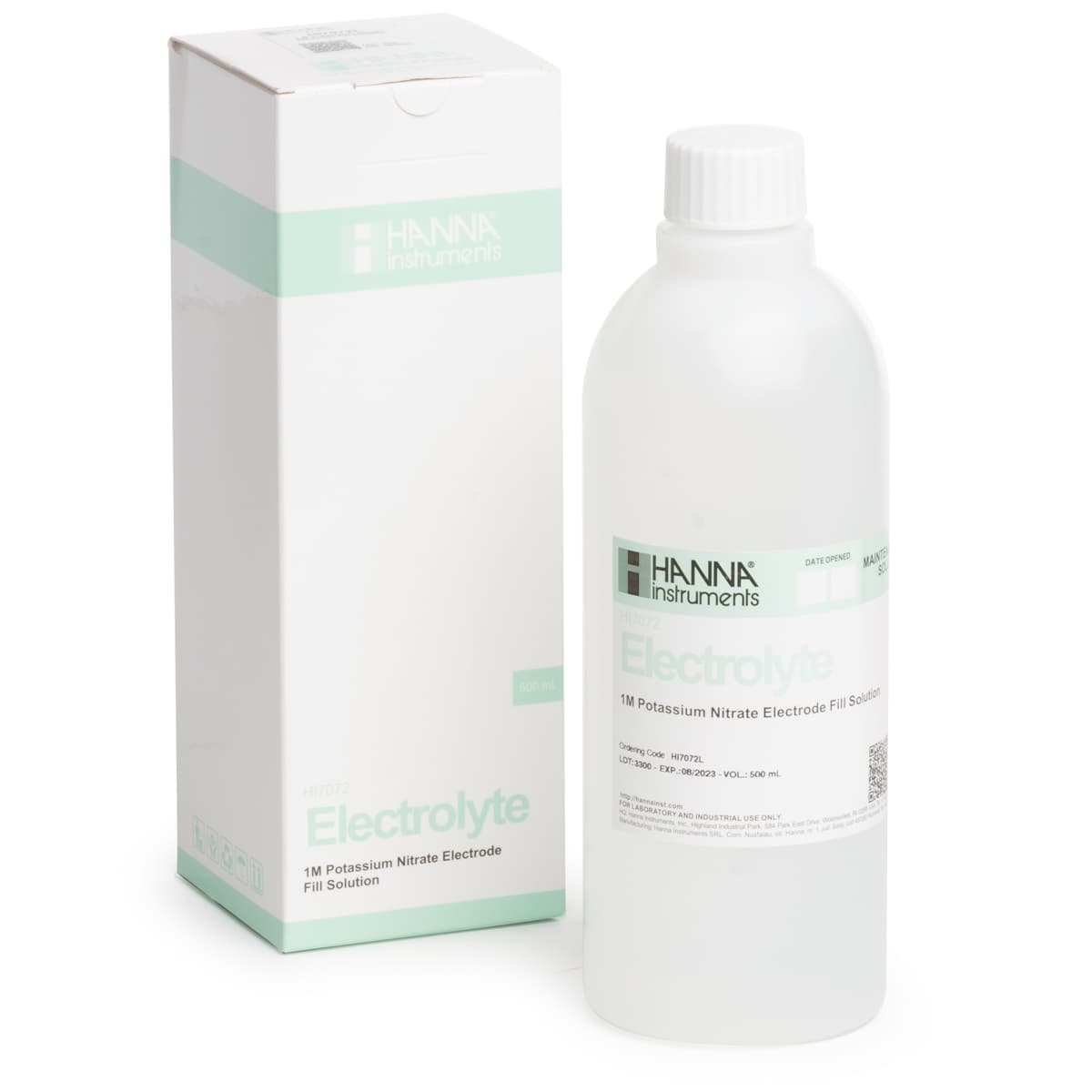
The HI7072L 1M KNO3 (potassium nitrate) electrode fill solution is chloride free. It is mainly used as a reference fill solution for Bromide, Cadmium, Chloride, Cupric, Cyanide, Iodide, Lead/Sulfate, and Silver/Sulfide electrodes.
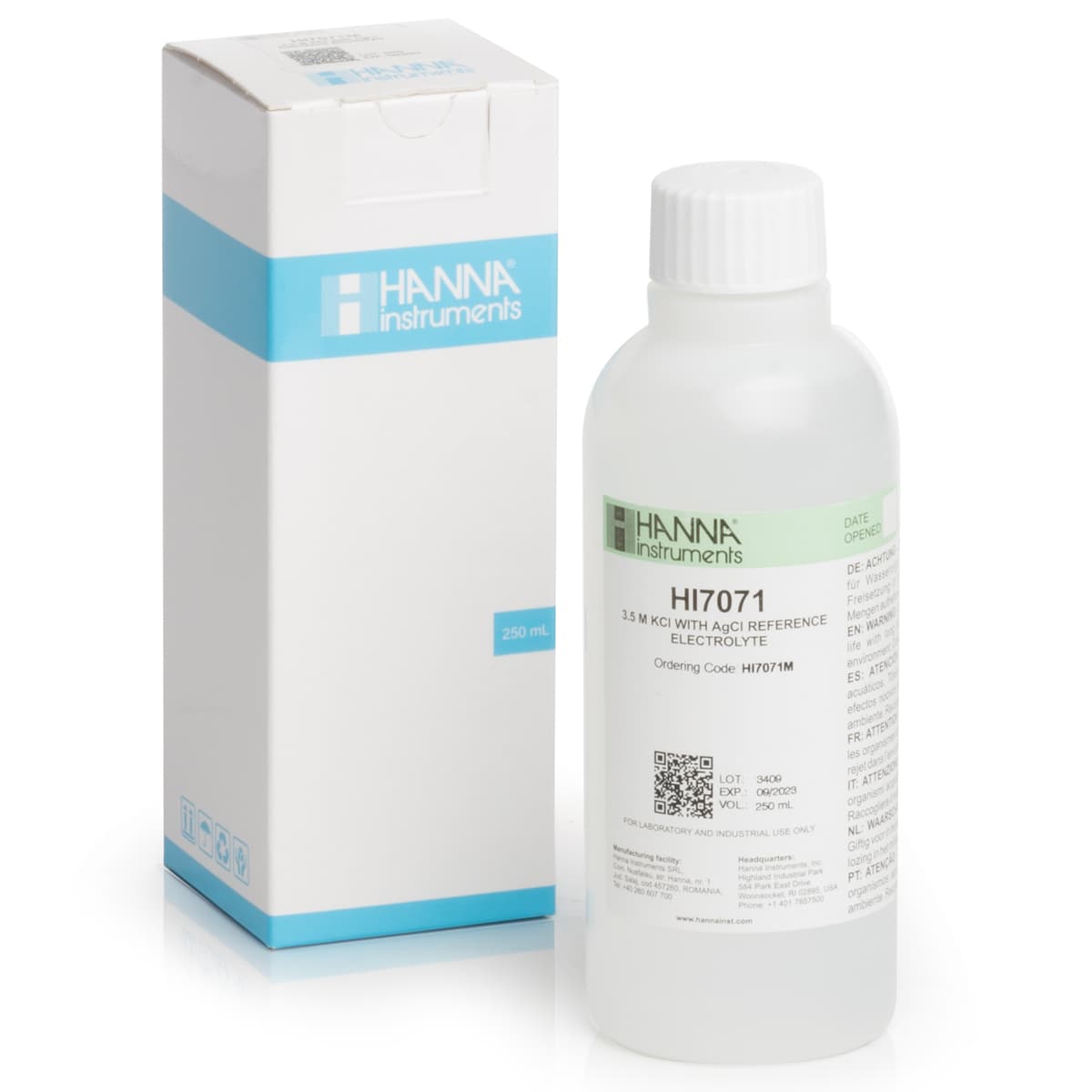
pH and ORP electrodes are available with a single junction or double junction reference cell. The single junction reference electrode is made with a silver (Ag) wire coated with silver chloride (AgCl). This wire is in contact with the sample to be measured by a fill solution that leaks through a junction.
The electrolyte level in refillable electrodes should be checked before performing any measurement. If the level is low, refill with the proper electrolyte solution to ensure the correct electrode performance.
The HI93739-03 are high quality reagents that are pre-measured, allowing for users to achieve fast and accurate colorimetric measurements. The method is an adaptation of EPA method 340.1 and the SPADNS method. The reaction between fluoride and the reagent causes a color change in the sample.
The HI93729-03 are high quality reagents that are pre-measured, allowing for users to achieve fast and accurate colorimetric measurements. The method is an adaptation of the EPA method 340.1 and SPADNS method. The reaction between fluoride and the reagent causes a color change in the sample.
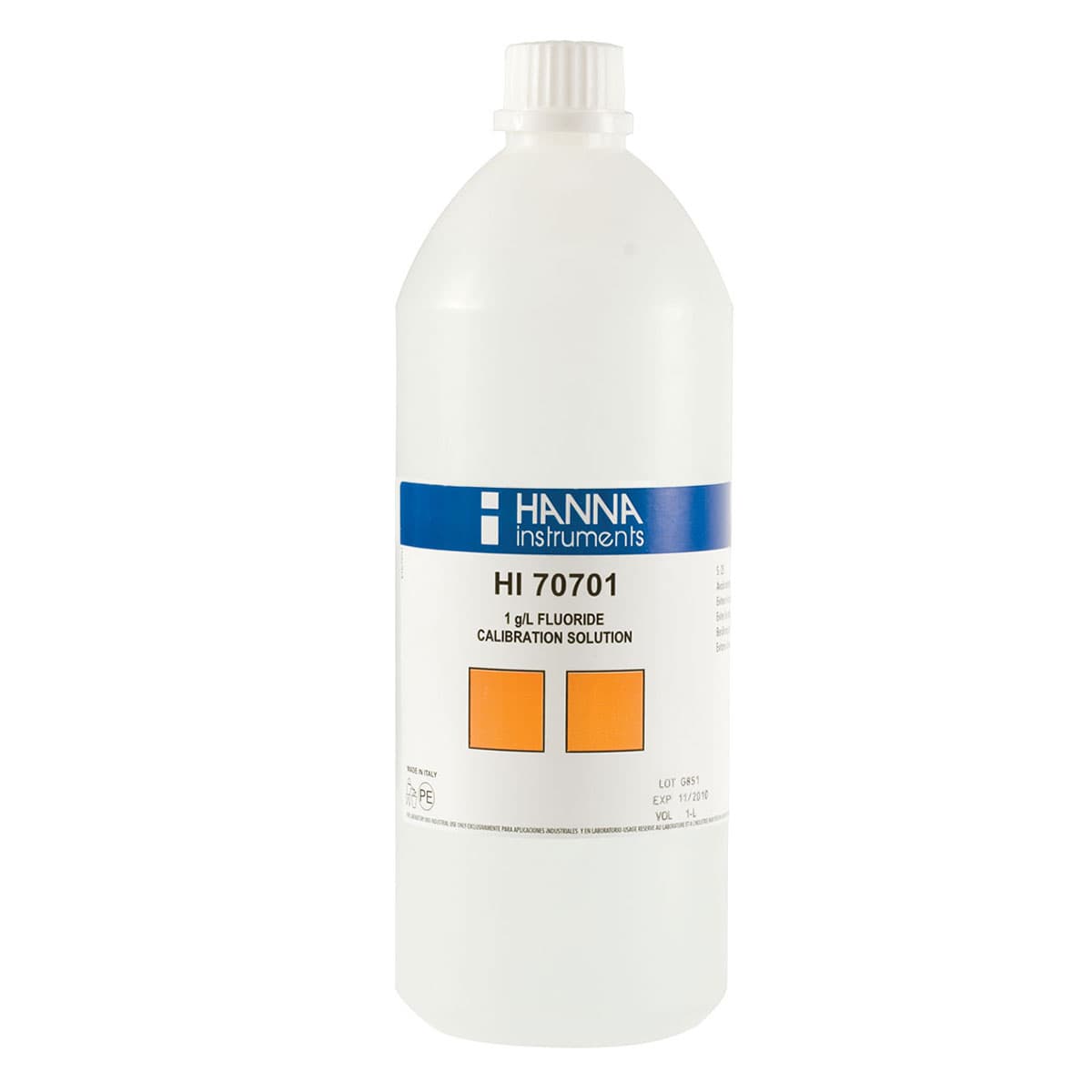
HI70701M is a 1 g/L standard solution of fluoride used to calibrate the fluoride solid state ion selective electrode (ISE). Hanna ISE standard solutions are manufactured with high purity chemicals and bottled in our own state-of-the-art facility.
HI70701/1L is a 1 g/L standard solution of fluoride used to calibrate the fluoride solid state ion selective electrode (ISE). Hanna ISE standard solutions are manufactured with high purity chemicals and bottled in our own state-of-the-art facility.
HI70702/1L is a 10 mg/L standard solution of fluoride used to calibrate the fluoride solid state ion selective electrode (ISE). Hanna ISE standard solutions are manufactured with high purity chemicals and bottled in our own state-of-the-art facility.
HI70702M is a 10 mg/L standard solution of fluoride used to calibrate the fluoride solid state ion selective electrode (ISE). Hanna ISE standard solutions are manufactured with high purity chemicals and bottled in our own state-of-the-art facility.
HI70702L is a 10 mg/L standard solution of fluoride used to calibrate the fluoride solid state ion selective electrode (ISE). Hanna ISE standard solutions are manufactured with high purity chemicals and bottled in our own state-of-the-art facility.
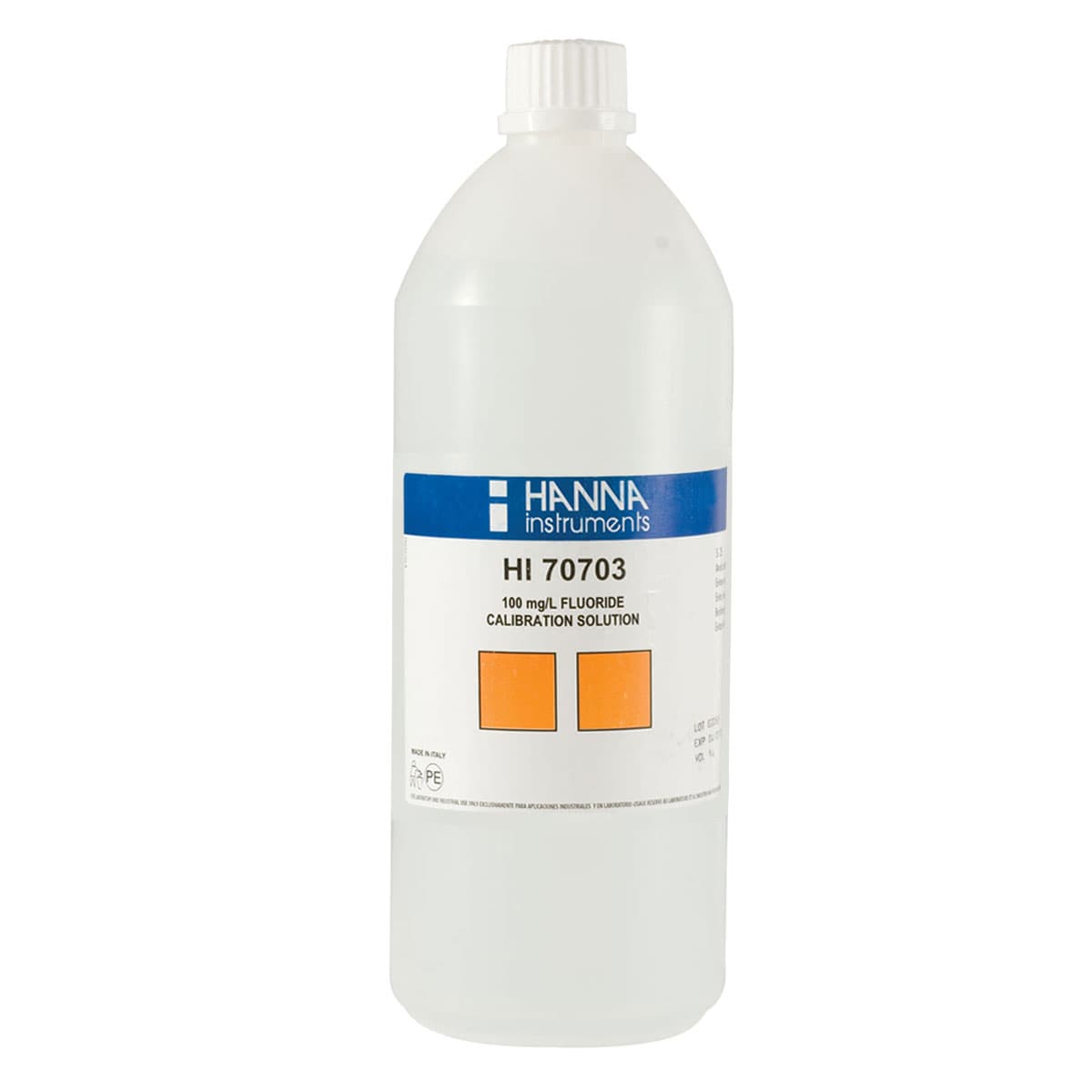
HI70703/1L is a 100 mg/L standard solution of fluoride used to calibrate the fluoride solid state ion selective electrode (ISE). Hanna ISE standard solutions are manufactured with high purity chemicals and bottled in our own state-of-the-art facility.
HI70703M is a 100 mg/L standard solution of fluoride used to calibrate the fluoride solid state ion selective electrode (ISE). Hanna ISE standard solutions are manufactured with high purity chemicals and bottled in our own state-of-the-art facility.
HI70703L is a 100 mg/L standard solution of fluoride used to calibrate the fluoride solid state ion selective electrode (ISE). Hanna ISE standard solutions are manufactured with high purity chemicals and bottled in our own state-of-the-art facility.
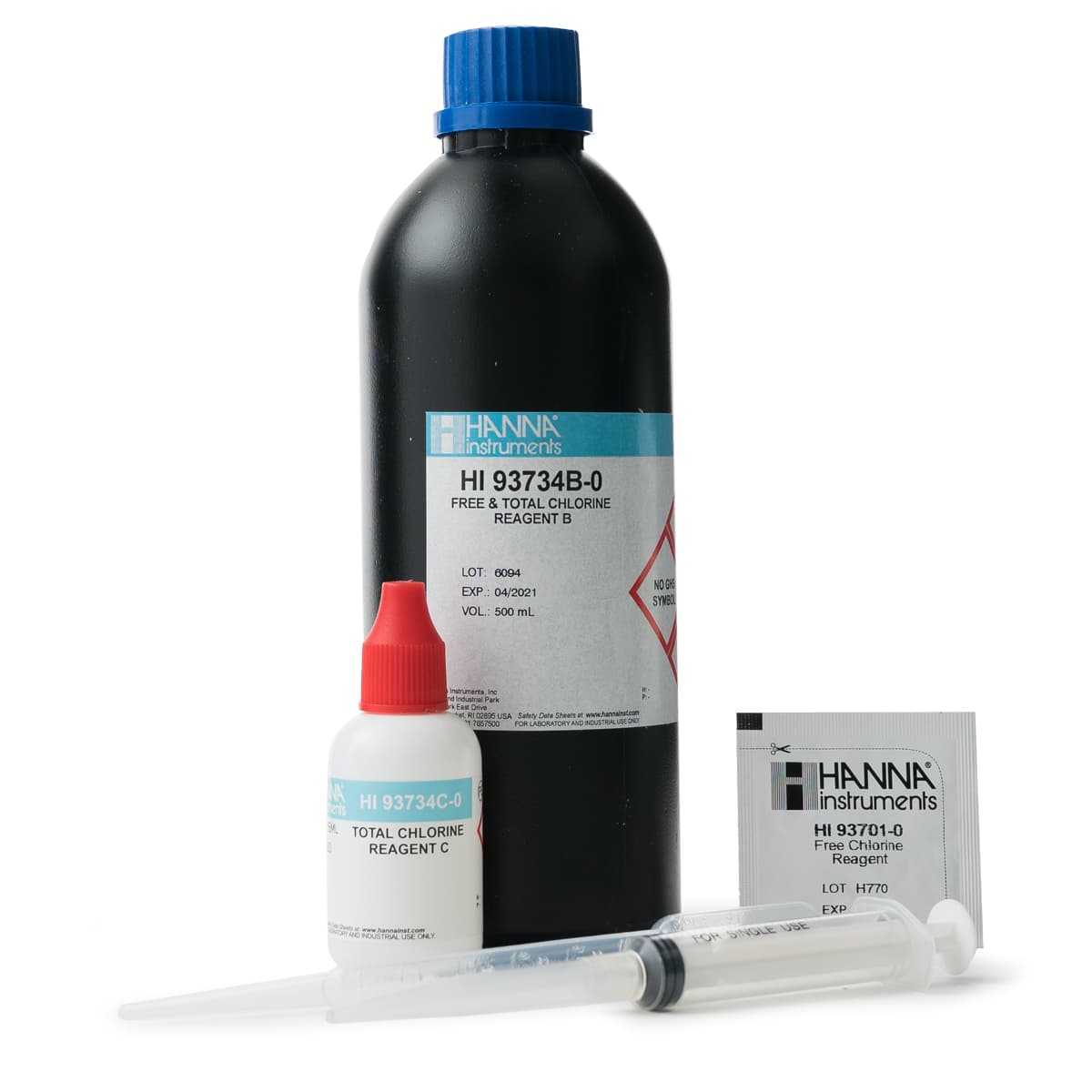
The HI93734-03 are high quality reagents that are pre-measured, allowing for users to achieve fast and accurate colorimetric measurements. These reagents follow an adaptation of the USEPA method 330.5 and Standard Method 4500-Cl G. The reaction between chlorine and the reagents causes a pink tint in the sample.
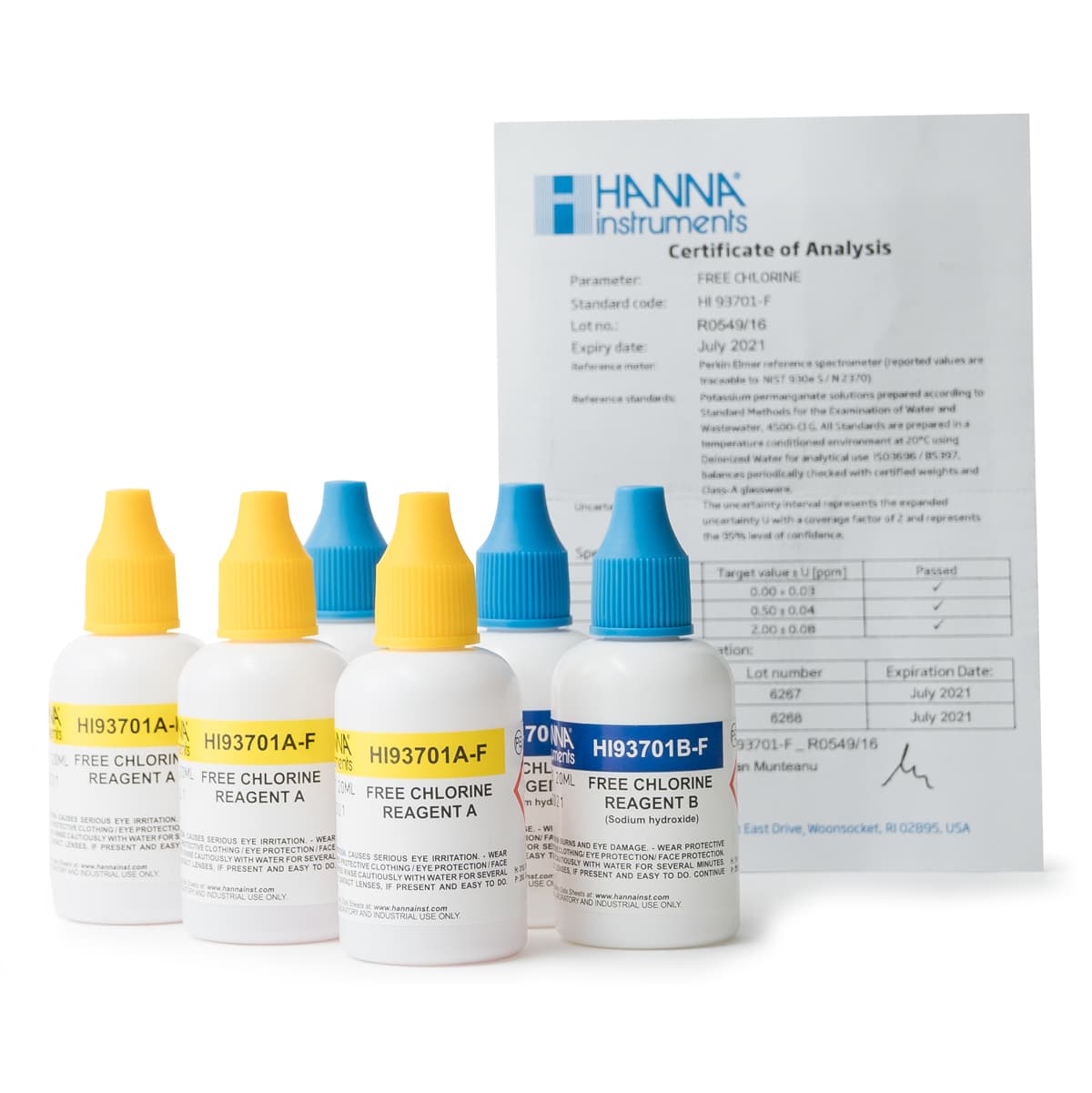
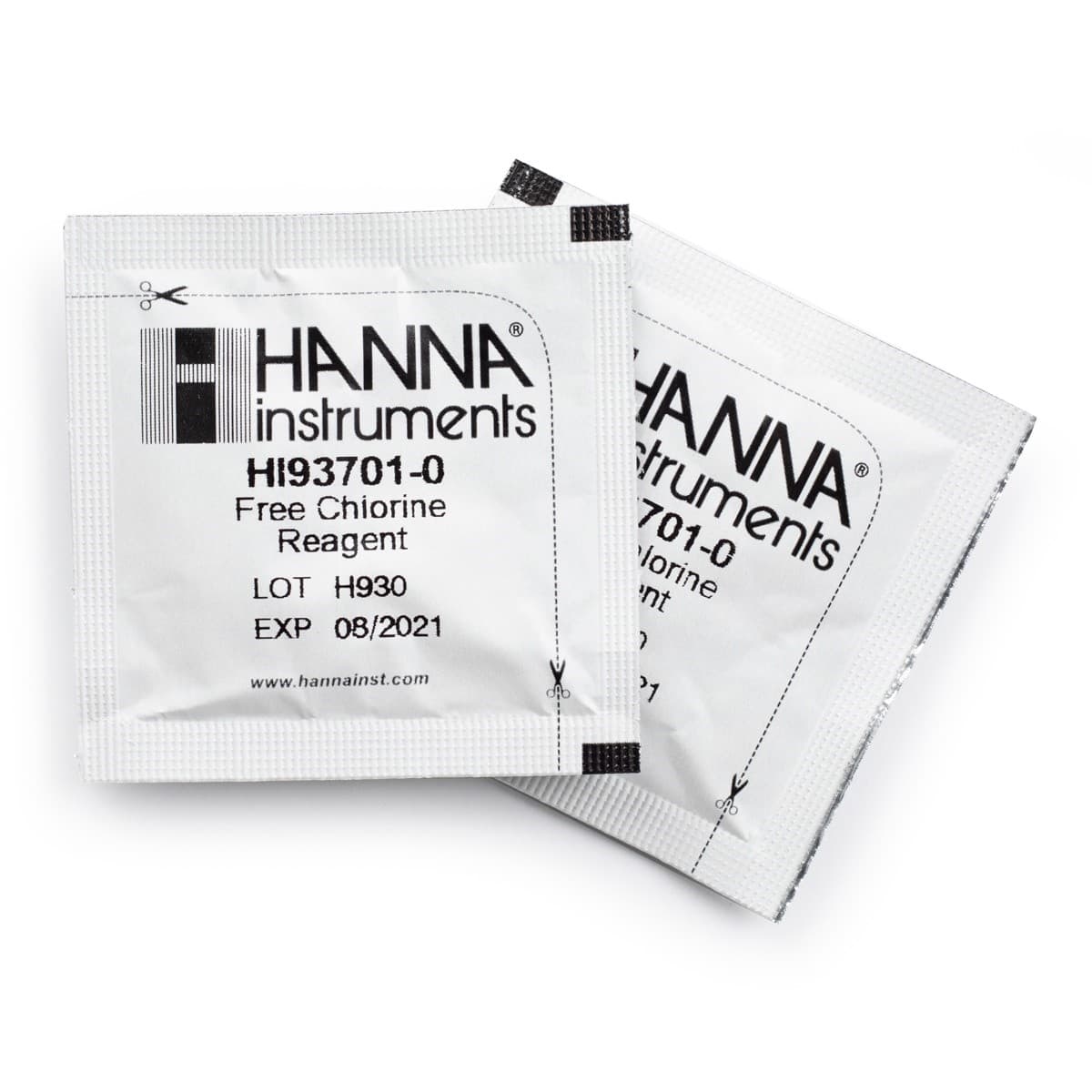
The HI93701-03 are high quality reagents that are pre-measured, allowing for users to achieve fast and accurate colorimetric measurements. These reagents follow the DPD Method in which the reaction between chlorine and reagent causes a pink tint in the sample.
The HI762-25 are high-quality reagents that are pre-measured, allowing for users to achieve fast and accurate measurements with their Free Chlorine Ultra Low Range Checker® HC. These reagents follow the DPD Method in which the reaction between chlorine and reagent causes a pink tint in the sample.
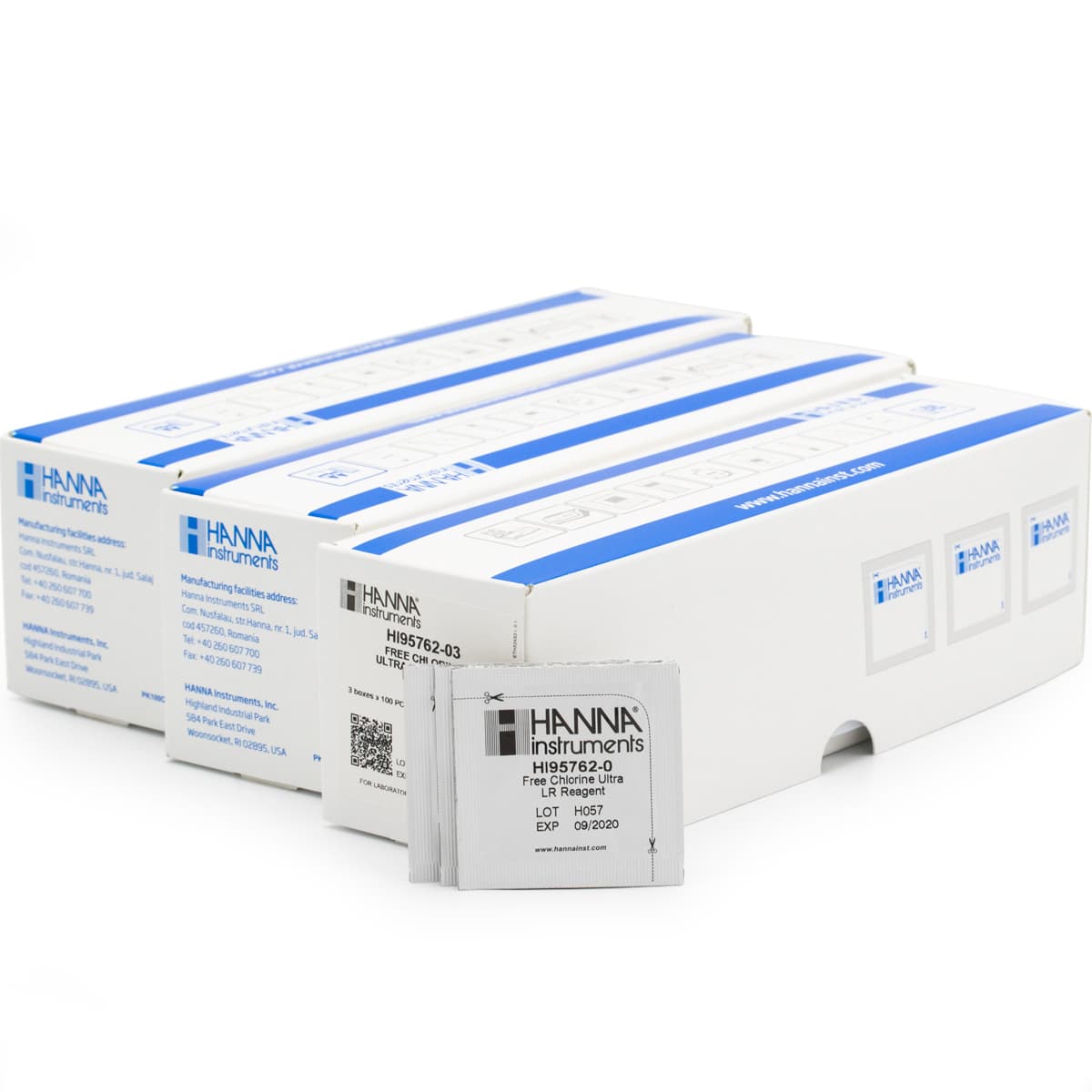
The HI95762-03 are high quality reagents that are pre-measured, allowing for users to achieve fast and accurate colorimetric measurements. These reagents follow an adaptation of the Standard Method 4500-Cl G, in which the reaction between free chlorine and the DPD reagent causes a pink tint in the sample.
The most common cause for pH measurement inaccuracies is an unclean or improperly cleaned electrode. This is very important to note, because during calibration, the instrument assumes that the electrode is clean and that the standardization curve created during the calibration process will remain a valid reference…
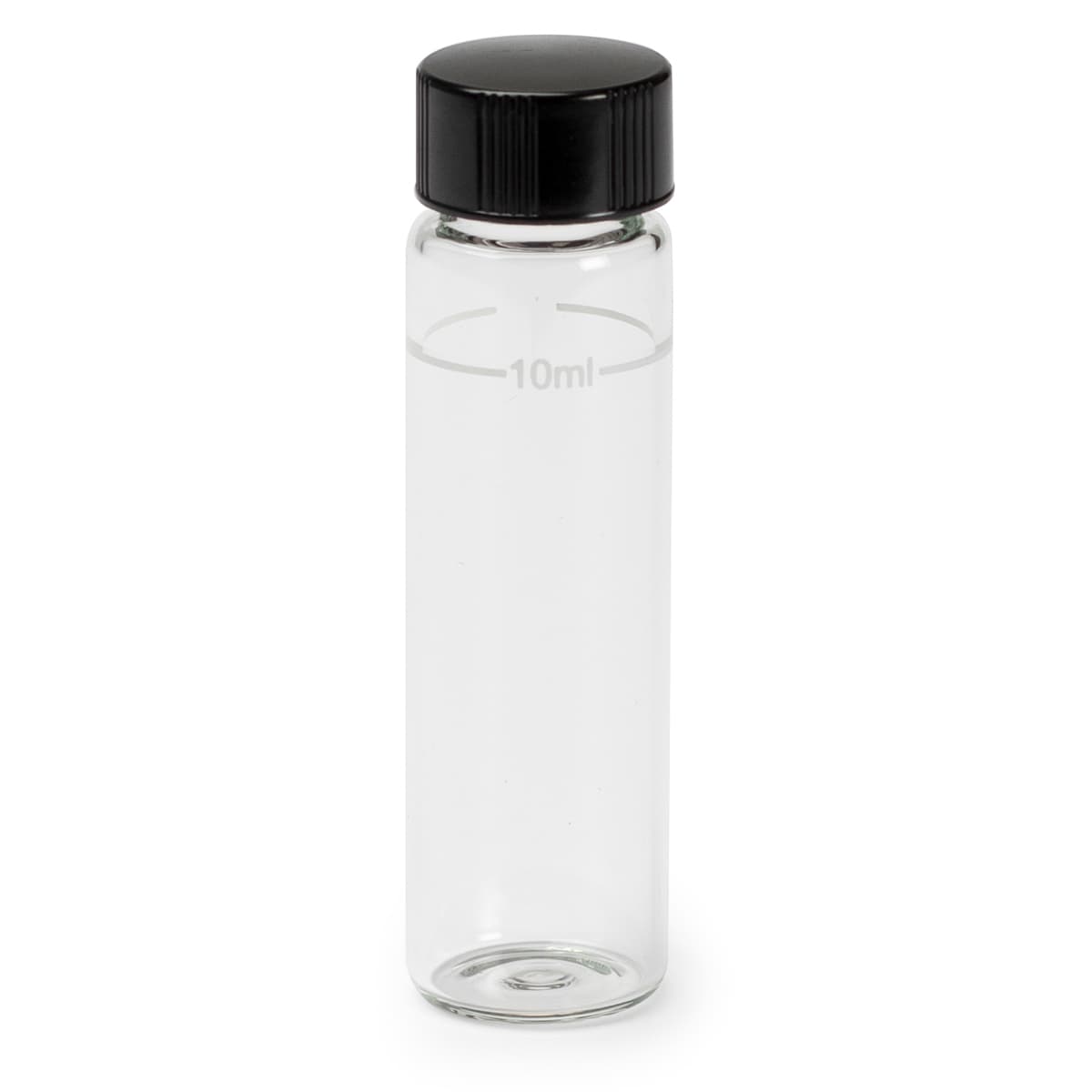
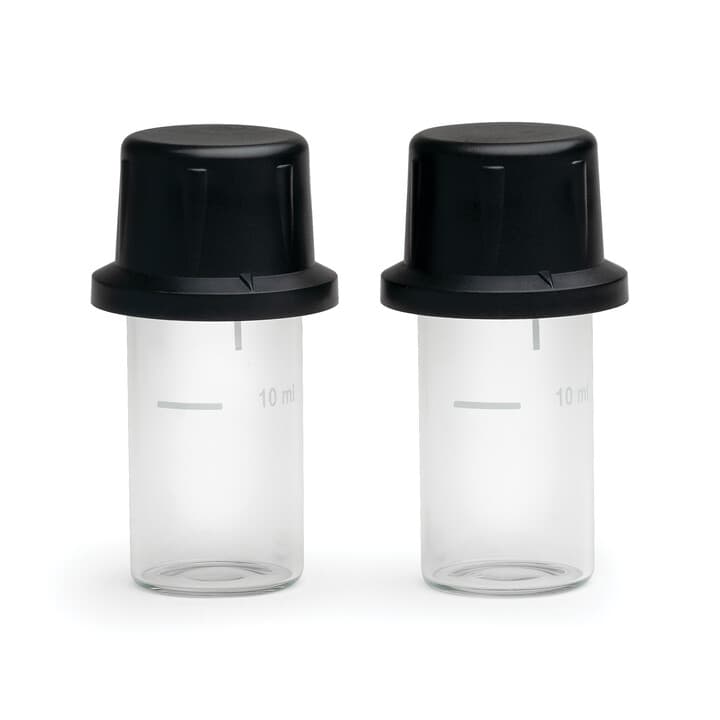
When using a colorimeter or photometer it is important to use clean cuvettes that are free from scratches. Any discoloration or scratches will interfere with any optically based measurement. The HI731315 are the replacement glass cuvettes that are supplied with the Checker® HC colorimeters.
The most common cause for pH measurement inaccuracies is an unclean or improperly cleaned electrode. This is very important to note, because during calibration, the instrument assumes that the electrode is clean and that the standardization curve created during the calibration process will remain a valid reference…
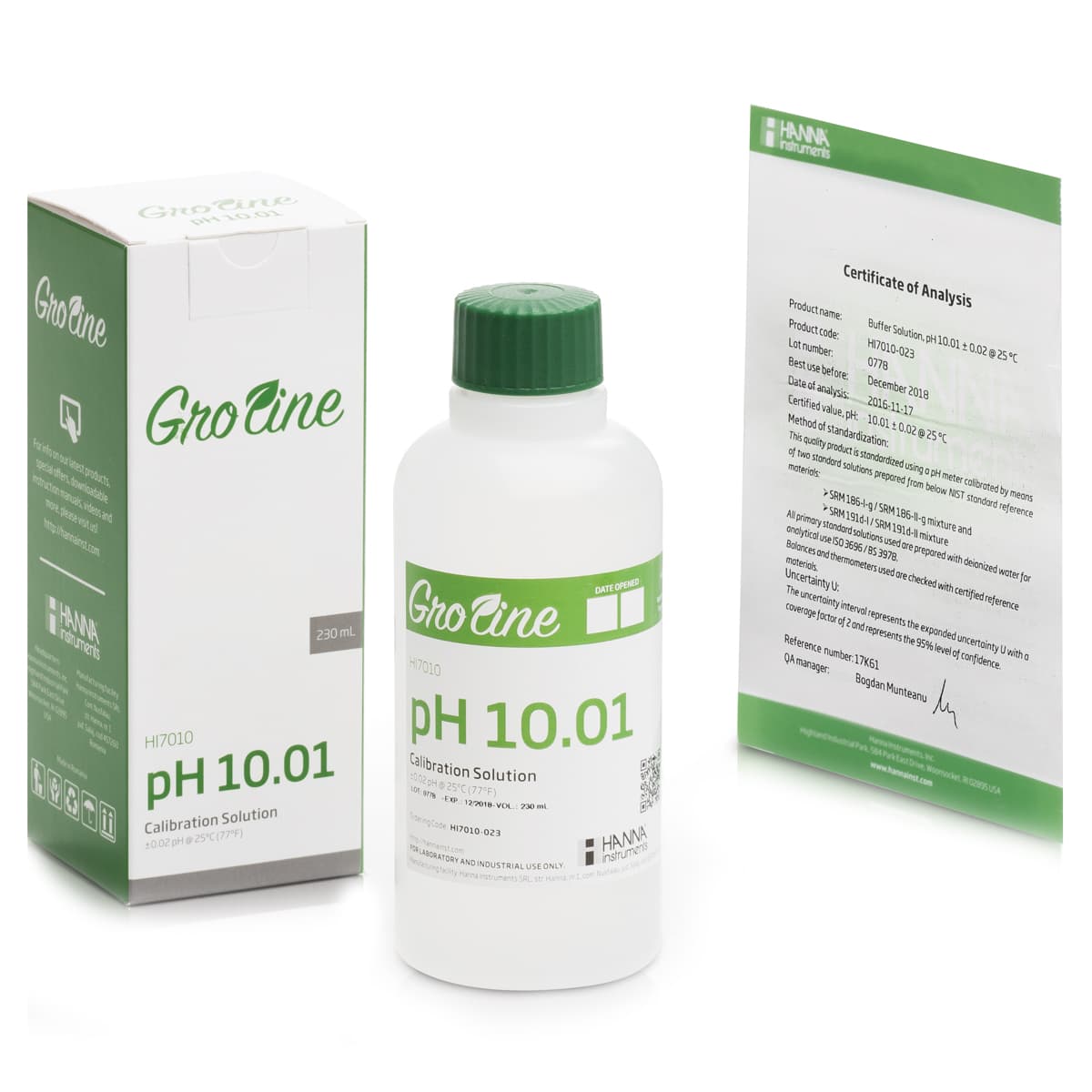
HI7010-023 is a high quality pH 10.01 calibration buffer produced in accordance with ISO 3696/BS3978 standards using high purity salts, deionized water, certified weight-checked balances, and Class A glassware in a temperature controlled environment monitored with certified thermometers.
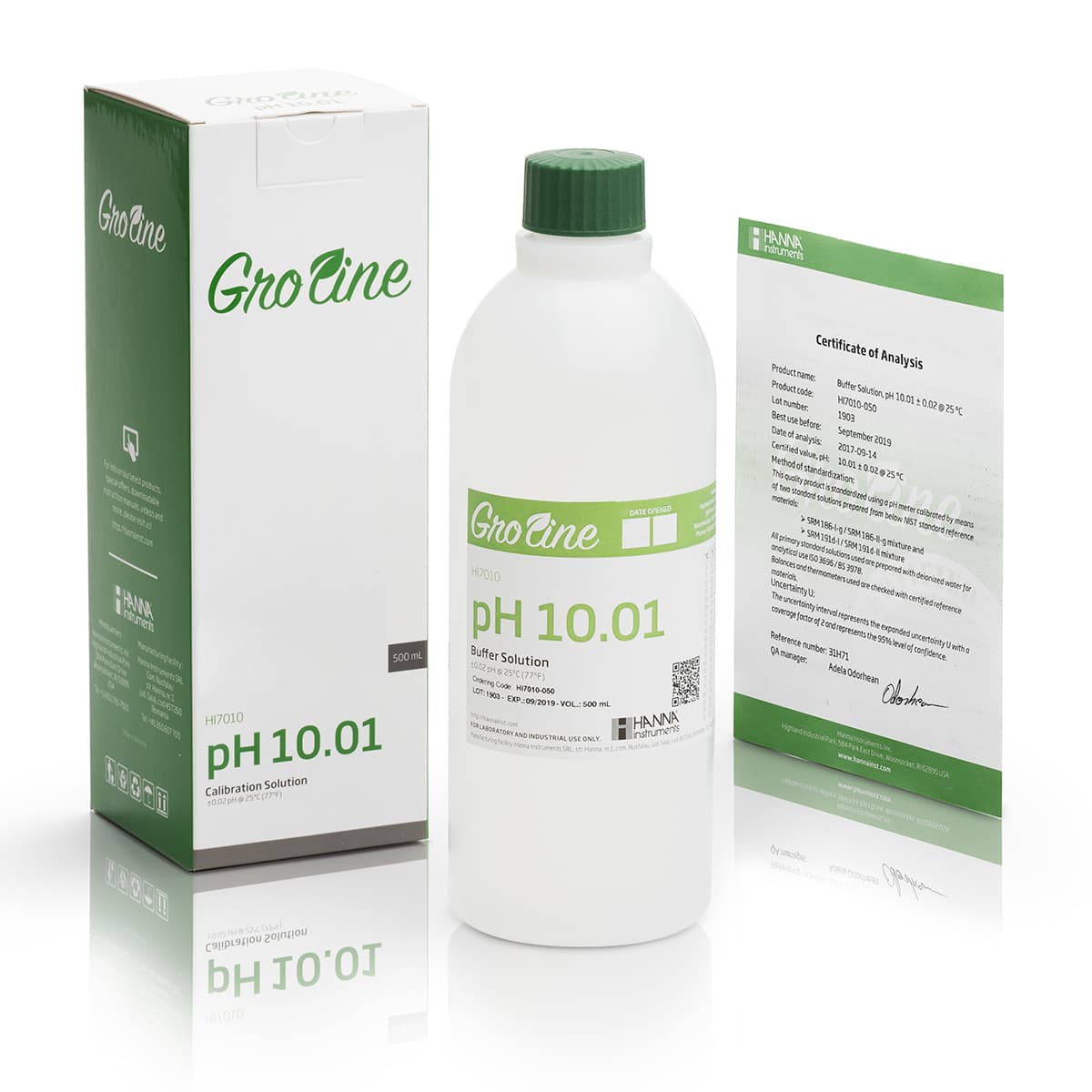
HI7010-050 is a high quality pH 10.01 calibration buffer produced in accordance with ISO 3696/BS3978 standards using high purity salts, deionized water, certified weight-checked balances, and Class A glassware in a temperature controlled environment monitored with certified thermometers.
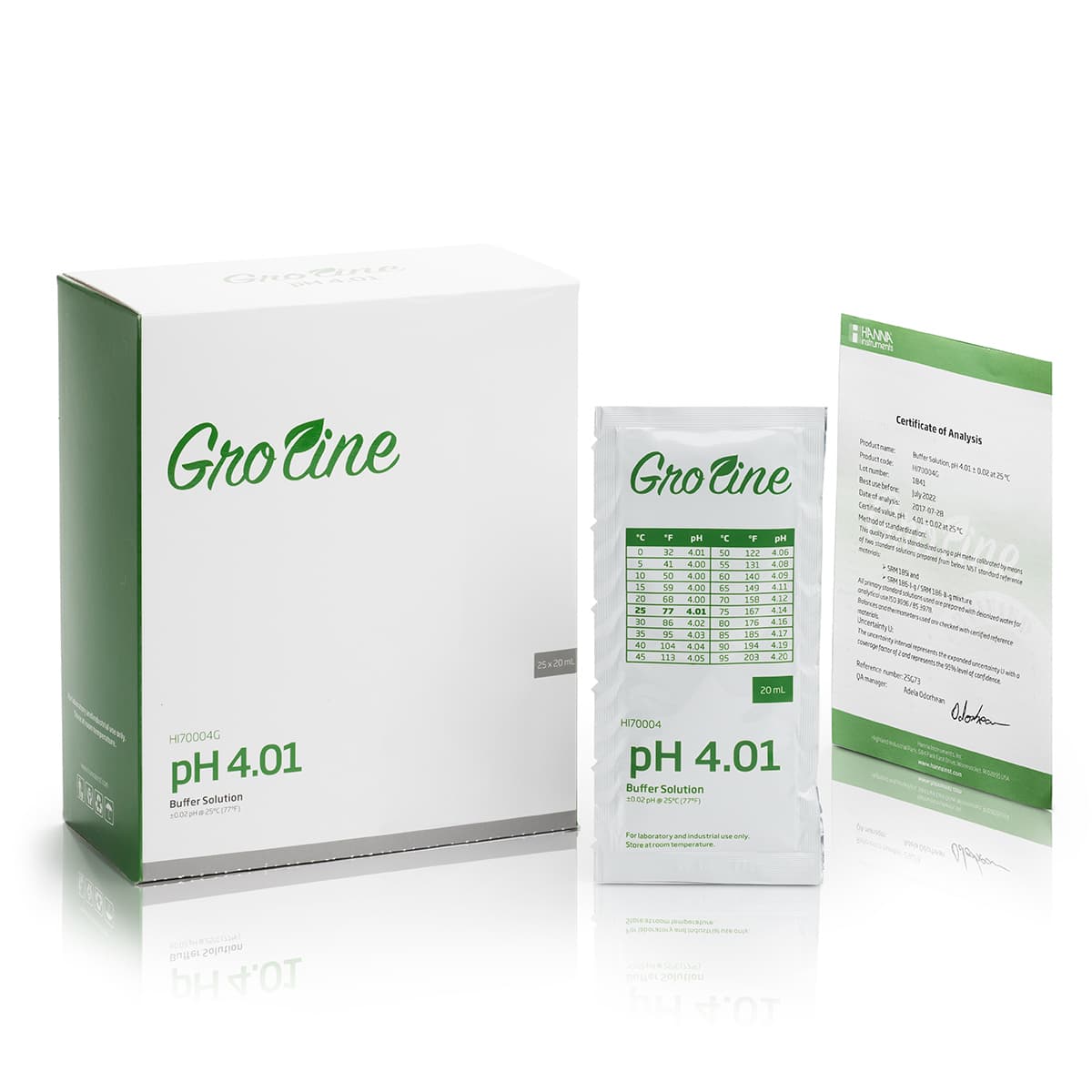
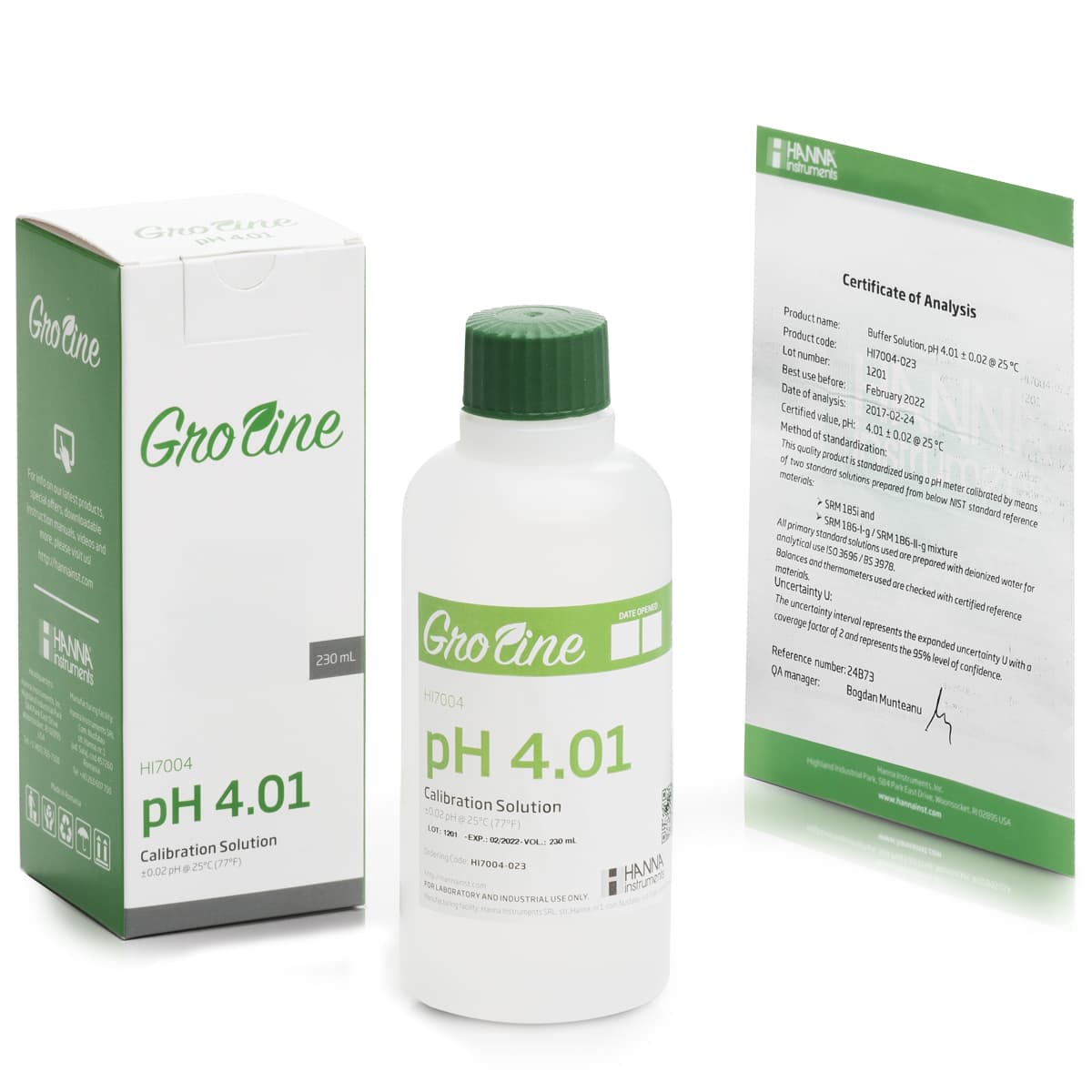
HI7004-023 is a high quality pH 4.01 calibration buffer produced in accordance with ISO 3696/BS3978 standards using high purity salts, deionized water, certified weight-checked balances, and Class A glassware in a temperature controlled environment monitored with certified thermometers.
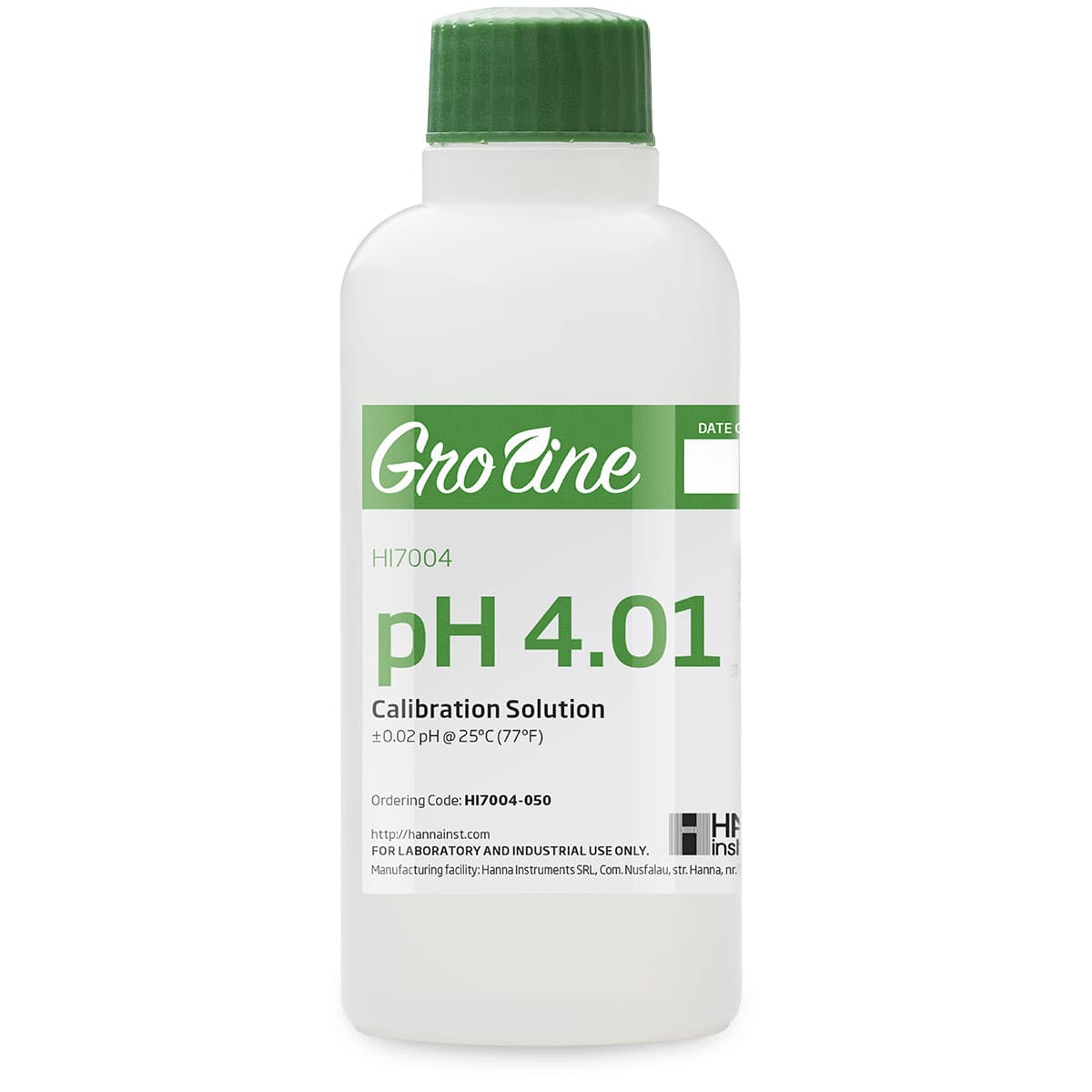
HI7004-050 is a high quality pH 4.01 calibration buffer produced in accordance with ISO 3696/BS3978 standards using high purity salts, deionized water, certified weight-checked balances, and Class A glassware in a temperature controlled environment monitored with certified thermometers.
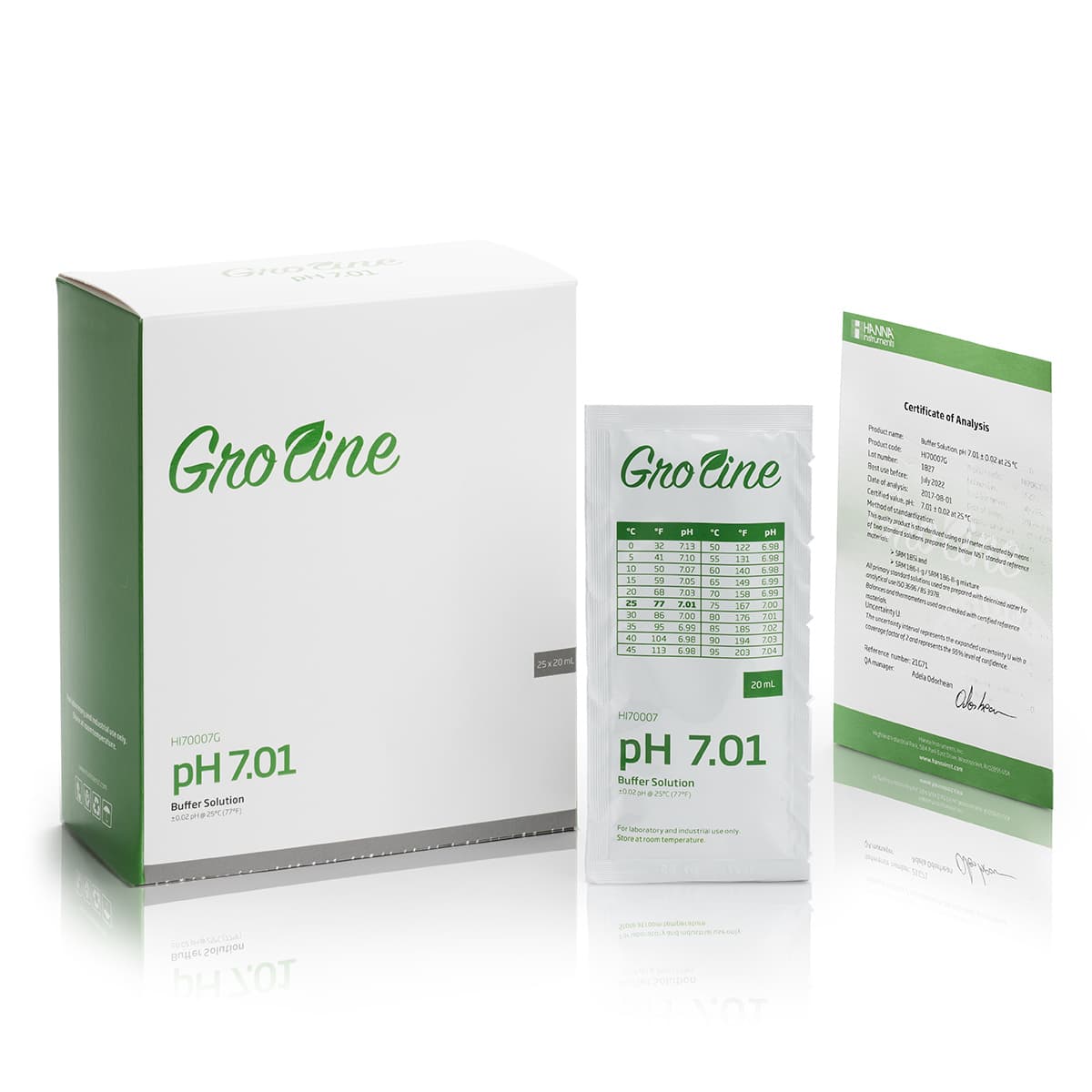
HI70007G is a high quality pH 7.01 calibration buffer produced in accordance with ISO 3696/BS3978 standards using high purity salts, deionized water, certified weight-checked balances, and Class A glassware in a temperature controlled environment monitored with certified thermometers.
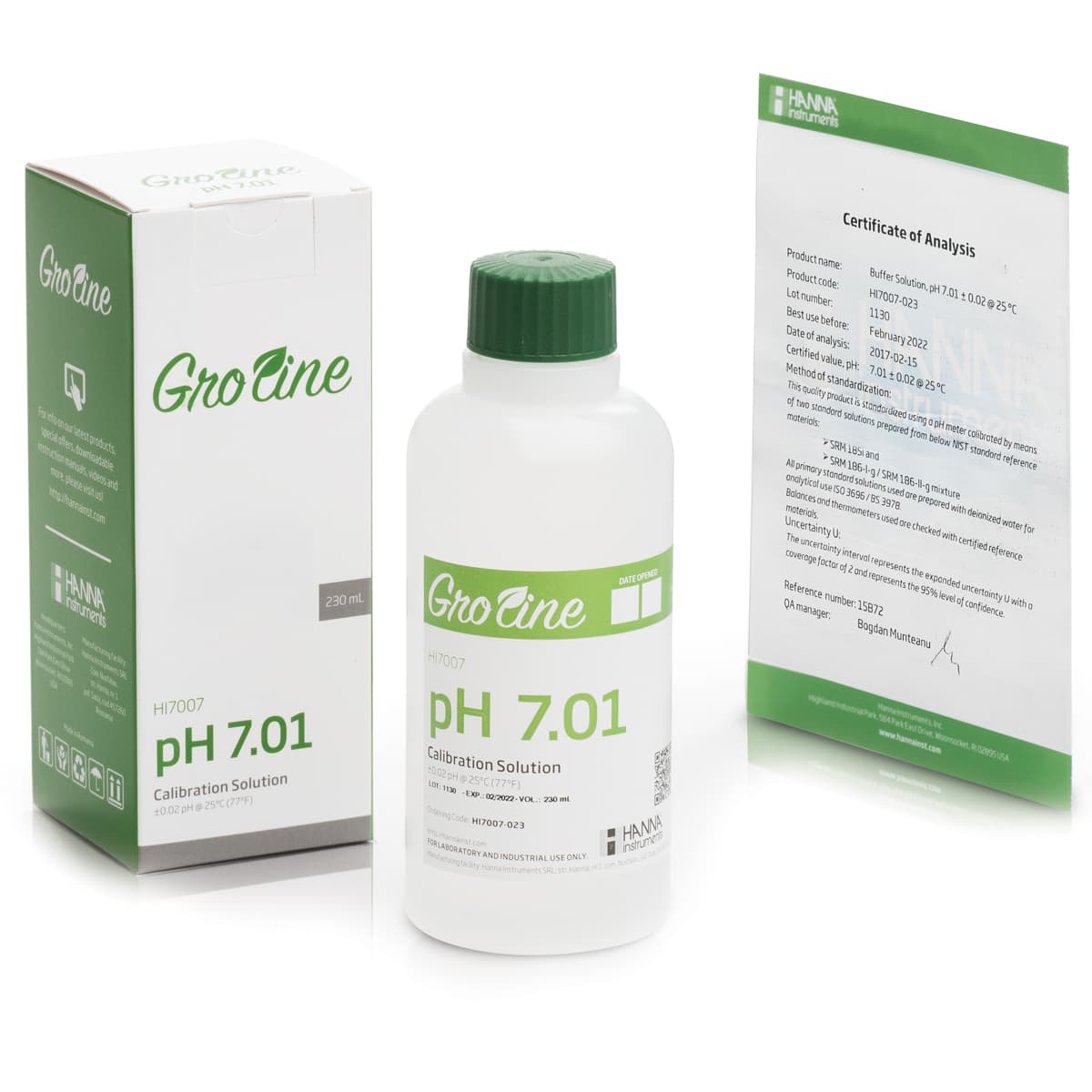
HI7007-023 is a high quality pH 7.01 calibration buffer produced in accordance with ISO 3696/BS3978 standards using high purity salts, deionized water, certified weight-checked balances, and Class A glassware in a temperature controlled environment monitored with certified thermometers.