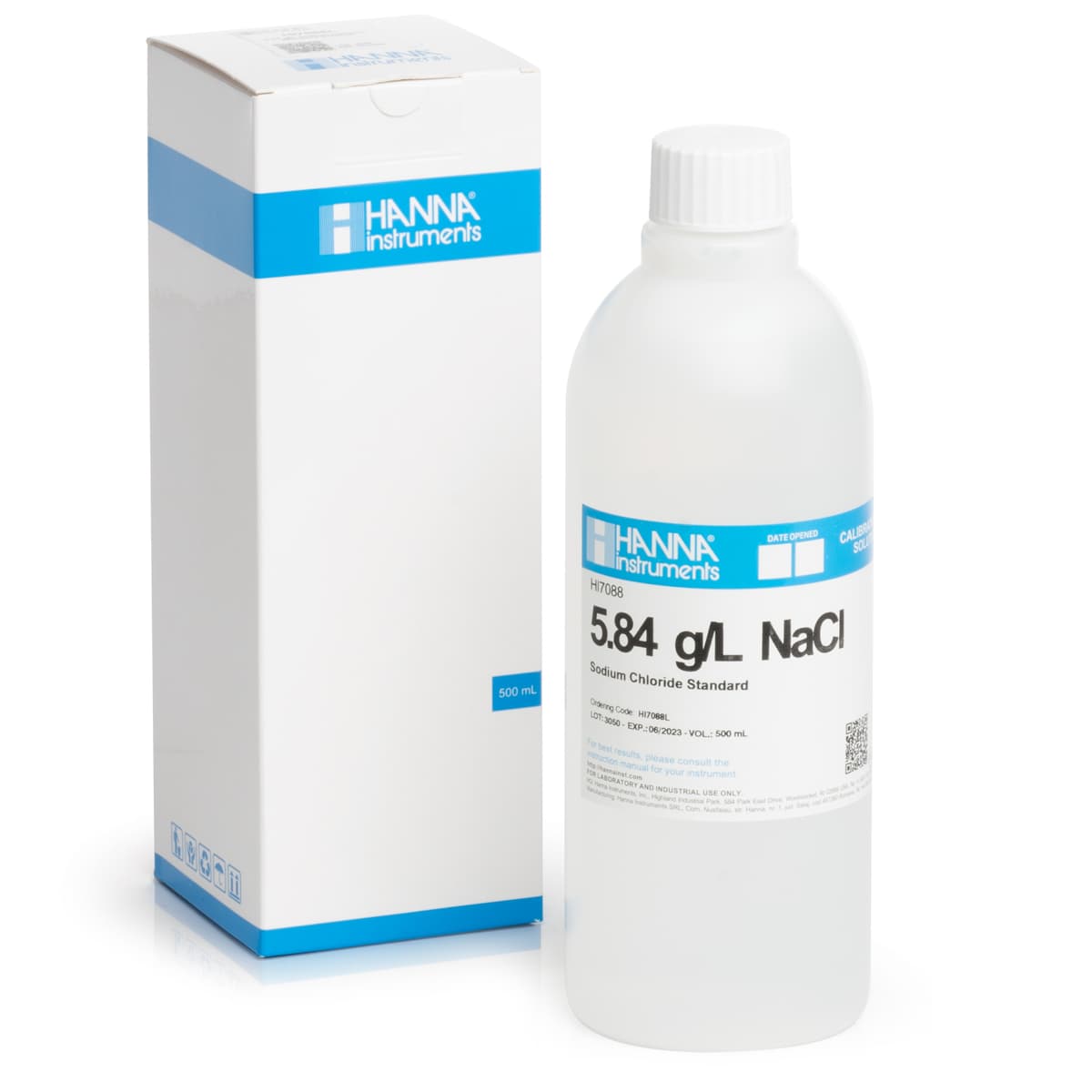
HI7088L is a premium quality 5.84 g/L NaCl calibration standard solution produced in accordance with ISO 3696/BS3978 standards using high purity salts, deionized water, certified weight-checked balances, and Class A glassware in a temperature controlled environment monitored with certified thermometers.
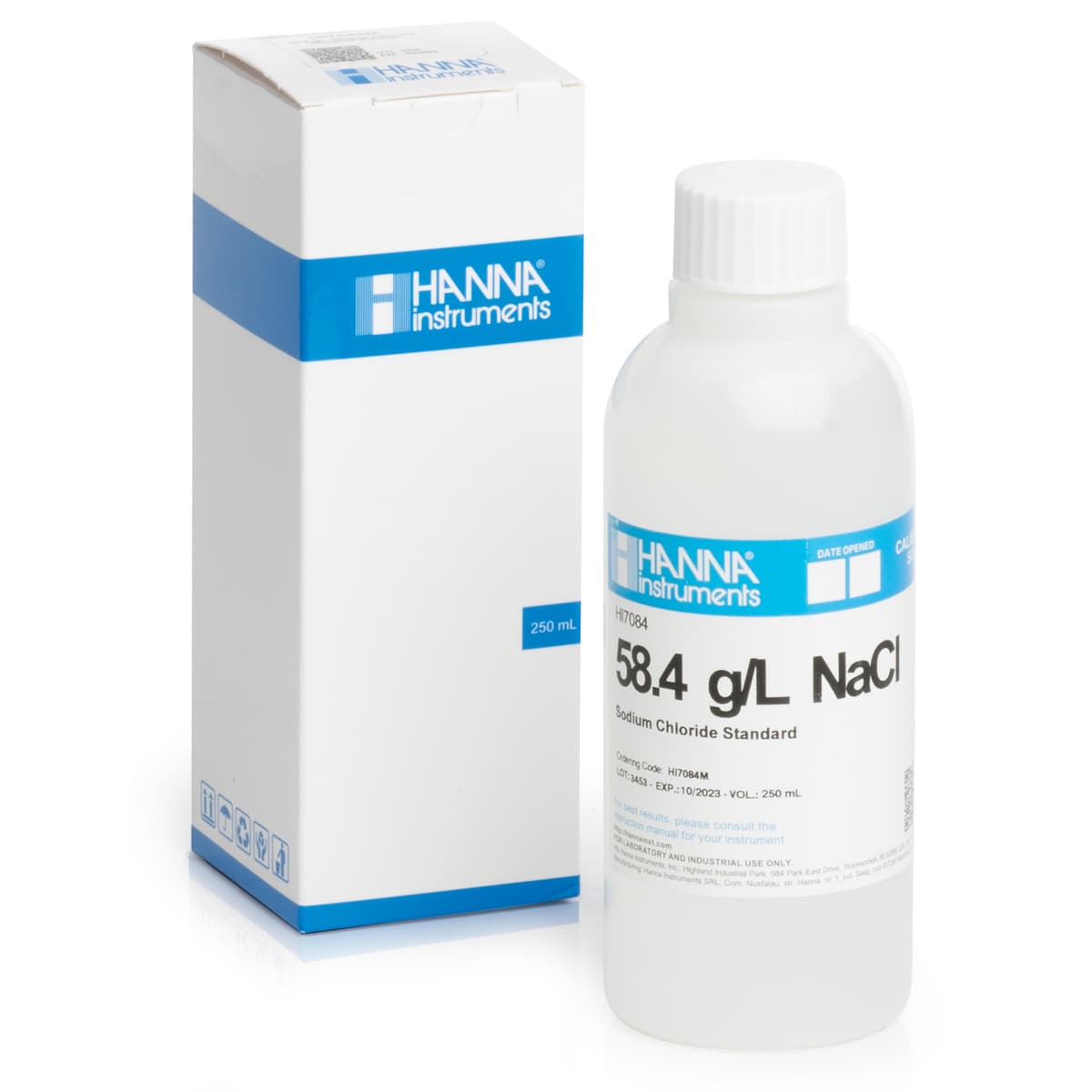
HI7084M is a premium quality 58.4 g/L NaCl calibration standard solution produced in accordance with ISO 3696/BS3978 standards using high purity salts, deionized water, certified weight-checked balances, and Class A glassware in a temperature controlled environment monitored with certified thermometers.
HI7084L is a premium quality 58.4 g/L NaCl calibration standard solution produced in accordance with ISO 3696/BS3978 standards using high purity salts, deionized water, certified weight-checked balances, and Class A glassware in a temperature controlled environment monitored with certified thermometers.
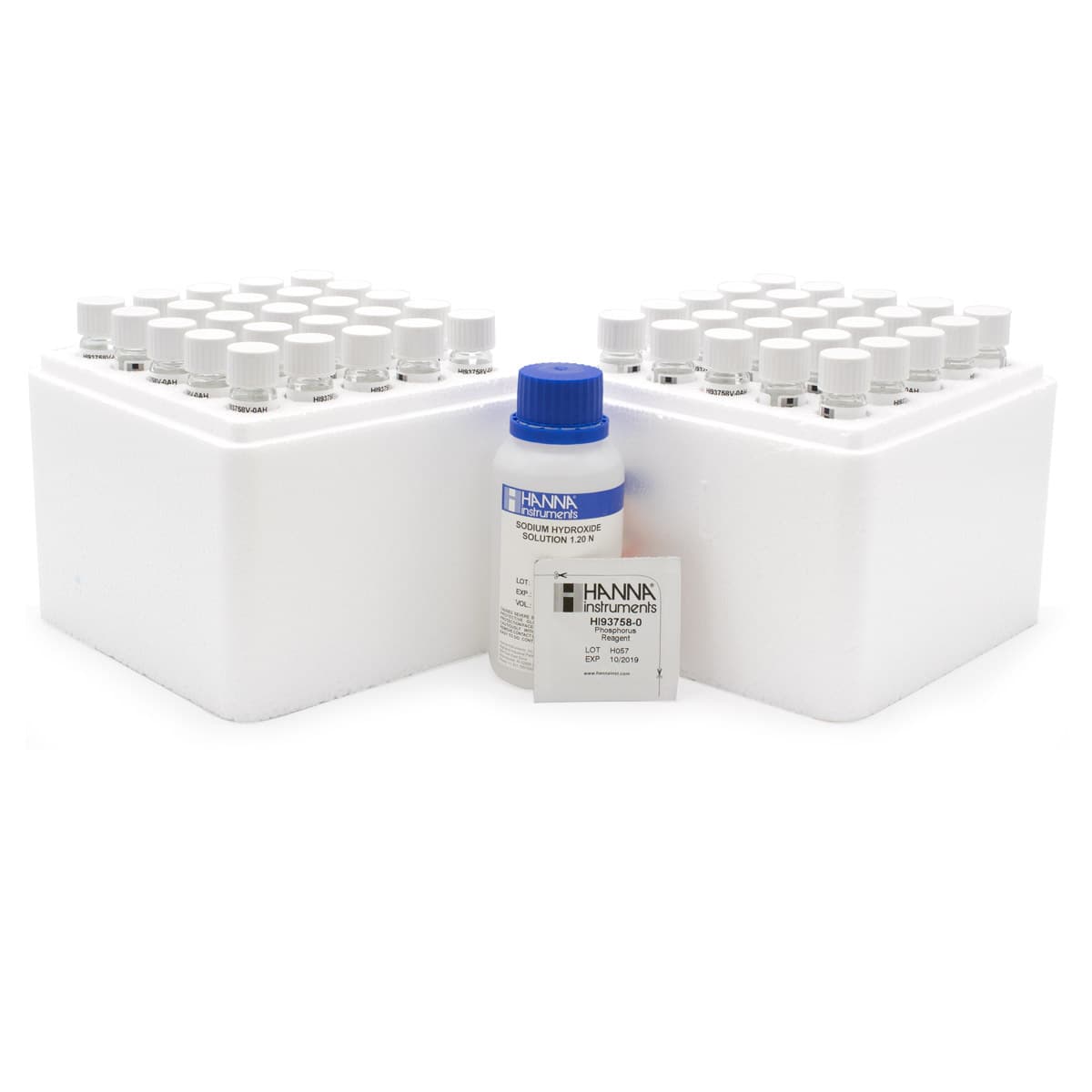
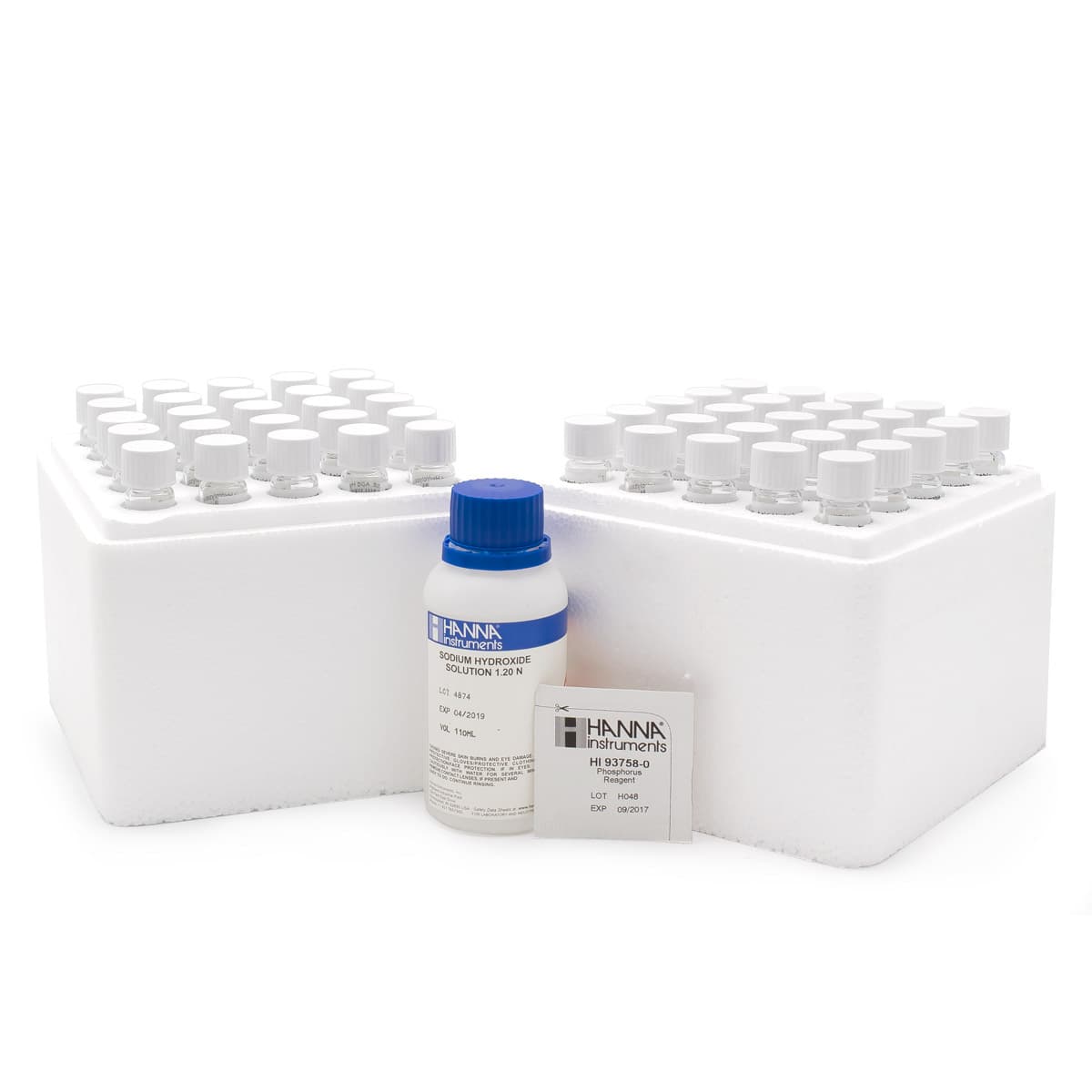
The HI93758B-0 reagent kit contains 50 ready-to-use vials of HI93758V-0AH, 1 bottle of HI93758B-0 solution, and 50 packets of HI93758-0 phosphorus reagent.
The HI94758B-50 reagent kit contains 50 ready-to-use vials of HI94758V-0AH, 1 bottle of HI93758B-0 solution, and 50 packets of HI93758-0 phosphorus reagent.
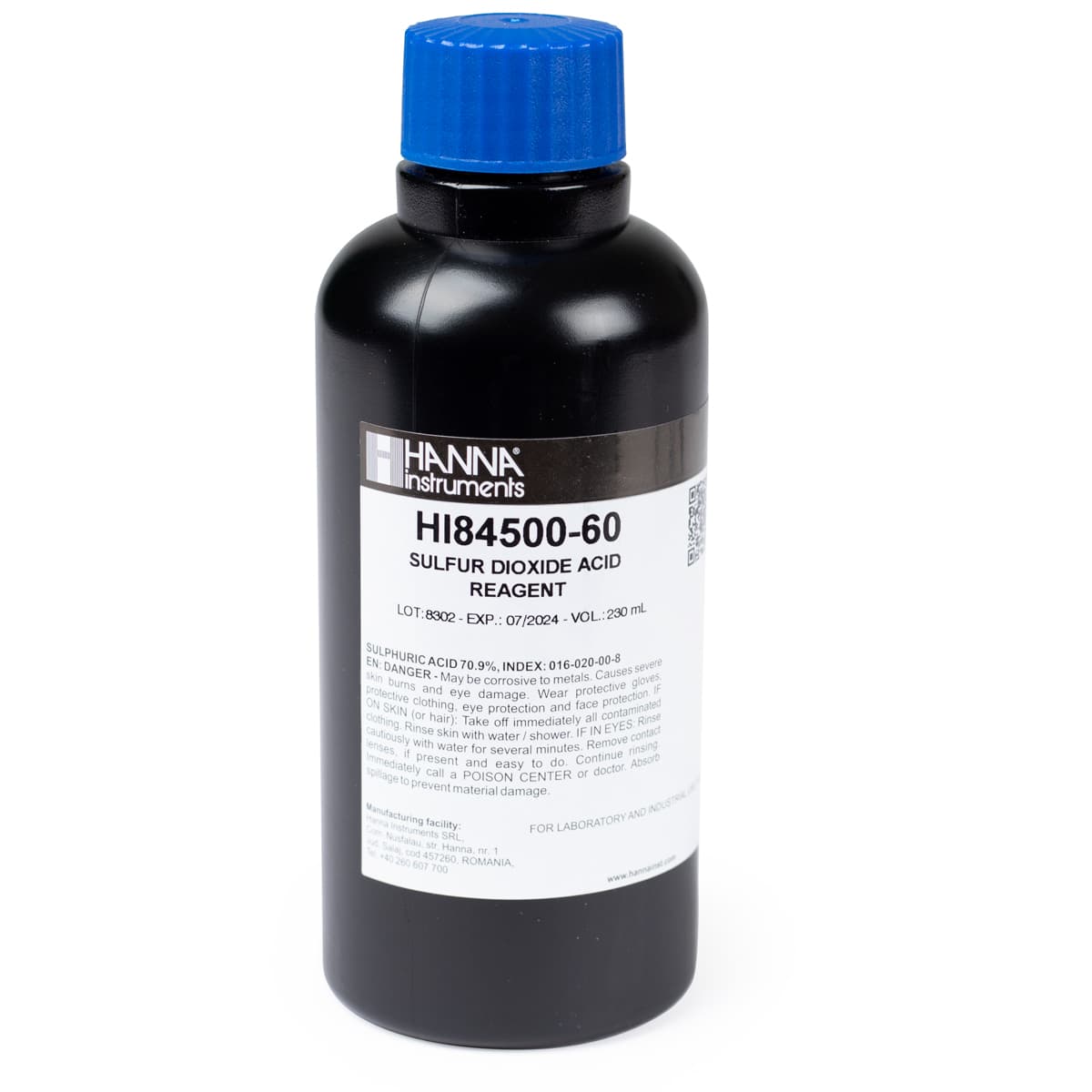
The HI84500-60 acid reagent is necessary to lower the pH of the wine sample before a titration can be performed for either free or total sulfur dioxide. The adjustment of the wine sample with 5 mL of the acidic reagent ensures the sample is at the correct pH.
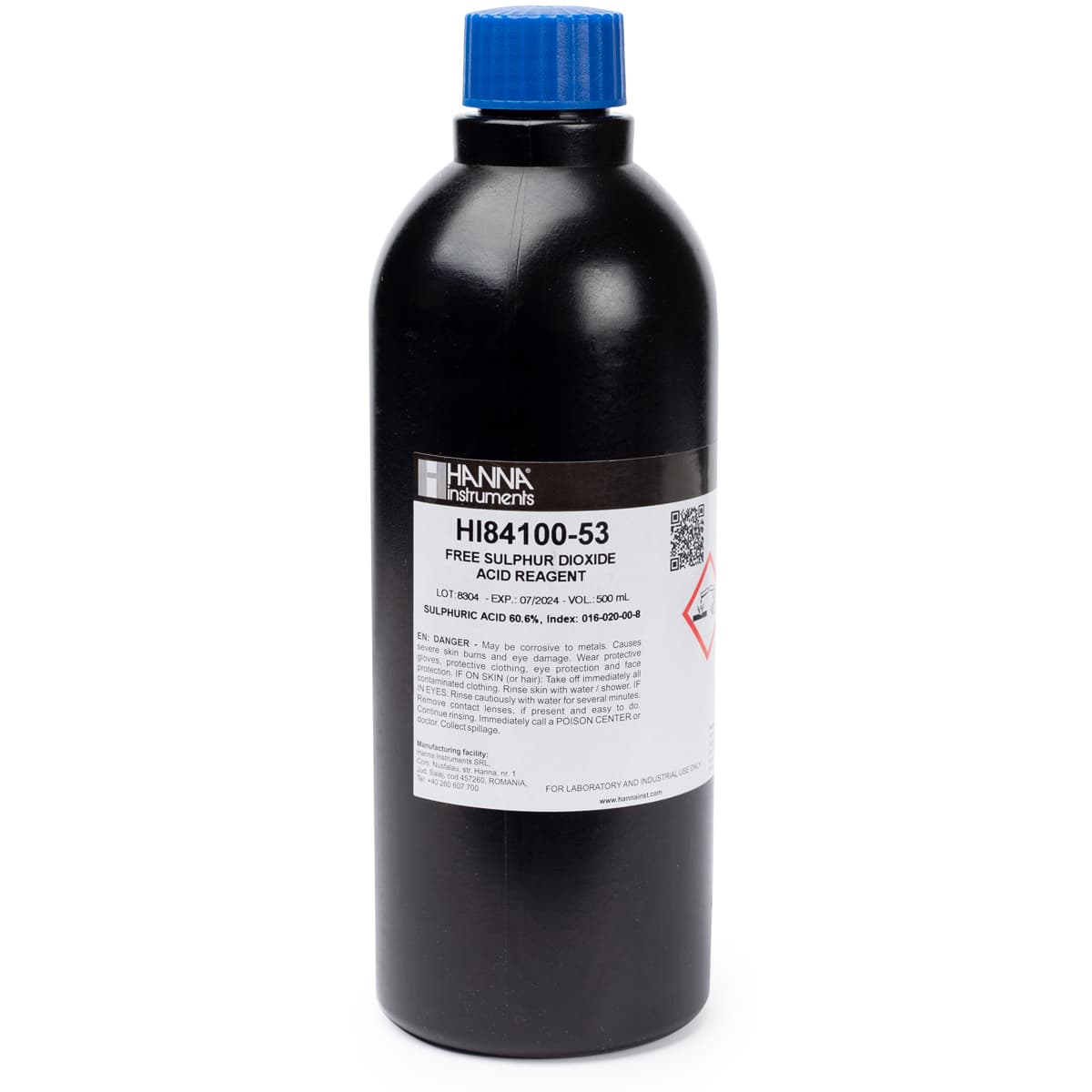
The HI84100-53 acid reagent is necessary to lower the pH of the wine sample before a titration can be performed for free sulfur dioxide. The adjustment of the wine sample with 5 mL of the HI84100-53 acid reagent ensures the sample is at the correct pH. The HI3148B ORP electrode is used to detect the endpoint.
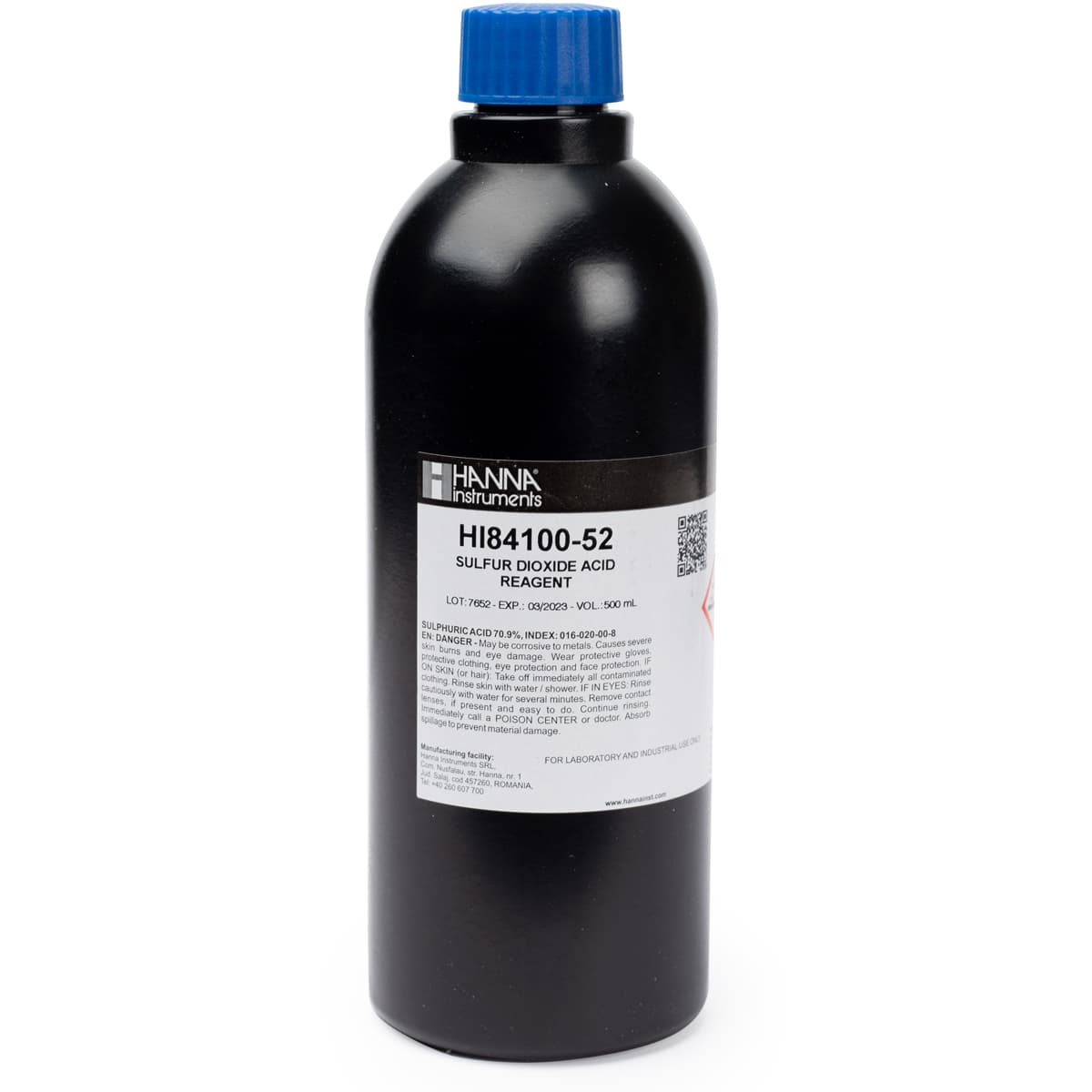
The HI84100-52 acid reagent is necessary to lower the pH of the wine sample before a titration can be performed for total sulfur dioxide. The adjustment of the wine sample with 5 mL of the HI84100-52 acid reagent ensures the sample is at the correct pH. The HI3148B ORP electrode is used to detect the endpoint.
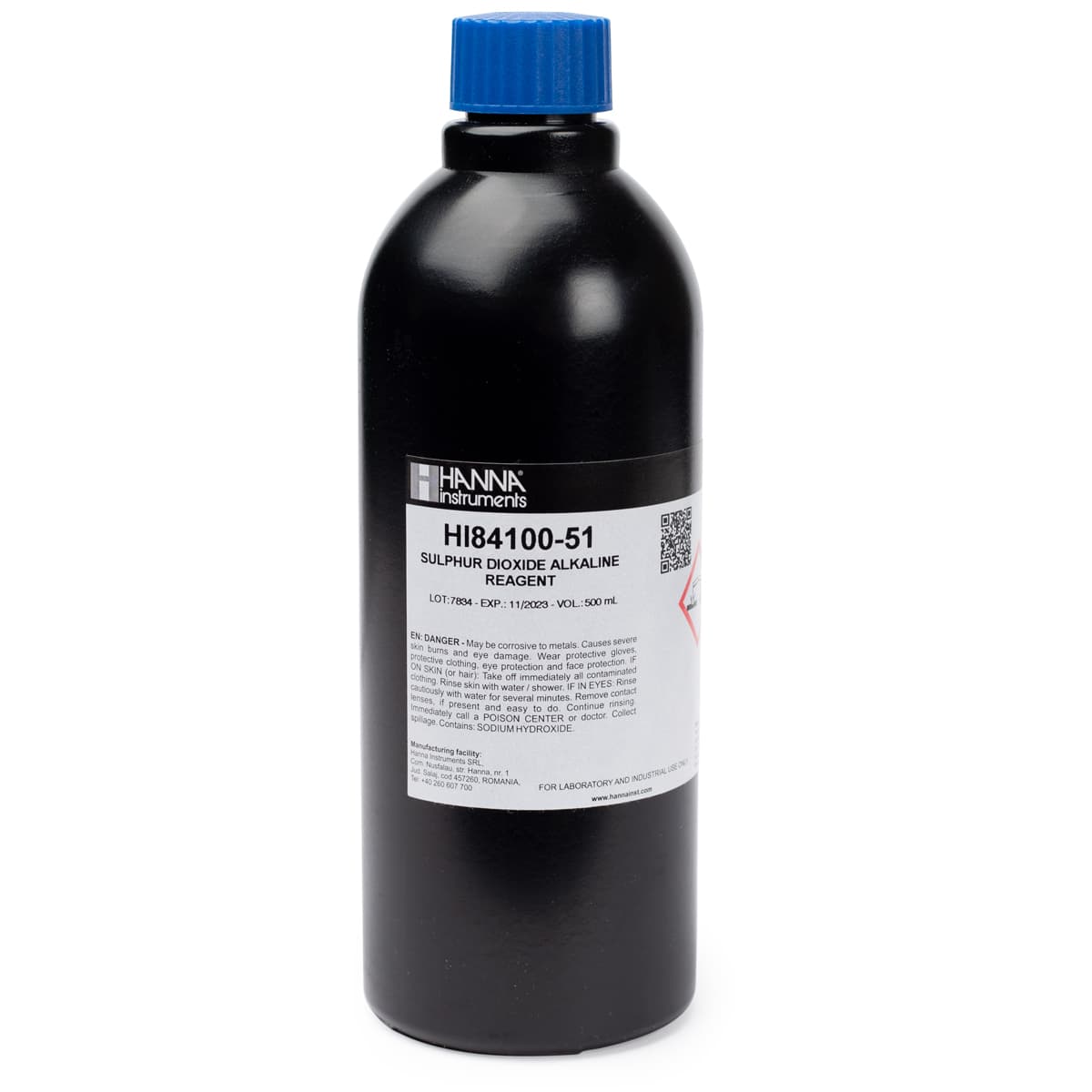
The HI84100-51 alkaline reagent is necessary for the analysis of total sulfur dioxide. The alkaline reagent raises the pH and liberates bound sulfur dioxide. This pH adjustment ensures that all of the free and bound sulfur dioxide is accounted for to give an accurate measurement of total sulfur dioxide.
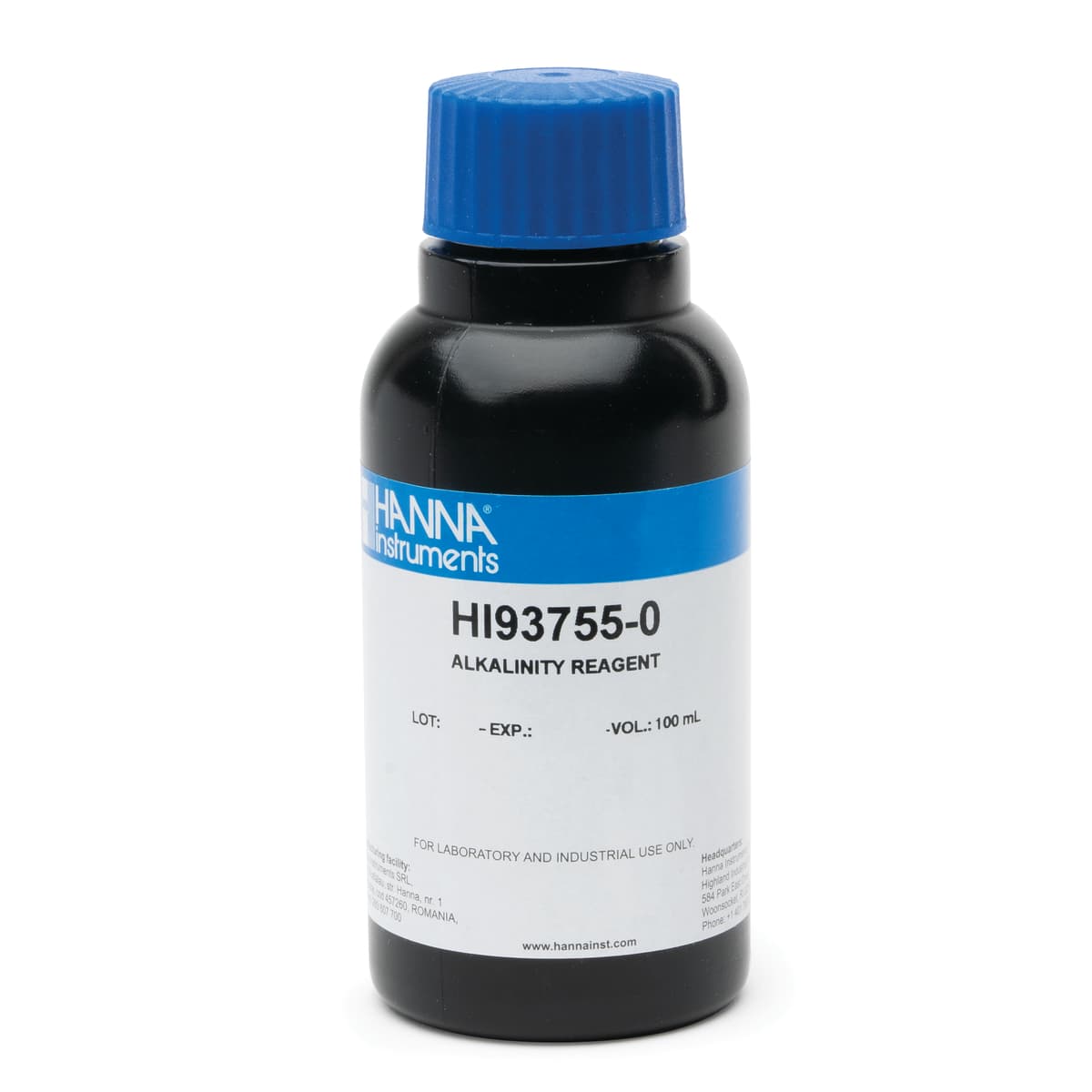
The HI93755-01 are high quality reagents that are pre-mixed, allowing for users to achieve fast and accurate colorimetric measurements. These reagents follow a colorimetric method in which the reaction between alkalinity in a water sample and the reagent causes a green tint to be produced.
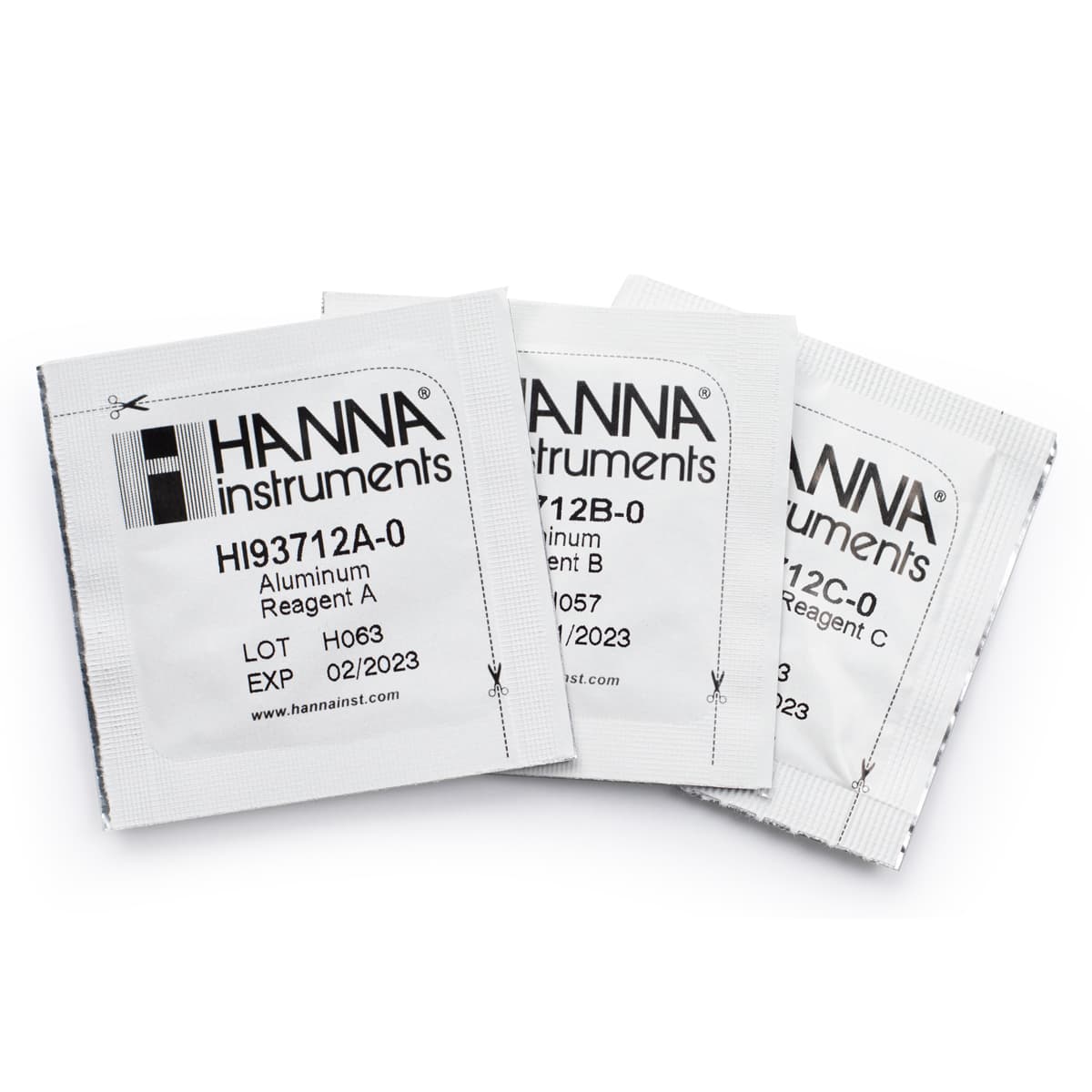
The HI93712-03 are high quality reagents that are pre-measured, allowing for users to achieve fast and accurate colorimetric measurements. These reagents are part of a method that is an adaption of the aluminon method. The reaction between the reagents and aluminum produces a reddish tint in the sample.
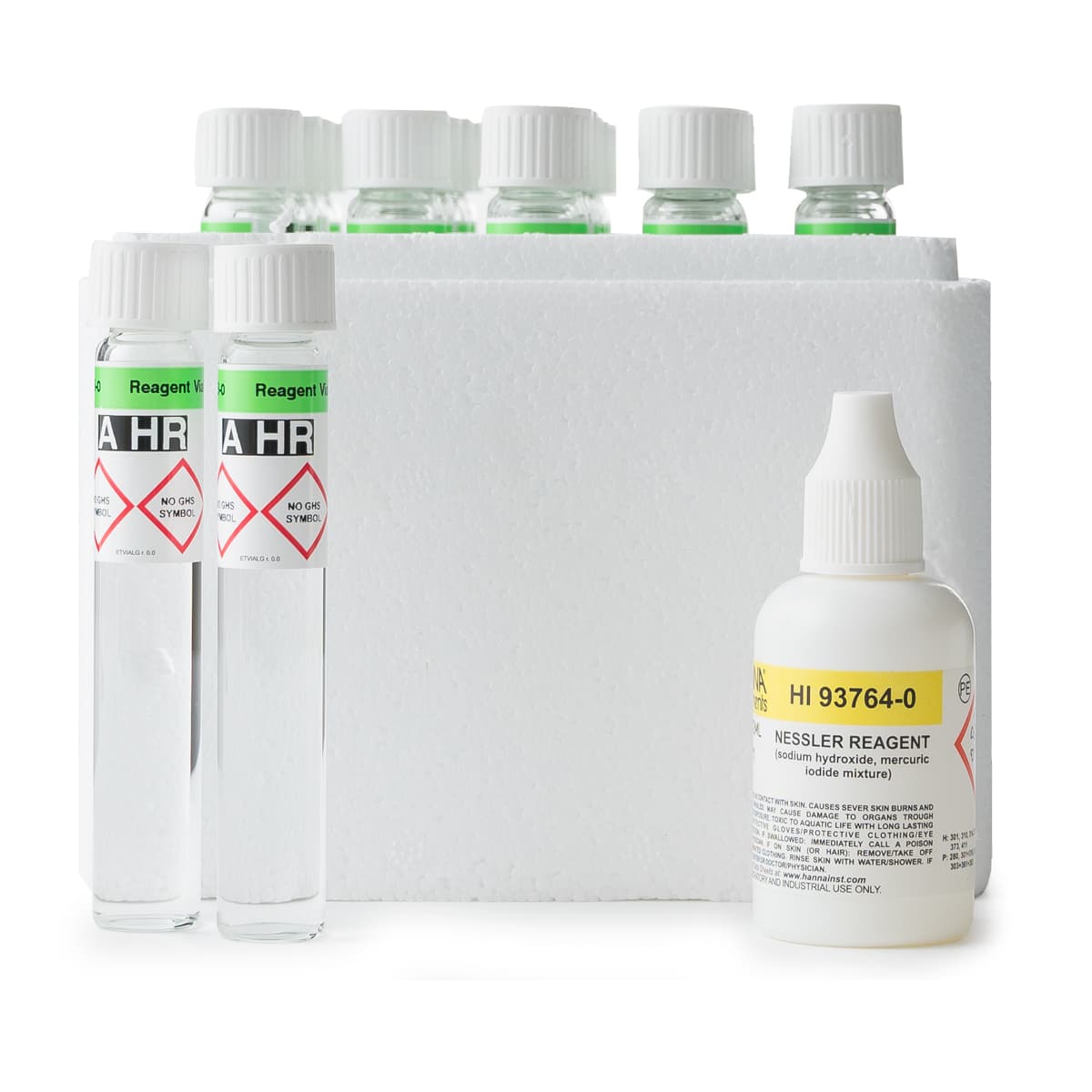
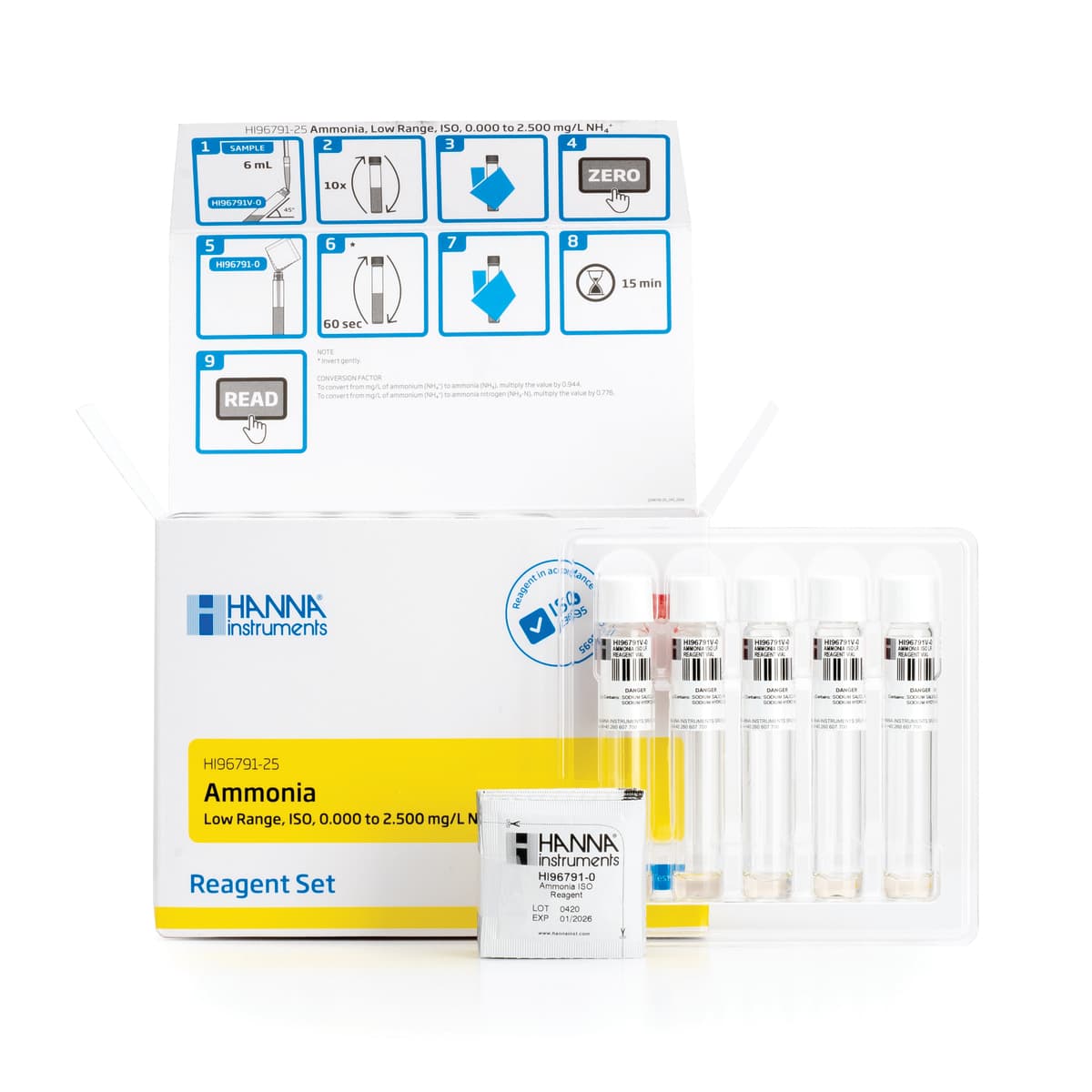
The HI93764B-25 reagent kit contains 25 ready-to-use vials of HI93764B-0 and 1 bottle HI93764-0 Nessler reagent. These high quality reagents follow an adaptation of the ASTM Manual of Water and Environmental Technology, D1426-92, Nessler method.
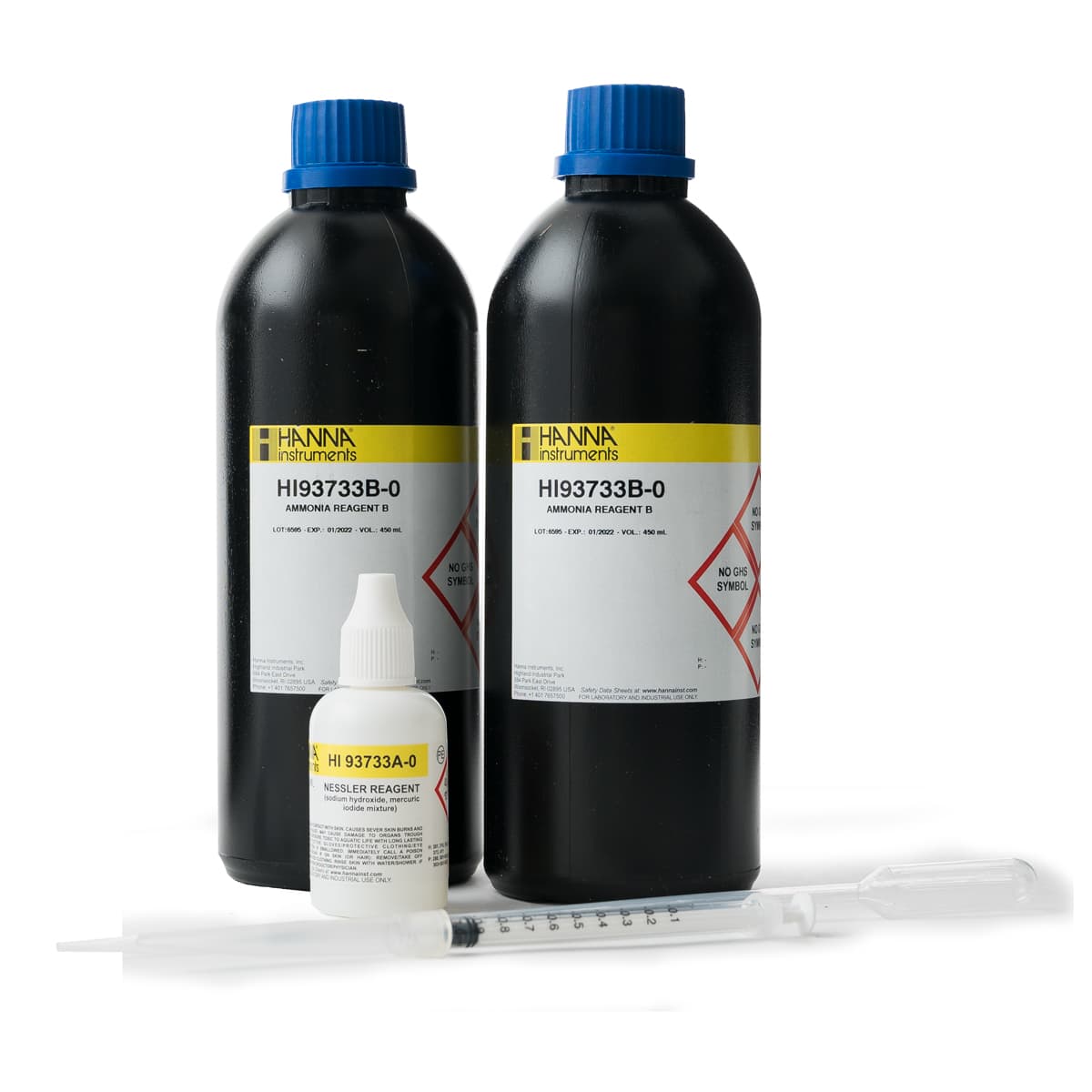
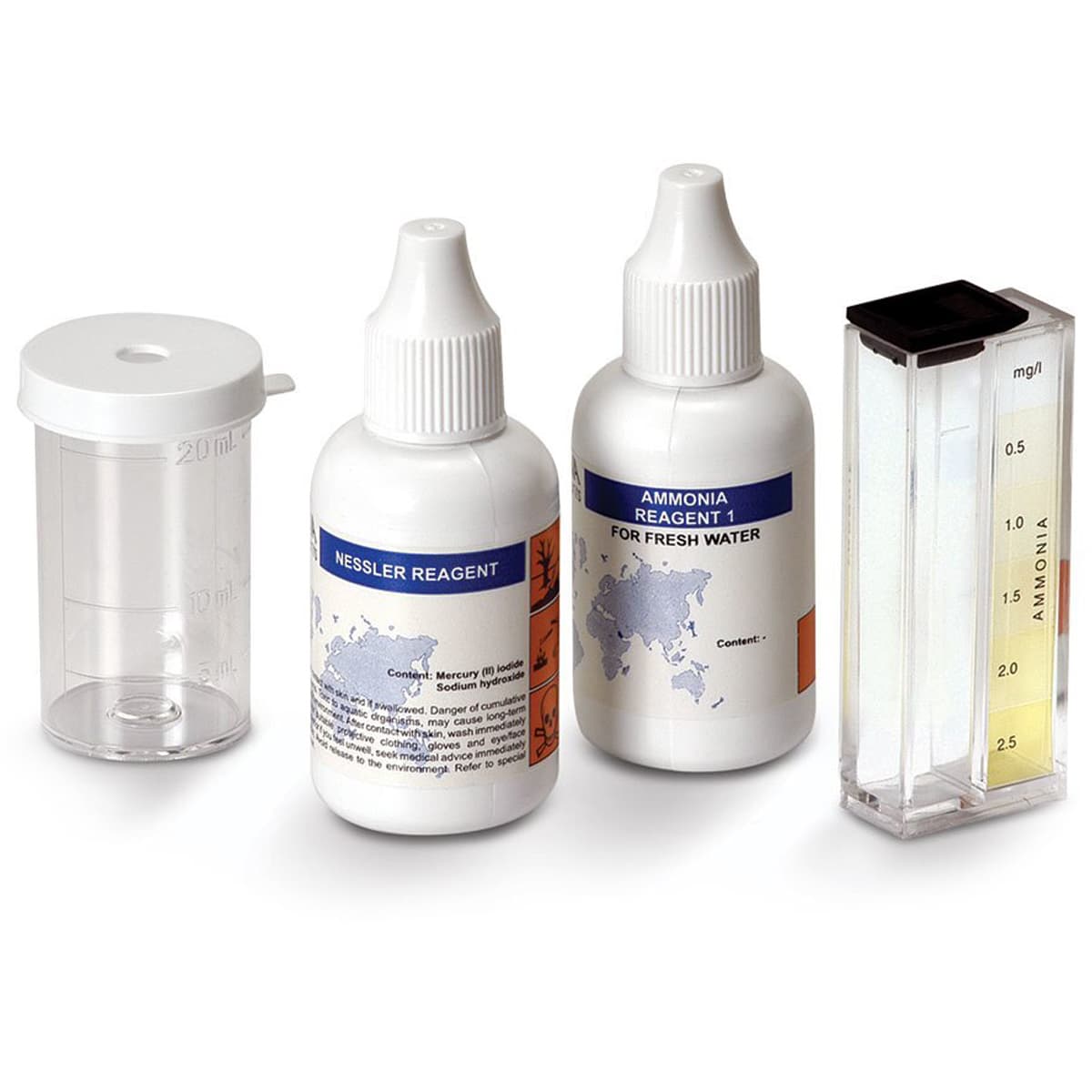
The HI93733-03 are high quality reagents that are pre-measured, allowing for users to achieve fast and accurate colorimetric measurements. These reagents follow the Nessler Method in which the reaction between ammonia and reagents causes a yellow tint in the sample.
The HI94764B-25 reagent kit contains 25 ready-to-use vials of HI94764B-0 and 1 bottle HI93764-0 Nessler reagent. These high quality reagents follow an adaptation of the ASTM Manual of Water and Environmental Technology, D1426-92, Nessler method.
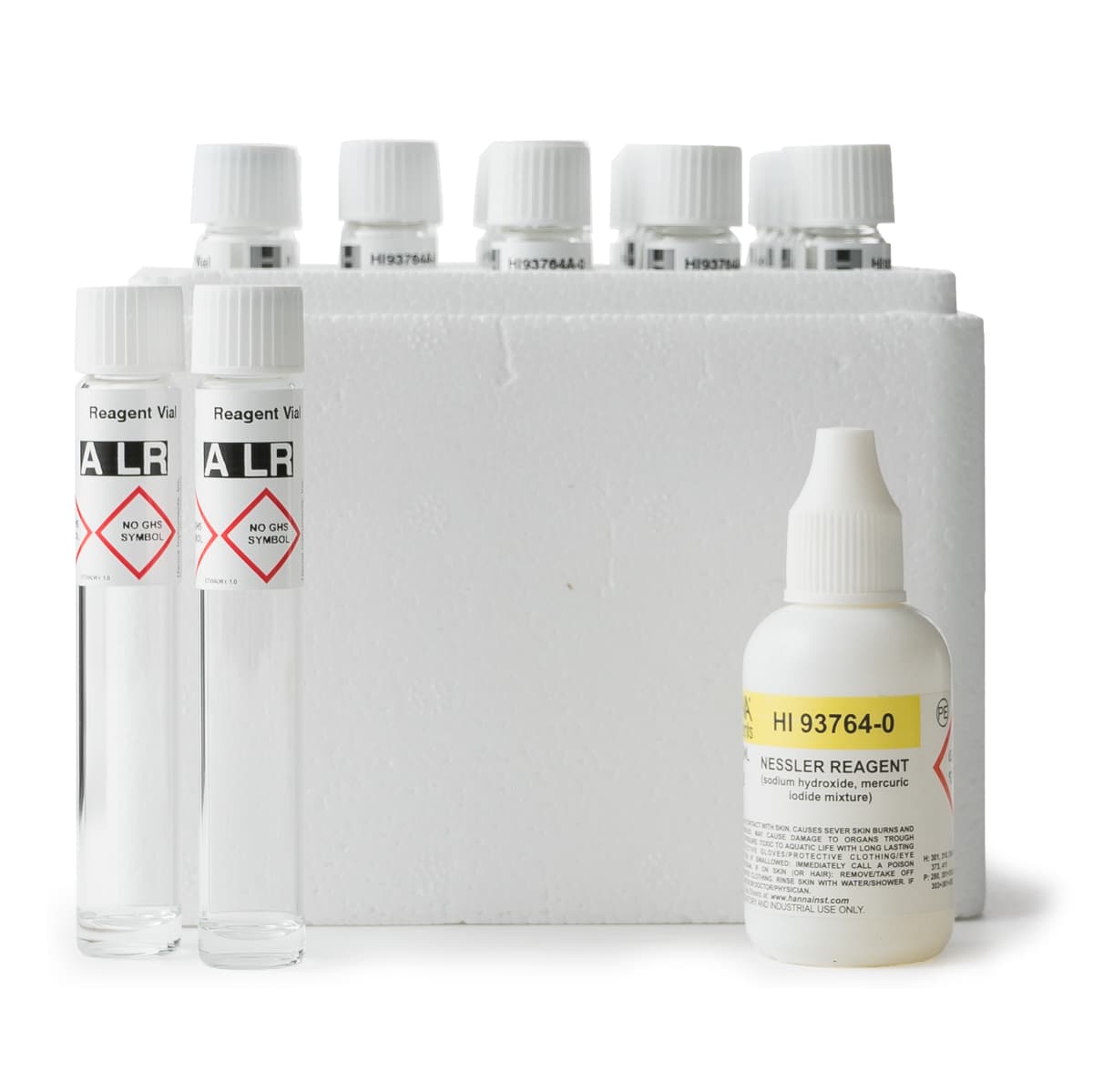
The HI93764A-25 reagent kit contains 25 ready-to-use vials of HI93764A-0 and 1 bottle HI93764-0 Nessler reagent. These high quality reagents follow an adaptation of the ASTM Manual of Water and Environmental Technology, D1426-92, Nessler method.
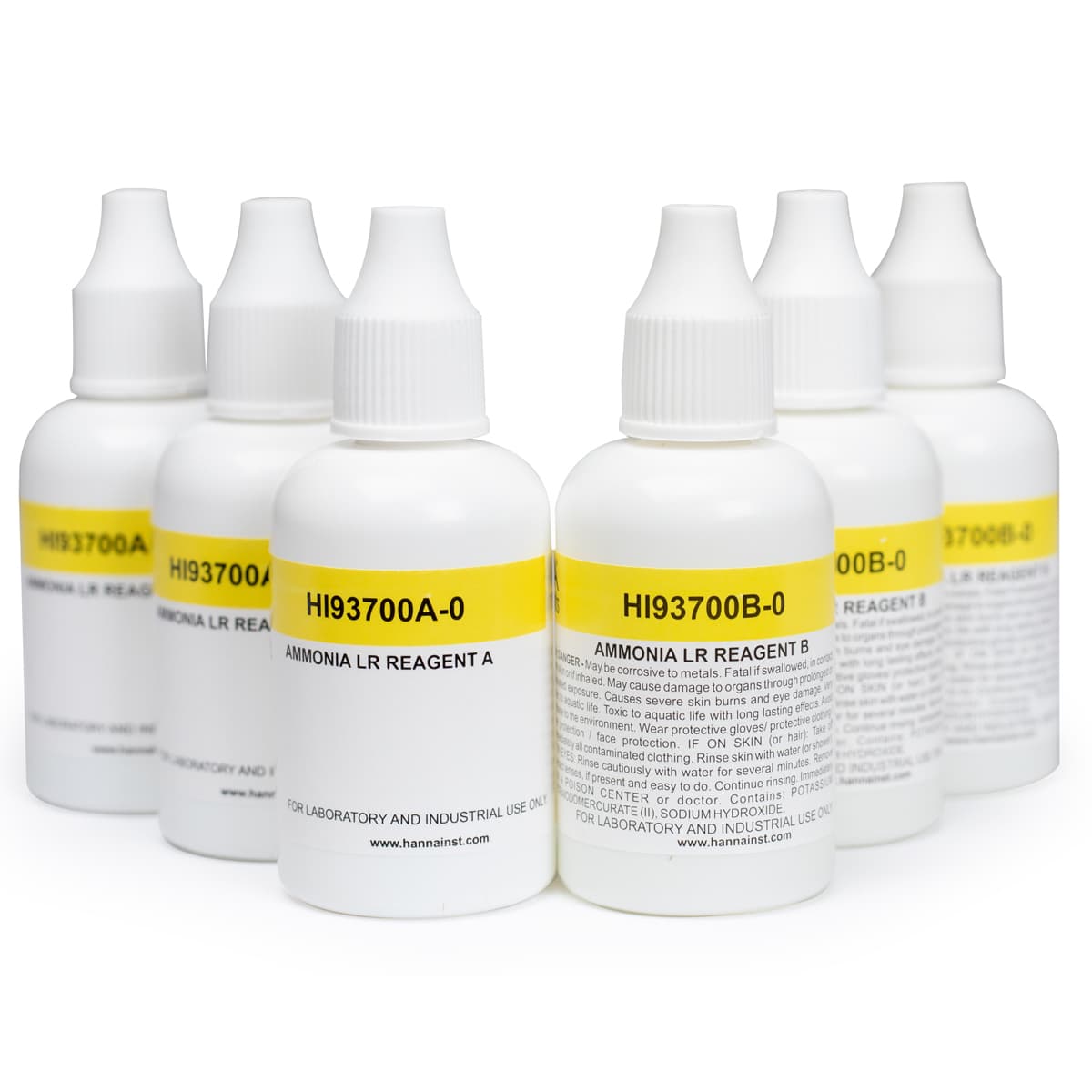
The HI93700-03 are high quality reagents that are pre-measured, allowing for users to achieve fast and accurate colorimetric measurements. These reagents follow the Nessler Method in which the reaction between ammonia and reagents causes a yellow tint in the sample.
The HI94764A-25 reagent kit contains 25 ready-to-use vials of HI94764A-0 and 1 bottle HI93764-0 Nessler reagent. These high quality reagents follow an adaptation of the ASTM Manual of Water and Environmental Technology, D1426-92, Nessler method.
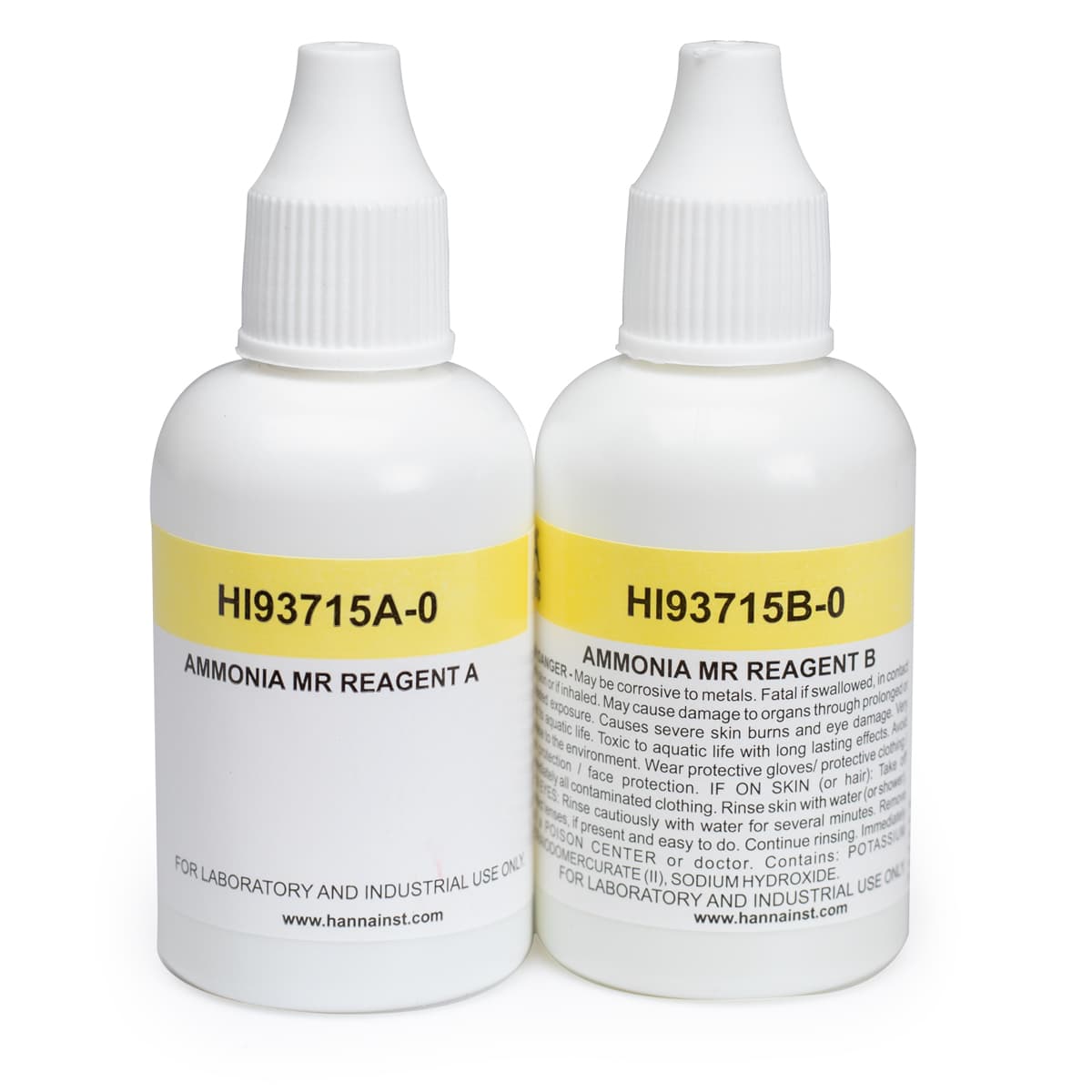
The HI93715-03 are high quality reagents that are pre-measured, allowing for users to achieve fast and accurate colorimetric measurements. These reagents follow the Nessler Method in which the reaction between ammonia and the reagent causes a color change in the sample.
The prevention of protein haze or deposit in bottled wines is a universal concern, and often a wine needs to be stabilized before bottling. Fining, or clarifying, is the process of removing substances that contribute to haze by binding them through adsorption.
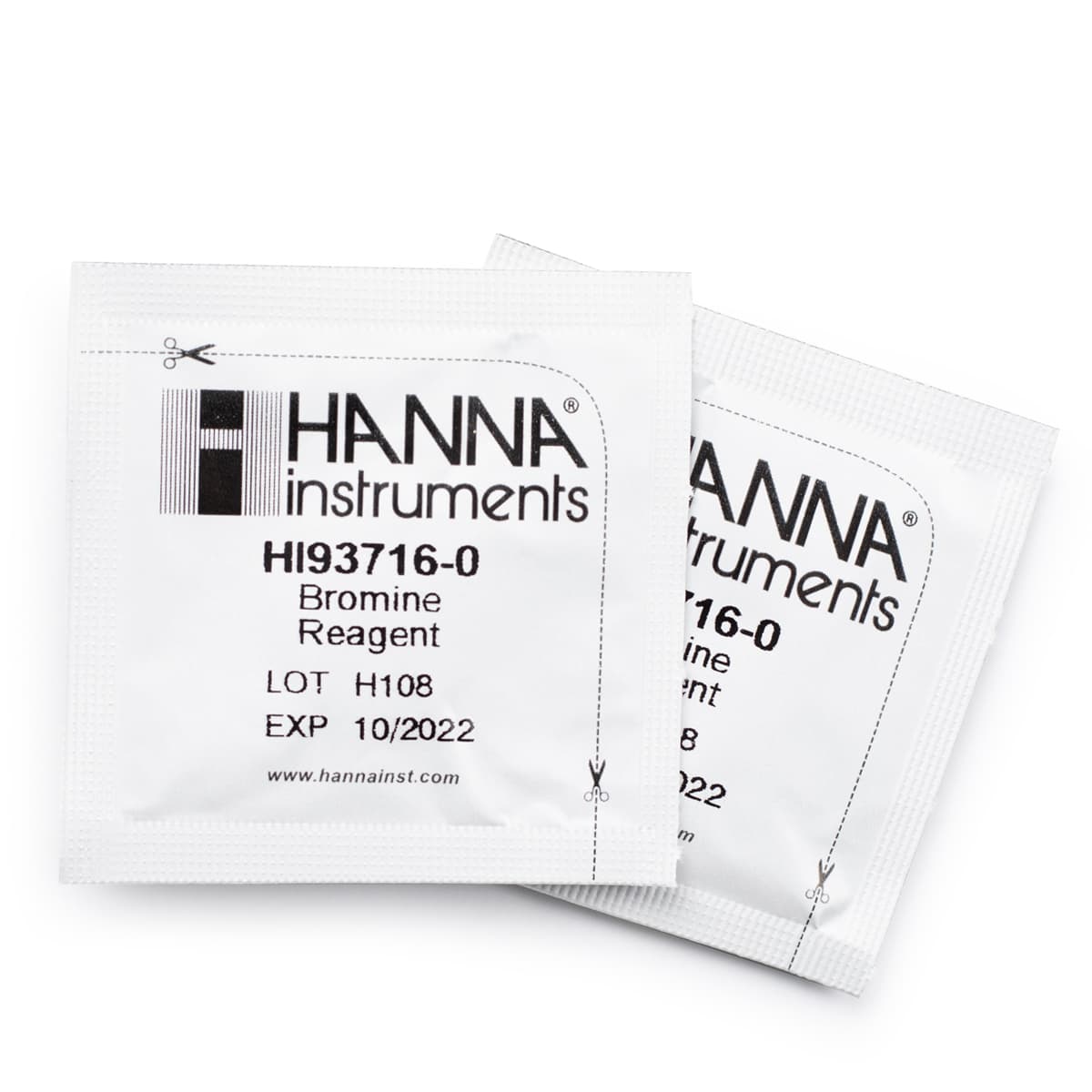
The HI93716-03 are high quality reagents that are pre-measured, allowing for users to achieve fast and accurate colorimetric measurements. These reagents follow the DPD Method in which the reaction between bromine and reagent causes a pink tint in the sample.
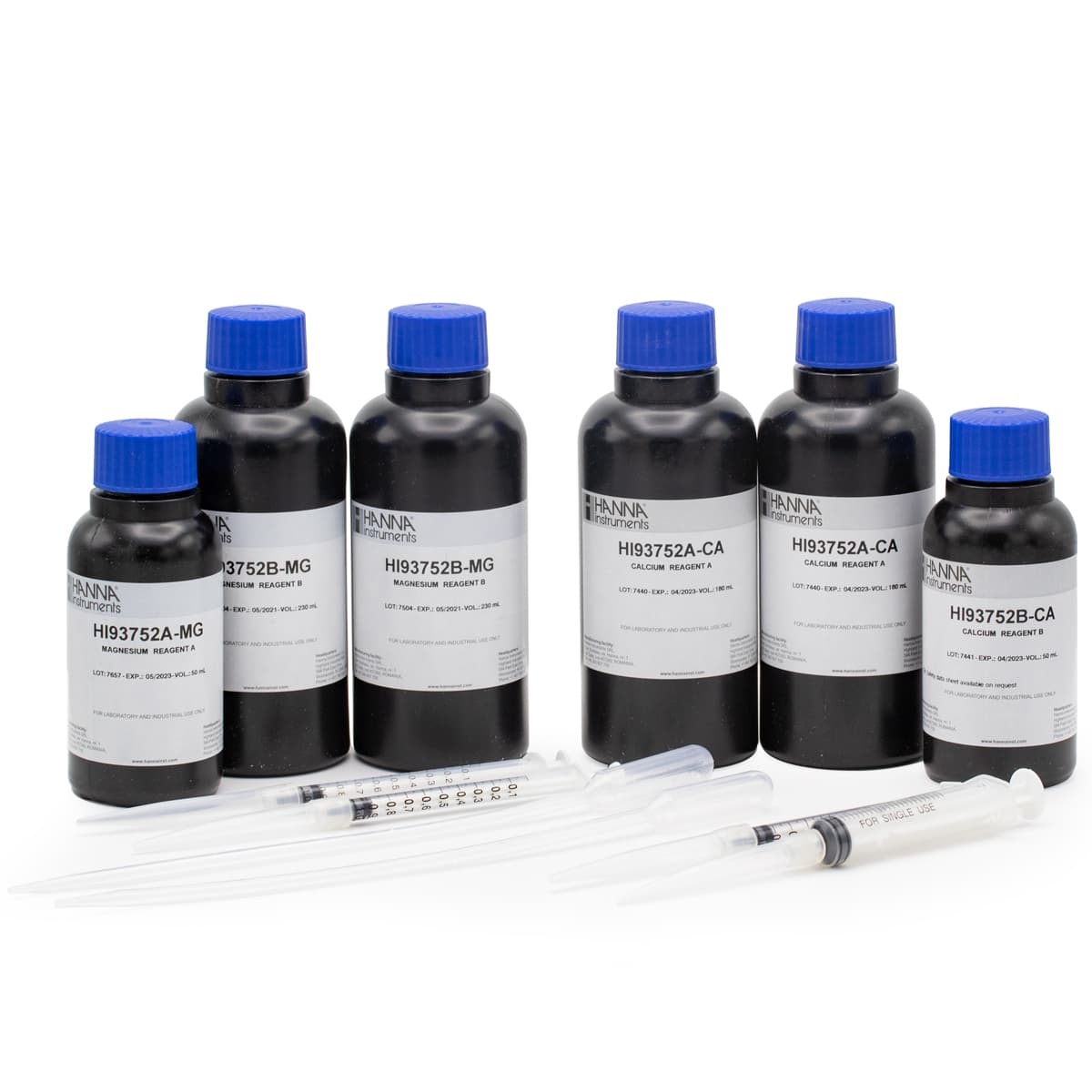
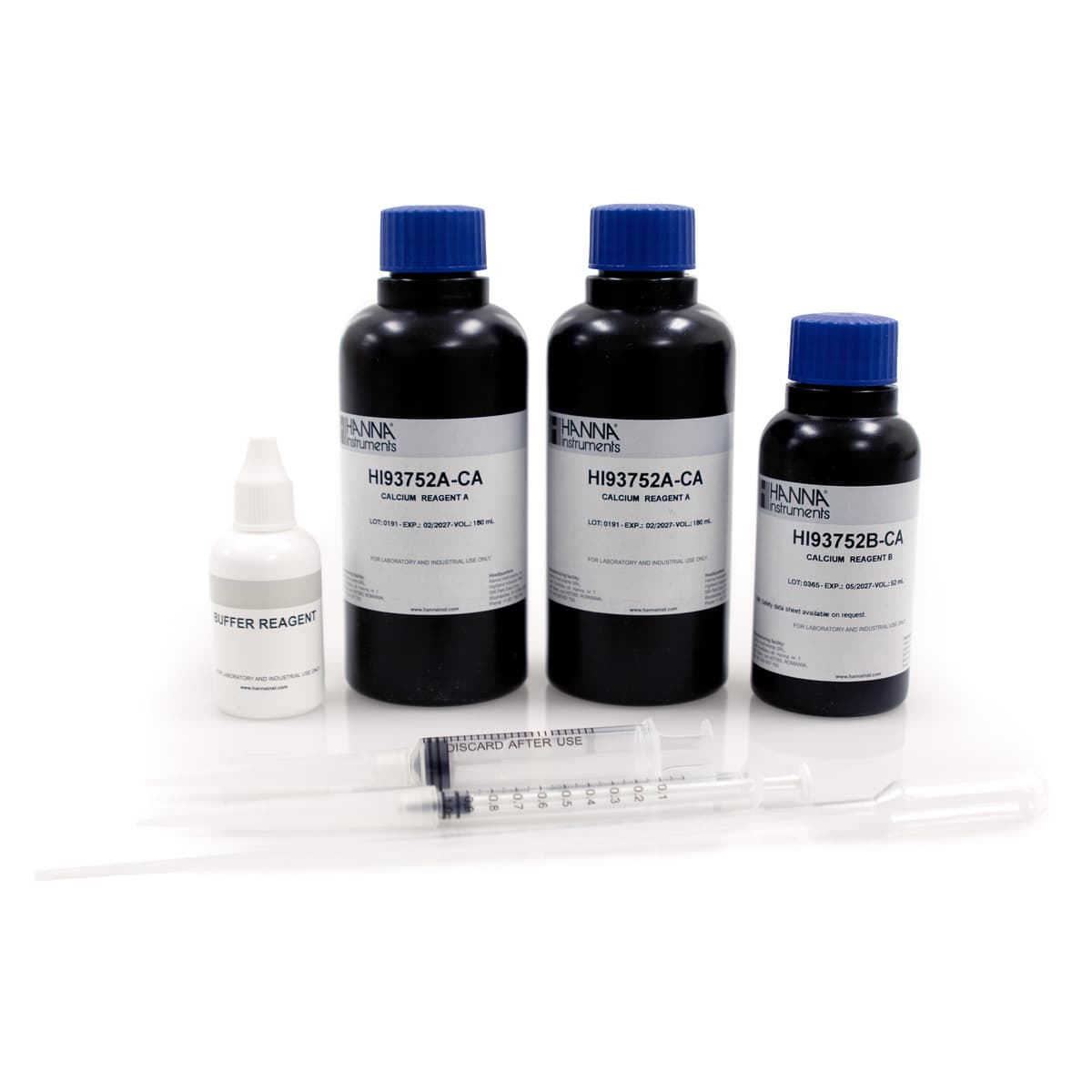
The HI93752-03 are high quality reagents that are pre-measured, allowing for users to achieve fast and accurate colorimetric measurements. These reagents follow an adaptation of the calmagite method for determining calcium, and the oxalate method for magnesium.
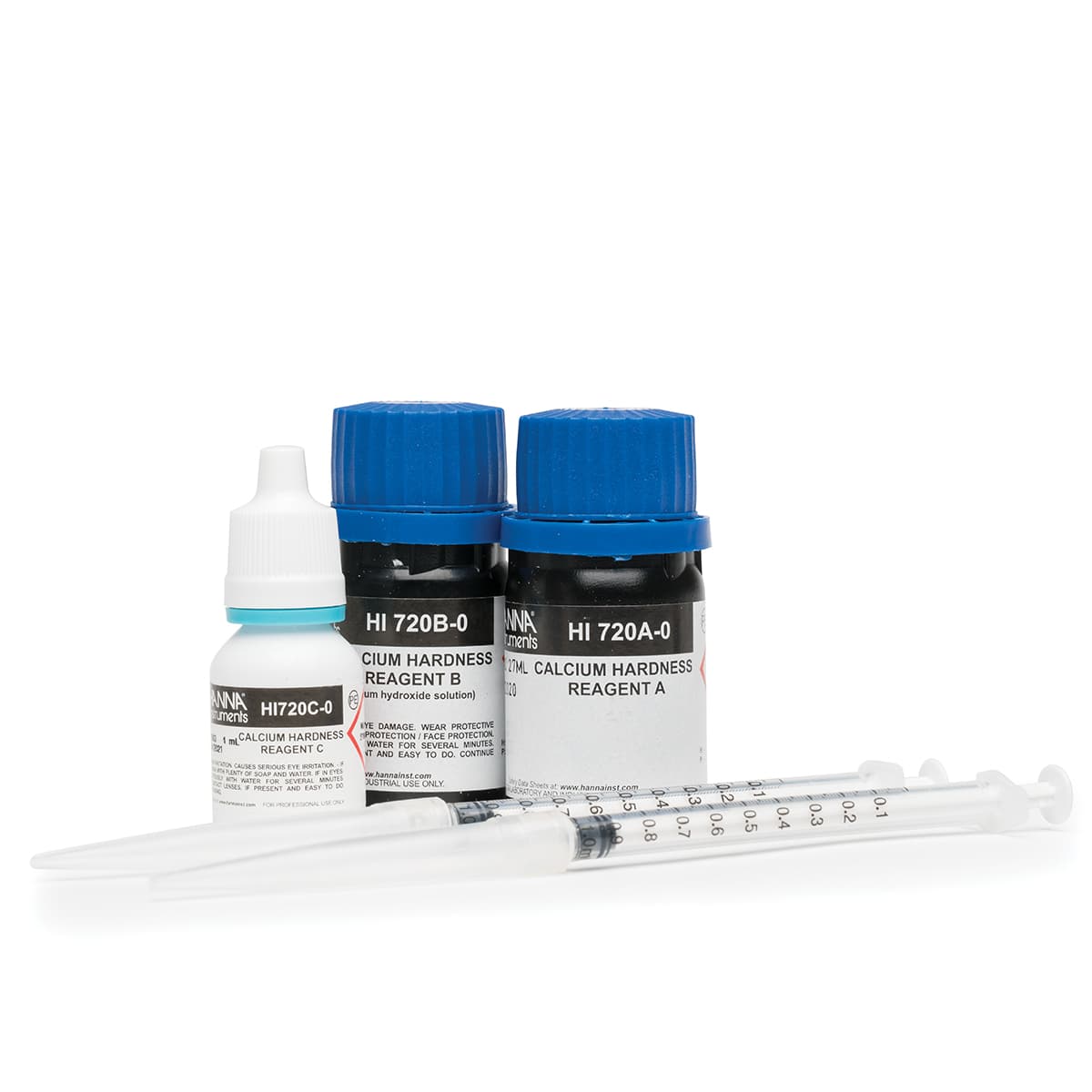
The HI720-25 are high-quality reagents that are pre-measured, allowing for users to achieve fast and accurate measurements with their Calcium Hardness Checker® HC. These reagents follow the Calmagite method in which the reaction between calcium and the reagent causes a violet tint in the sample.
The HI93720-03 are high quality reagents that are pre-measured, allowing for users to achieve fast and accurate colorimetric measurements. These reagents follow an adaptation of the calmagite method. The reaction between calcium and the reagents causes a red tint in the sample.
The HI937521-03 are high quality reagents that are pre-measured, allowing for users to achieve fast and accurate colorimetric measurements. These reagents follow an adaptation of the oxalate method. The reaction between calcium and reagents causes a red tint in the sample.
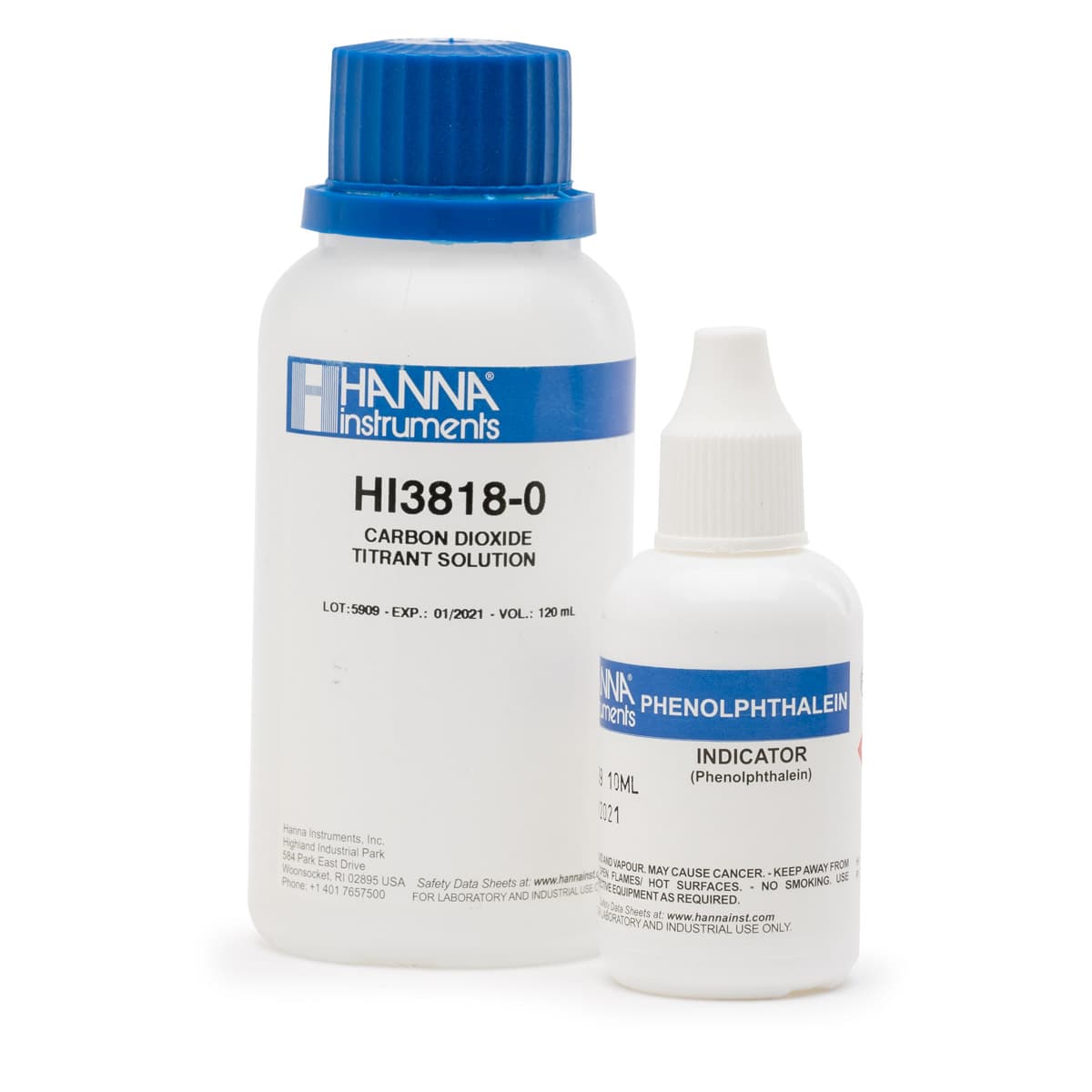
The HI3818-100 are high quality reagents that are pre-measured, allowing for users to achieve fast and accurate carbon dioxide measurements with the chemical test kit. These reagents follow the phenolphthalein method to determine carbon dioxide concentration.
HI753-11 is a high-quality set of calibration standards that allows users to validate the Chloride Checker® HC - HI753. The HI753-11 includes one sealed cuvette for zero ppm chloride and one cuvette that is tinted to an equivalent 10.0 +/- 1.0 ppm chloride sample @ 25°C.
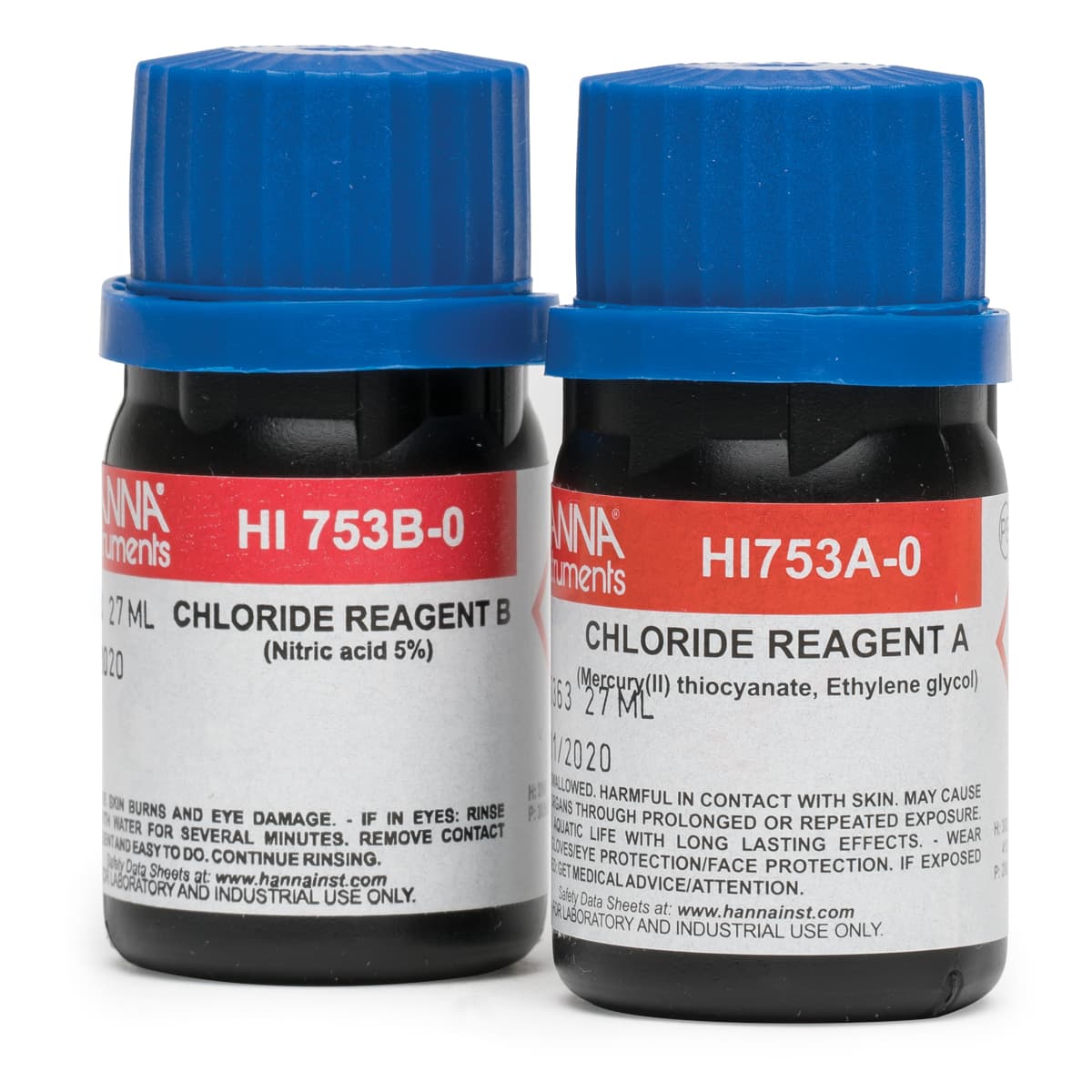
The HI753-25 are high-quality reagents that are pre-measured, allowing for users to achieve fast and accurate measurements with their Chloride Checker® HC. These reagents follow the Mercury (II) Thiocyanate Method in which the reaction between chloride and the reagents causes an orange tint in the sample.
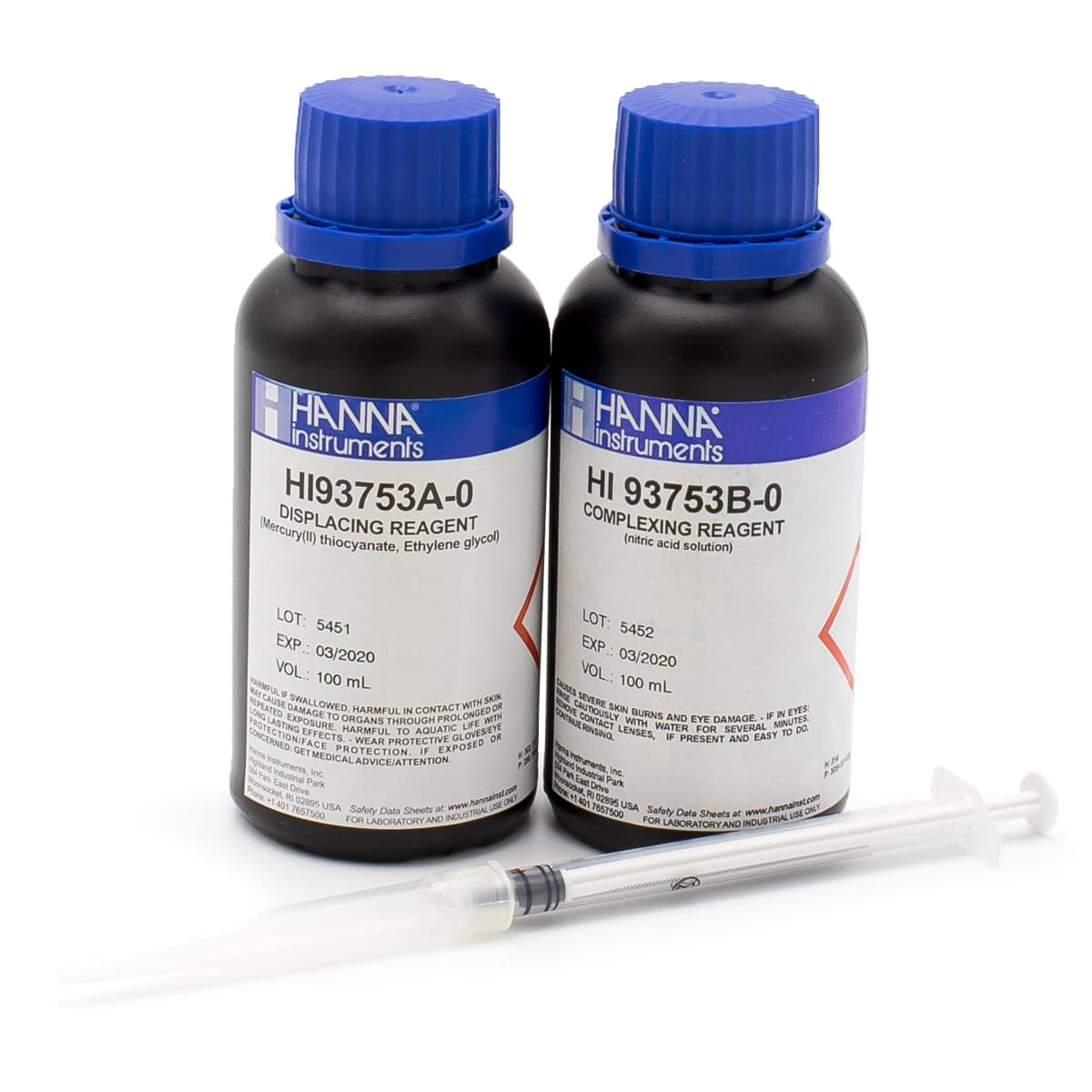
The HI93753-03 are high quality reagents that are pre-measured, allowing for users to achieve fast and accurate colorimetric measurements. The method is an adaptation of the mercury(II) thiocyanate method. The reaction between chloride and the reagent causes an orange tint in the sample.
The HI93738-03 are high quality reagents that are pre-measured, allowing for users to achieve fast and accurate colorimetric measurements. These reagents follow the chlorophenol red method in which the reaction between chlorine dioxide and the reagents causes a purple tint in the sample.
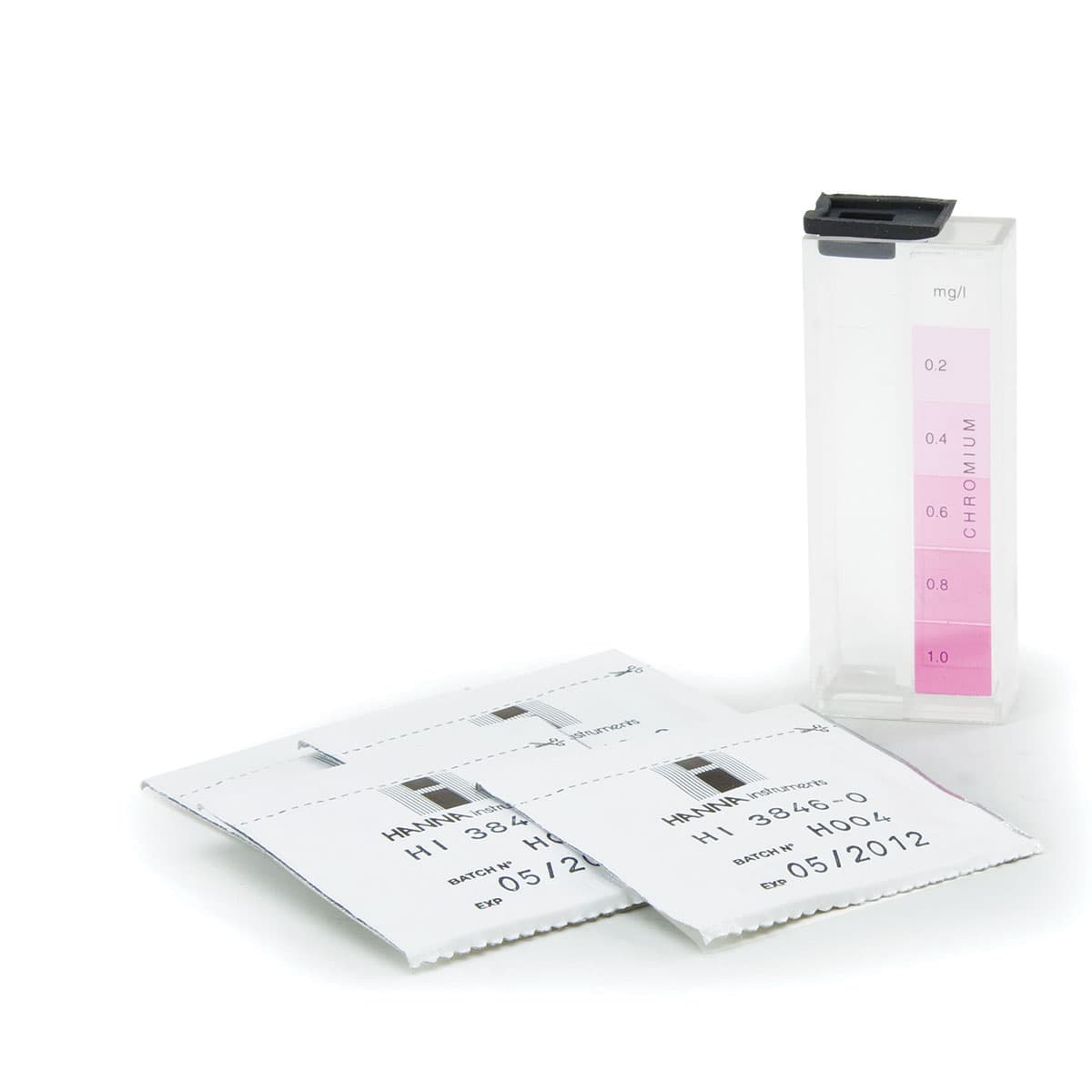
The HI93723-03 are high quality reagents that are pre-measured, allowing for users to achieve fast and accurate colorimetric measurements. The method is an adaptation of the diphenylcarbohydrazide method. The reaction between chromium VI and the reagent causes a purple tint in the sample.
The HI93749-03 are high quality reagents that are pre-measured, allowing for users to achieve fast and accurate colorimetric measurements. The method is an adaptation of the diphenylcarbohydrazide method. The reaction between chromium VI and the reagent causes a purple tint in the sample.
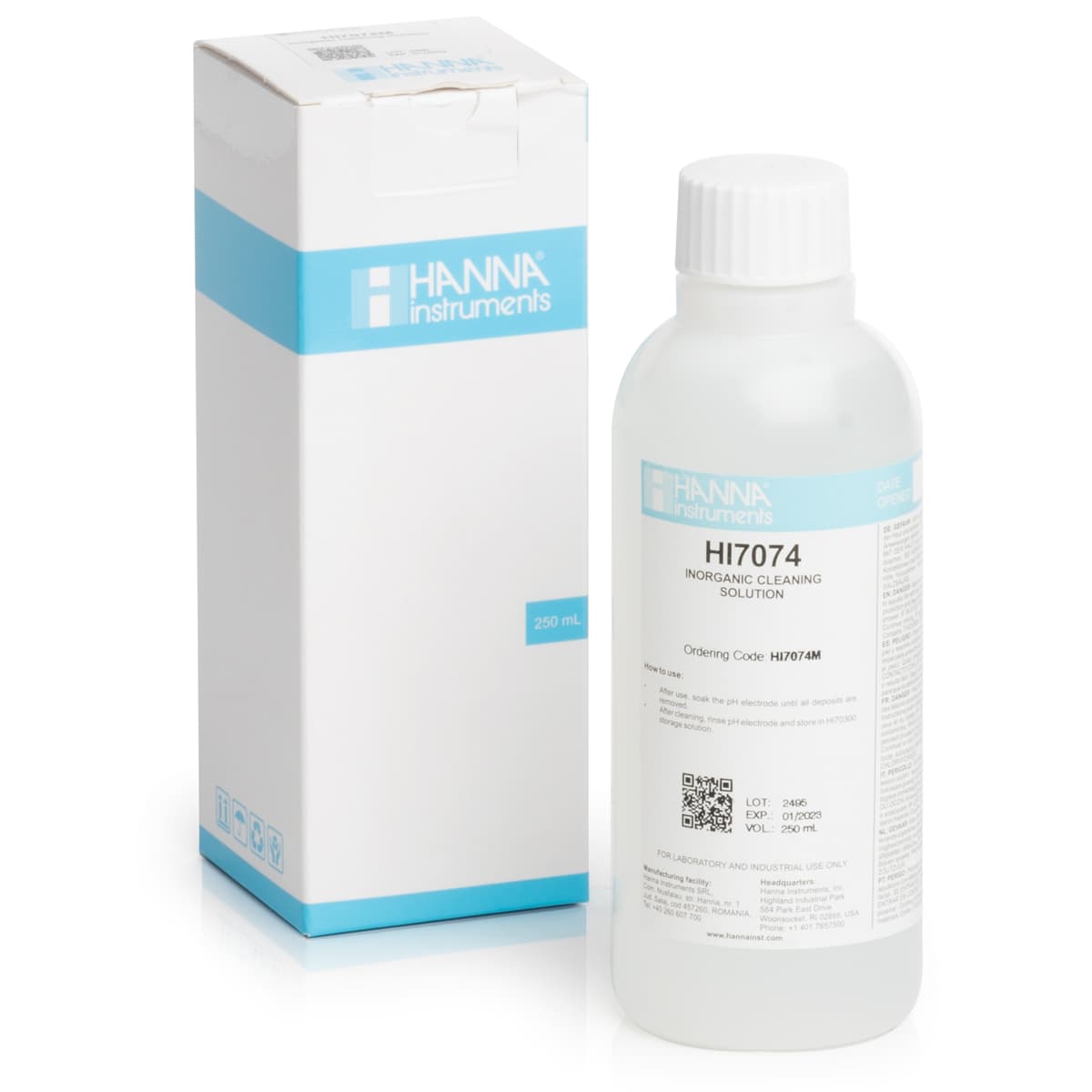
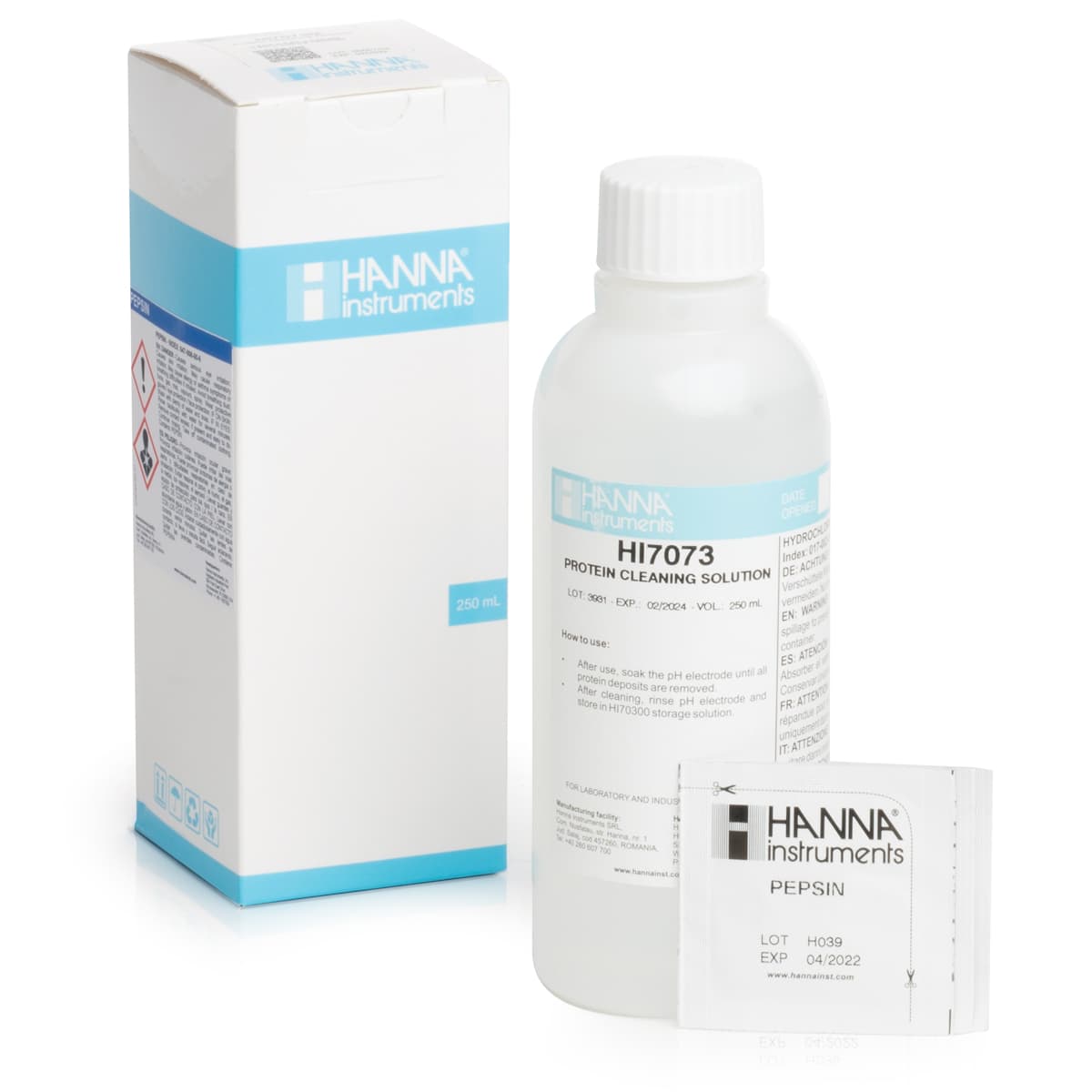
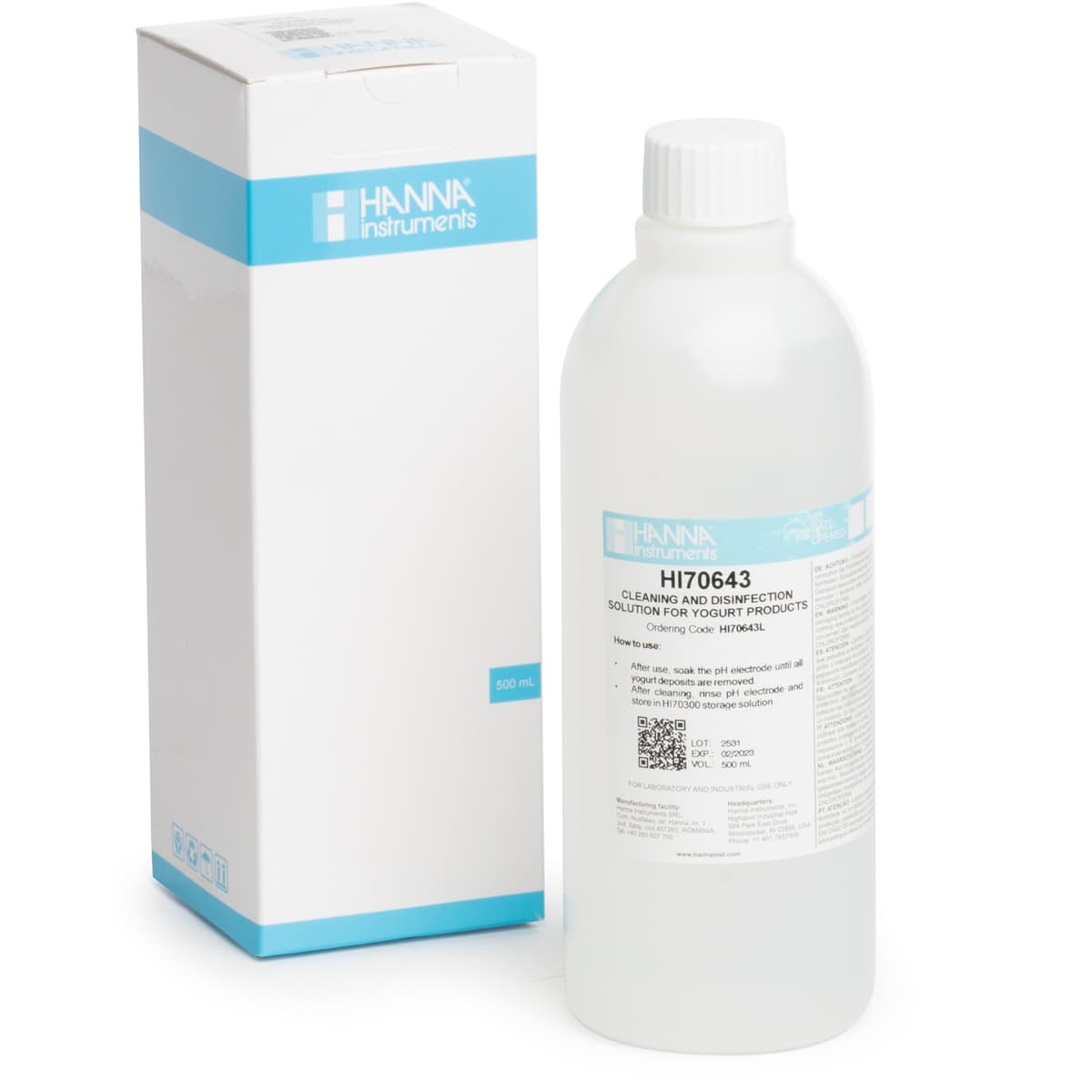
The most common cause for pH measurement inaccuracies is an unclean or improperly cleaned electrode. This is very important to note, because during calibration, the instrument assumes that the electrode is clean and that the standardization curve created during the calibration process will remain a valid reference…
The most common cause for pH measurement inaccuracies is an unclean or improperly cleaned electrode. This is very important to note because, during calibration, the instrument assumes that the electrode is clean and that the standardization curve created during the calibration process will remain a valid reference…
The most common cause for pH measurement inaccuracies is an unclean or improperly cleaned electrode. This is very important to note because, during calibration, the instrument assumes that the electrode is clean and that the standardization curve created during the calibration process will remain a valid reference…
The most common cause for pH measurement inaccuracies is an unclean or improperly cleaned electrode. This is very important to note, because during calibration, the instrument assumes that the electrode is clean and that the standardization curve created during the calibration process will remain a valid reference…
The most common cause for pH measurement inaccuracies is an unclean or improperly cleaned electrode. This is very important to note, because during calibration, the instrument assumes that the electrode is clean and that the standardization curve created during the calibration process will remain a valid reference…
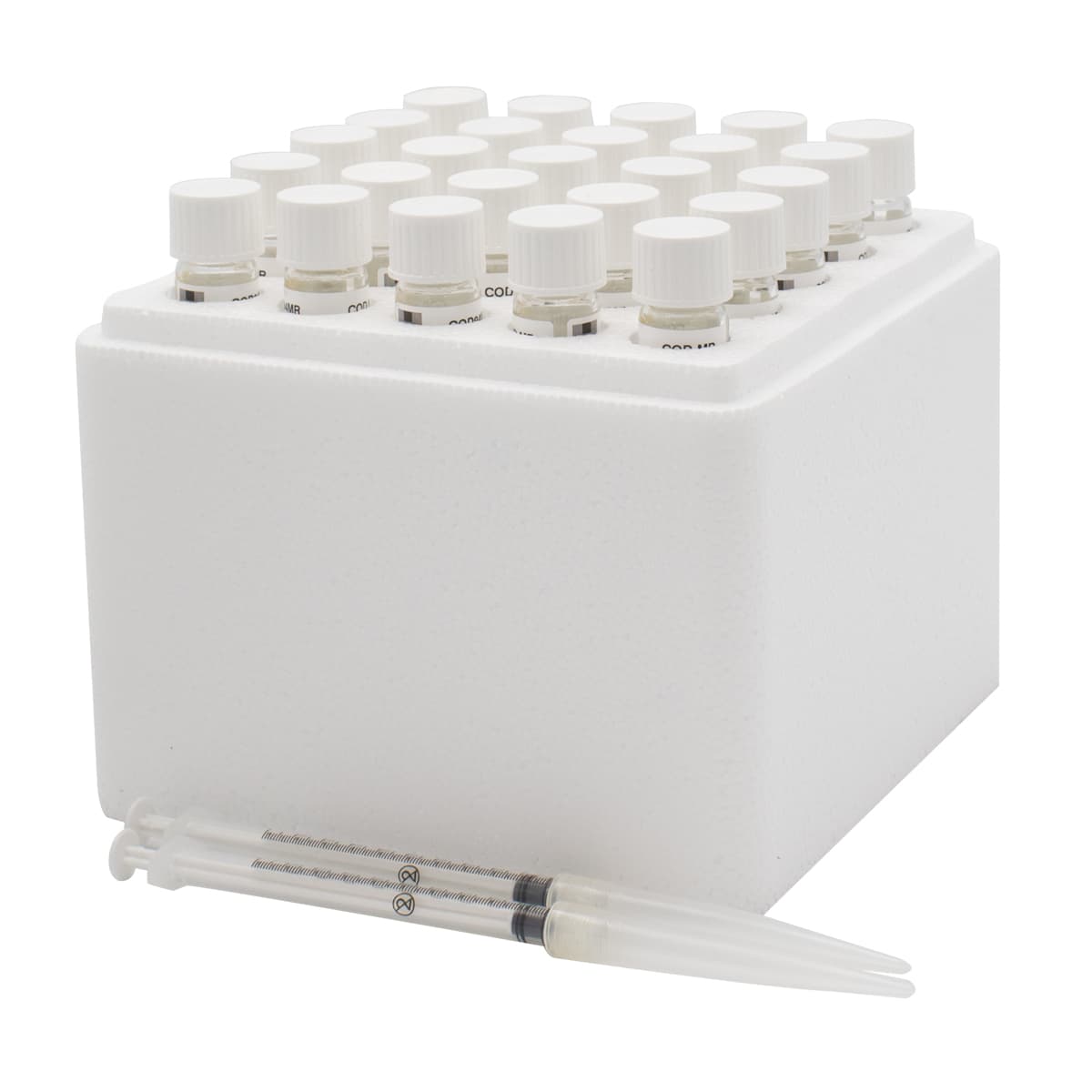
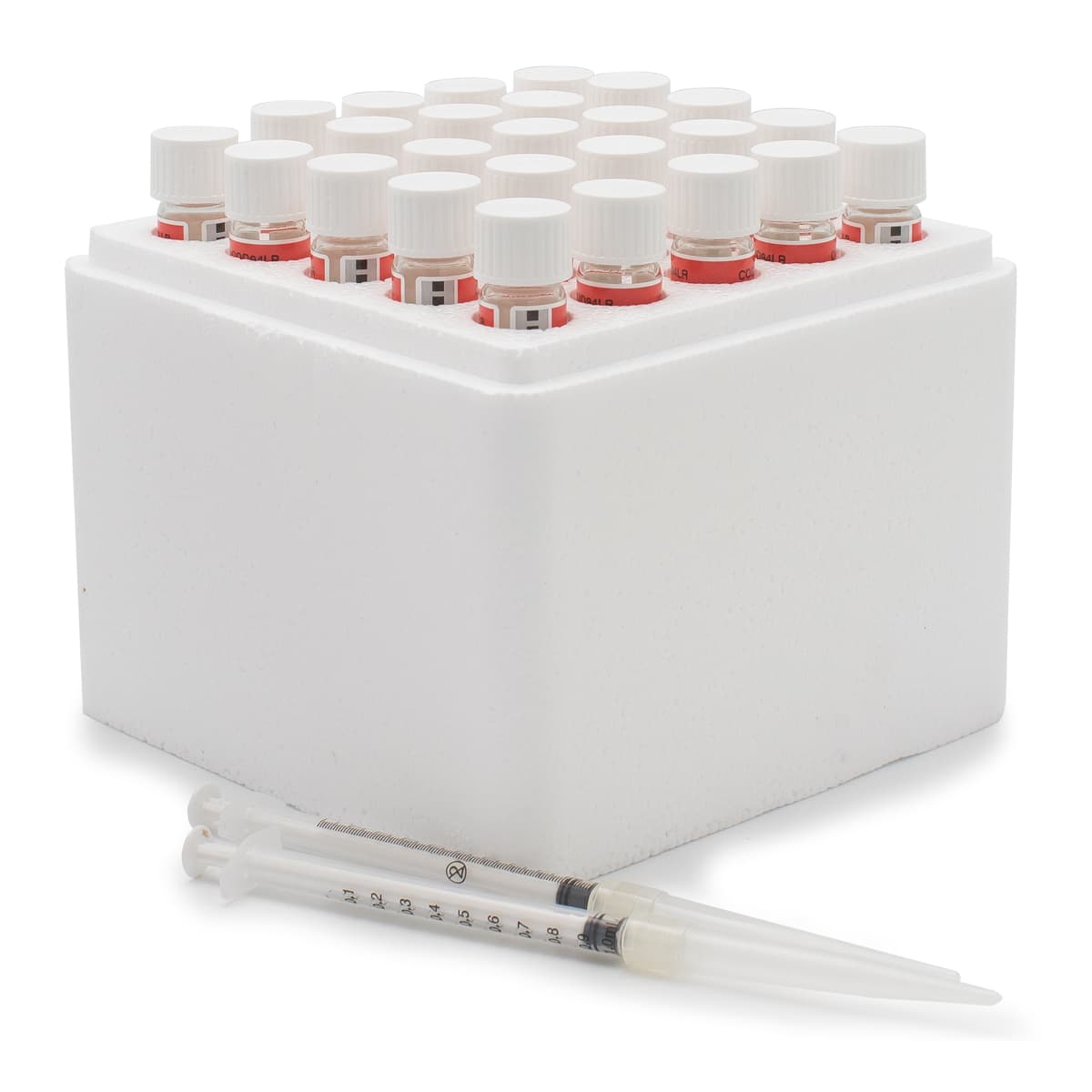
The HI94754C-25 COD kit contains 25 ready-to-use, barcoded vials containing pre-measured reagents. These high quality reagents follow an adaptation of the dichromate method for COD determination. In this method, a heated digestion is required to oxidize organic matter in the sample.
The HI94754F-25 COD kit contains 25 ready-to-use, barcoded vials containing pre-measured reagents. These high quality reagents follow the ISO approved method 15705. In this method, a heated digestion is required to oxidize organic matter in the sample.
The HI94754D-25 COD kit contains 25 ready-to-use, barcoded vials containing pre-measured reagents. These high quality reagents follow the mercury-free dichromate method for determination of COD. In this method, a heated digestion is required to oxidize organic matter in the sample.
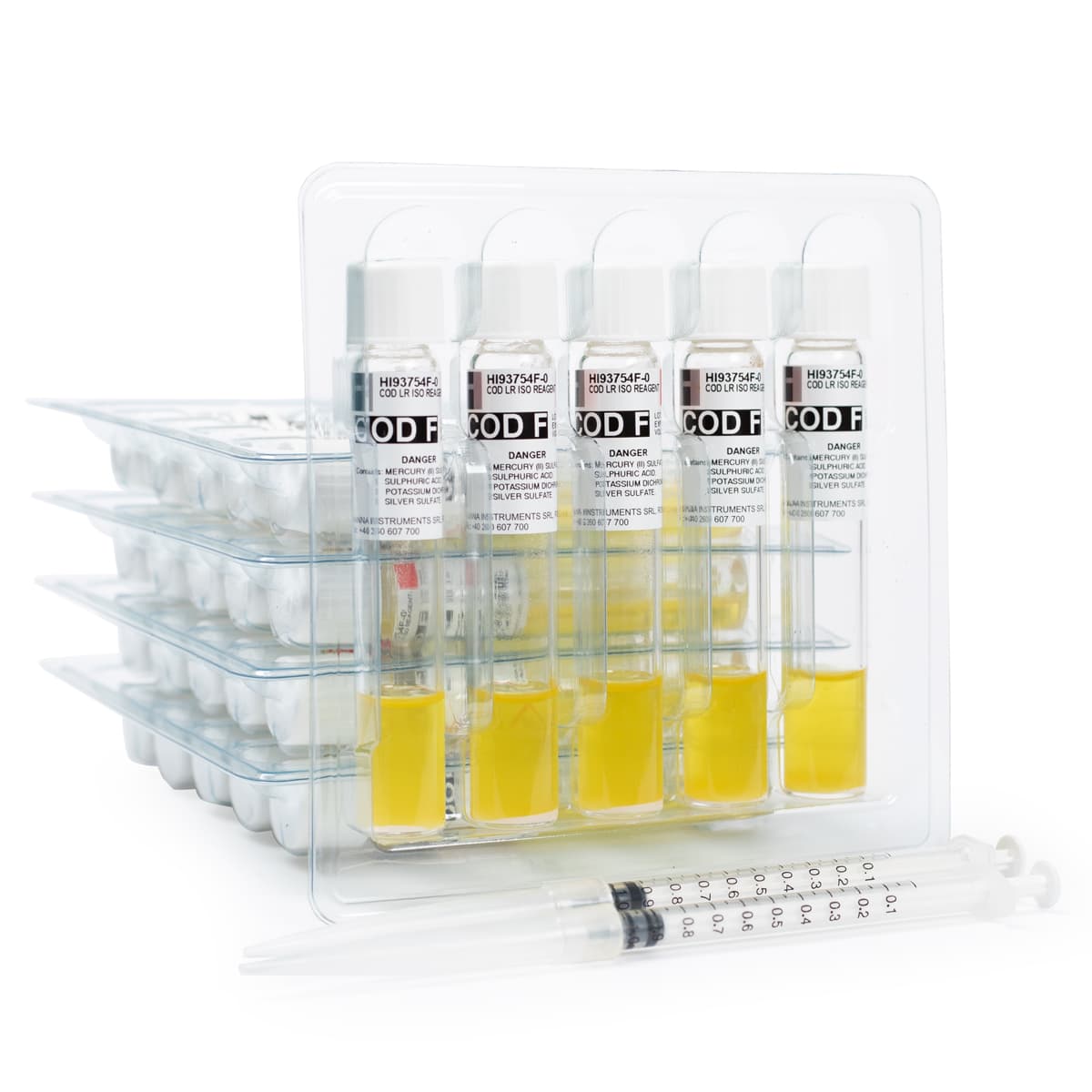
The HI93754F-25 COD kit contains 25 ready-to-use vials containing pre-measured reagents. These high quality reagents follow the ISO approved method 15705 for determination of COD. In this method, a heated digestion is required to oxidize organic matter in the sample.
The HI94754B-25 COD kit contains 25 ready-to-use, barcoded vials containing pre-measured reagents. These high quality reagents follow the EPA approved method 410.4. In this method, a heated digestion is required to oxidize organic matter in the sample.
The HI94754G-25 COD kit contains 25 ready-to-use, barcoded vials containing pre-measured reagents. These high quality reagents follow the ISO approved method 15705. In this method, a heated digestion is required to oxidize organic matter in the sample.
The HI94754E-25 COD kit contains 25 ready-to-use, barcoded vials containing pre-measured reagents. These high quality reagents follow the mercury-free dichromate method for determination of COD. In this method, a heated digestion is required to oxidize organic matter in the sample.
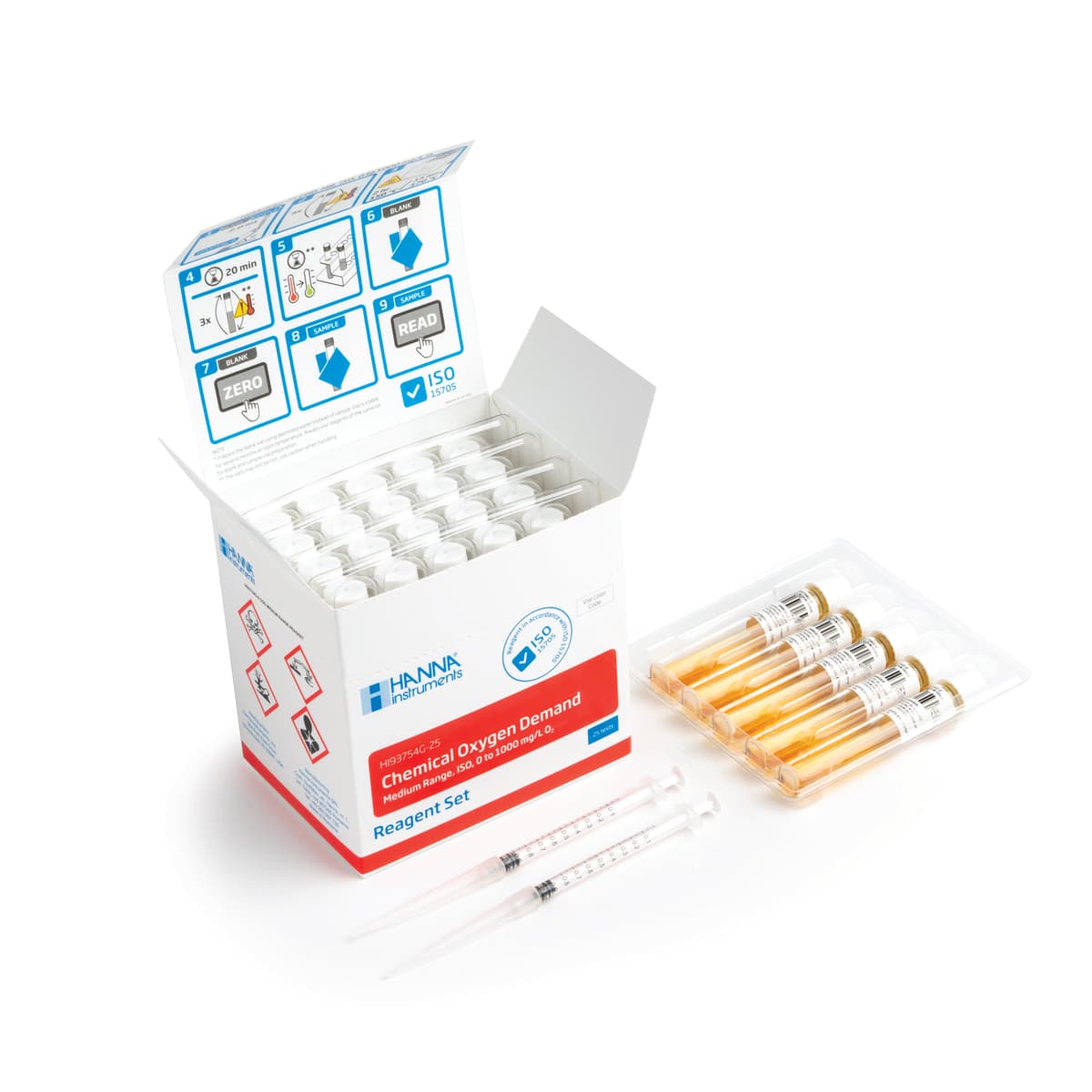
The HI93754G-25 COD kit contains 25 ready-to-use vials containing pre-measured reagents. These high quality reagents follow the ISO approved method 15705 for determination of COD. In this method, a heated digestion is required to oxidize organic matter in the sample.
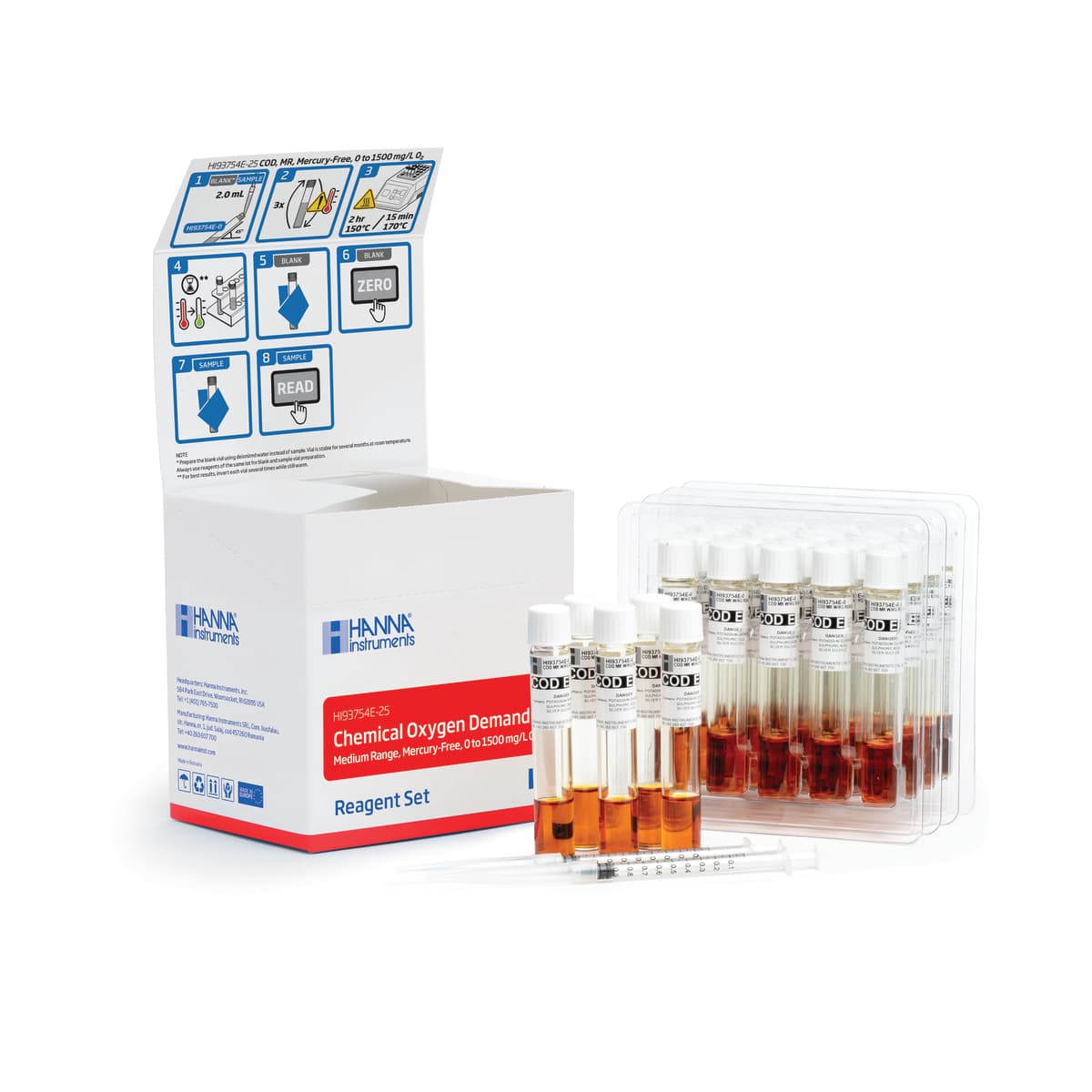
The HI93754E-25 COD kit contains 25 ready-to-use vials containing pre-measured reagents. These high quality reagents follow the mercury-free dichromate method for determination of COD. In this method, a heated digestion is required to oxidize organic matter in the sample.